




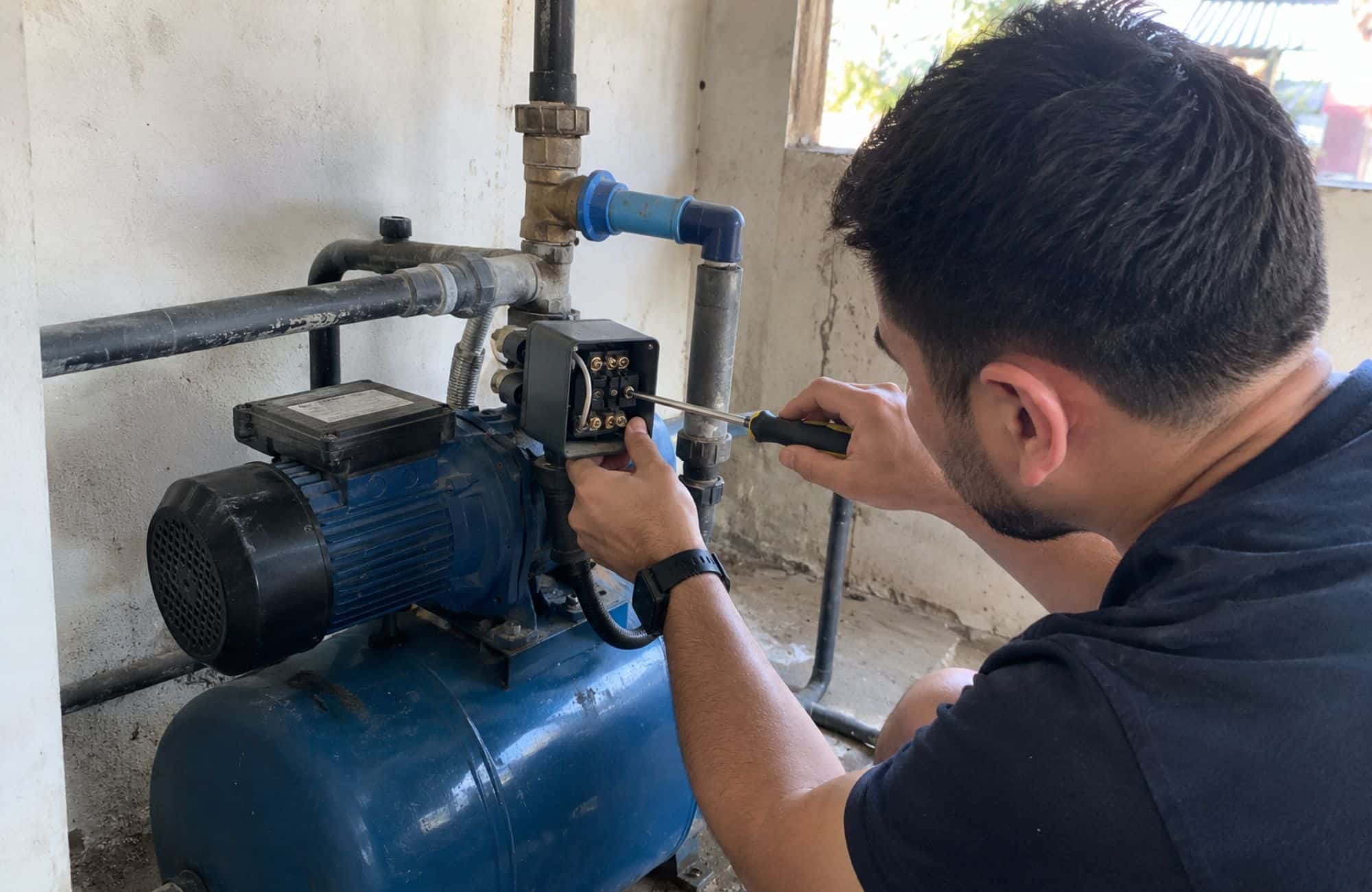
When your well pump won’t start, keeps running, or turns on and off too frequently, water pump pressure switch troubleshooting can help narrow down the problem. These symptoms can affect your home’s water supply, but they do not always mean the pressure switch itself has failed.
For Connecticut homeowners who depend on private wells, understanding pump behavior is a useful first step. Knowing what to look for can help you identify possible causes, avoid unsafe repairs, and determine when professional testing is necessary.
Water Pump Pressure Switch Troubleshooting: Where to Start
Water pump pressure switch troubleshooting begins by identifying how your pump behaves and checking the system’s pressure readings. Common warning signs include a pump that won’t start, won’t shut off, short cycles, clicks repeatedly, or causes inconsistent water pressure. Each symptom can have several causes involving the switch, pressure tank, wiring, plumbing, or pump.
A pressure switch controls when a conventional well pump starts and stops based on water pressure. When pressure drops to the cut-in setting, the switch activates the pump. When pressure reaches the cut-out setting, the switch stops it. Common residential settings include 30/50 and 40/60 PSI, although the correct settings depend on the system.
Common Pressure Switch Problems and Possible Solutions
The following table helps connect common symptoms with possible causes and practical next steps. It is a starting point for troubleshooting, not a substitute for testing, because different system problems can produce similar symptoms.
| Symptom | Possible Causes | Recommended Action |
| Pump won’t start | Tripped breaker, faulty switch, wiring issue, failed pump | Check the breaker and pressure gauge; request professional testing if needed |
| Pump won’t shut off | Stuck contacts, plumbing leak, weak pump, low well yield | Observe pressure behavior and stop unsafe operation |
| Pump short cycles | Waterlogged tank, low tank air charge, unstable pressure | Have the pressure tank and controls inspected |
| Switch clicks repeatedly | Rapid pressure changes, worn contacts, blocked sensing tube | Record clicking patterns and check visible gauge behavior |
| Low water pressure | Restricted filter, pump issue, switch fault, plumbing leak | Compare water flow with pressure readings |
| Pump hums but won’t run | Motor, capacitor, control box, or electrical problem | Avoid repeated starting attempts and request professional diagnosis |
Observing the pressure gauge can provide useful clues about what’s happening inside the system. However, avoid removing the switch cover, touching wires, or adjusting components while troubleshooting.
Why Won’t Your Well Pump Start?
A well pump that won’t start may have a pressure switch that fails to activate when system pressure drops. However, electrical problems, a tripped breaker, a clogged pressure-sensing connection, or pump motor failure can cause the same symptom. Checking the pressure gauge and available power can help narrow down the problem without opening electrical equipment.
Possible Causes of a Pump That Won’t Start
A faulty pressure switch may not close its contacts when pressure reaches the cut-in setting. Corrosion, worn contacts, or debris blocking the sensing passage can interfere with its operation. A separate control box or damaged wiring may also prevent a submersible pump from starting.
Recommended Troubleshooting Steps
Start by checking whether the circuit breaker has tripped and whether the pressure gauge shows unusually low pressure. Listen for humming, clicking, or other sounds that may indicate an attempted pump start. Do not repeatedly reset a breaker that trips again, because an unresolved electrical fault may be present.
If the pump remains inactive, a qualified professional should inspect the electrical supply, pressure switch, pump controls, and motor. Replacing the switch without confirming the cause may leave the original problem unresolved.
Why Won’t Your Well Pump Shut Off?
A well pump that runs continuously may have a stuck pressure switch, but the pressure gauge helps distinguish control problems from other faults. If pressure reaches the expected cut-out setting and the pump continues running, the switch or electrical controls may be malfunctioning. If pressure cannot reach that setting, the problem may involve a leak, weak pump, restriction, or limited well yield.
When Pressure Reaches the Cut-Out Setting
A pressure switch normally stops the pump once water pressure reaches its upper setting. Worn or stuck electrical contacts, a blocked sensing connection, or a faulty control component may prevent normal shutdown.
If pressure continues rising beyond its intended limit, disconnect power at a safe, accessible breaker or disconnect and arrange professional service. Do not attempt to force the switch open or adjust its settings while the equipment is operating.
When Pressure Stays Below the Cut-Out Setting
If the system cannot build enough pressure, the pressure switch may continue calling for the pump to run. Possible causes include plumbing leaks, inadequate well yield, a worn pump, or problems within the water delivery system.
A pump that continues running without adequate water can suffer damage. If pressure stops increasing or dry running is suspected, shut down the equipment safely and have the system evaluated.
Why Does Your Well Pump Short Cycle?
Short cycling occurs when a well pump starts and stops repeatedly over unusually short intervals. Although the pressure switch controls these cycles, the underlying cause may be a waterlogged pressure tank, incorrect tank air charge, or another pressure-control problem. Frequent cycling can place additional strain on pump components and should be investigated.
Pressure Tank Problems
A pressure tank helps maintain water pressure and reduces unnecessary pump starts. If its internal bladder fails or its air charge becomes too low, the tank may hold less usable water between pump cycles.
On many conventional precharged tank systems, the air charge should be set 2 PSI below the pressure switch’s cut-in setting when the tank is empty of water. According to Amtrol’s well tank guidance, rapid pump cycling and low water pressure can also indicate pressure tank problems. The correct settings and inspection procedures depend on the tank model and manufacturer requirements.
Pressure Switch or Sensing Problems
A clogged sensing tube or faulty switch can also contribute to irregular pump cycling. If the switch receives inaccurate or delayed pressure information, it may not respond at the expected times.
Watch the pressure gauge and note how quickly pressure changes between starts and stops. A professional can check whether the issue comes from the switch, pressure tank, pump, or another component. Suspected tank problems may require professional pressure tank service.
Why Does Your Pressure Switch Keep Clicking?
A pressure switch normally clicks when it activates or stops the well pump. However, rapid clicking, repeated chattering, or clicking without normal pump operation may indicate unstable pressure, worn electrical contacts, or a problem with the sensing connection. The timing of the sounds can help determine whether the switch is responding to changing pressure or operating incorrectly.
Normal Clicking vs. Repeated Chattering
An occasional click during a normal pump cycle is expected. Repeated clicking within a short period, especially when the pump starts and stops rapidly, may indicate a pressure tank or control problem.
If clicking occurs without the pump running, electrical controls or wiring may require inspection. Do not remove the switch cover to watch the contacts while power is connected, and leave electrical diagnosis to a qualified professional.
What Causes Low or Inconsistent Water Pressure?
Low or fluctuating water pressure can result from a pressure switch problem, but it can also involve the pressure tank, pump, plumbing, or water filters. The most helpful starting point is comparing pressure gauge readings with water flow at your fixtures. This can reveal whether the system is struggling to maintain pressure or whether water delivery is restricted elsewhere.
Pressure Switch Problems vs. Other System Issues
If pressure falls below the expected cut-in setting without the pump starting, the switch or electrical controls may need testing. However, weak water flow while the gauge shows normal pressure may suggest a clogged filter, restricted pipe, or another plumbing problem.
Sudden pressure drops may also indicate leaks or pump performance issues. Avoid increasing pressure switch settings to compensate for low flow before identifying the actual cause, because the pump may not be able to reach a higher shutoff pressure.
Safe Troubleshooting Steps Before Calling a Professional
Homeowners can perform several basic checks without opening electrical equipment or changing pressure settings. Observing the gauge, listening for unusual sounds, and checking accessible plumbing may provide helpful information. However, pressure switches contain electrical connections, and their covers should remain in place during homeowner troubleshooting.
Basic Homeowner Troubleshooting Checklist
Begin with observations that do not require tools or direct contact with energized components. Record what happens during normal pump operation so a technician can evaluate the symptoms more efficiently.
- Identify the symptom. Determine whether the pump won’t start, won’t stop, short cycles, or causes changing pressure.
- Check the pressure gauge. Record the visible pressure reading when the problem occurs.
- Listen for unusual sounds. Note repeated clicking, humming, chattering, or grinding.
- Check the circuit breaker. Look for a tripped breaker, but do not repeatedly reset one that continues tripping.
- Look for visible leaks. Inspect accessible pipes and tank connections without touching electrical components.
- Observe pump cycling. Note how often the pump starts and stops during normal household water use.
- Record the conditions. Note whether the problem happens at one fixture, throughout the house, or during periods of heavy water demand.
If you notice burning smells, visible electrical damage, smoke, or water near electrical connections, stop troubleshooting. Disconnect power only if you can safely reach the breaker or disconnect, and request qualified assistance.
When Is Pressure Switch Testing Necessary?
Pressure switch testing becomes necessary when pump behavior suggests the switch may not be responding to the expected pressure settings. Testing can help distinguish a faulty switch from electrical supply problems, inaccurate pressure readings, or other system faults.
For detailed information about checking pressure readings and evaluating switch operation, read the existing guide on how to test a pressure switch on a well. Electrical measurements and internal switch inspections should be performed by qualified professionals.
When Should You Call a Well Pump Professional?
Professional assistance is recommended when a pump won’t start, runs continuously, short cycles repeatedly, or causes persistent pressure problems. These symptoms may involve electrical faults, pressure tank failures, pump damage, or problems within the well system. A qualified technician can evaluate the connected components and identify which repairs are appropriate.
Seek prompt service if you notice repeated breaker trips, damaged wiring, burning smells, suspected dry running, or pressure rising beyond the intended shutoff point. If professional testing confirms that the pressure switch has failed, replacement may be needed, but other causes should be ruled out first.
Get Help With Water Pump Pressure Switch Problems
Water pump pressure switch troubleshooting starts with understanding the symptoms and observing how the system responds to changing water pressure. A pump that won’t start, runs constantly, short cycles, or makes repeated clicking sounds may have a faulty switch, but the pressure tank, electrical controls, plumbing, or pump itself could be responsible.
If you’re experiencing ongoing well pump pressure problems, having the system professionally inspected can help identify the cause and prevent unnecessary repairs. Contact us for help diagnosing pressure switch and well pump issues. Housatonic Valley Well Pump Services LLC serves homeowners throughout Litchfield County and Upper Fairfield County, Connecticut.
FAQs
How Do You Know if a Water Pump Pressure Switch Is Bad?
Common signs include a pump that fails to start at its expected pressure, continues running beyond its shutoff setting, or clicks repeatedly. Burned contacts, corrosion, or a clogged sensing connection may also indicate problems during a professional inspection. However, similar symptoms can come from a faulty pressure tank, damaged wiring, or pump failure, so testing is needed before confirming the switch is bad.
How Do You Reset a Water Pump Pressure Switch?
Some pressure switches have a manual reset feature, especially models with low-pressure cut-off protection. Other switches operate automatically and have no manual reset control. The correct procedure depends on the switch model, and repeated resets should be avoided until the cause of the shutdown has been identified.
What Would Cause a Pressure Switch to Go Bad?
Pressure switches may fail because of worn electrical contacts, corrosion, moisture, or damaged internal components. Mineral buildup or debris can also block the pressure-sensing passage and interfere with normal operation. A technician can determine whether the switch itself has failed or another system problem is affecting its performance.
Can a Bad Pressure Tank Cause Pressure Switch Problems?
Yes, a pressure tank with insufficient air charge or a damaged bladder can cause rapid pressure changes and frequent pump cycling. The pressure switch may respond normally to those changes even though the system is not operating correctly. Inspecting the pressure tank before replacing the switch can help identify the actual cause.
How Do You Adjust a Water Pump Pressure Switch to Get More Pressure?
Some conventional mechanical pressure switches have adjustable cut-in and cut-out settings, but changing them requires careful evaluation. Higher settings must be compatible with the pump, pressure tank, plumbing, and manufacturer requirements. Increasing the settings without checking these conditions can cause continuous running or excessive system pressure, so professional evaluation is recommended.
When Should a Water Pump Pressure Switch Be Replaced?
A pressure switch may need replacement when professional testing confirms damaged contacts, failed internal components, or incorrect operation that cannot be safely corrected. Low water pressure and short cycling alone do not confirm switch failure because other components may produce the same symptoms. The decision should follow a system inspection, and the well pump pressure switch replacement guide explains the related considerations.