




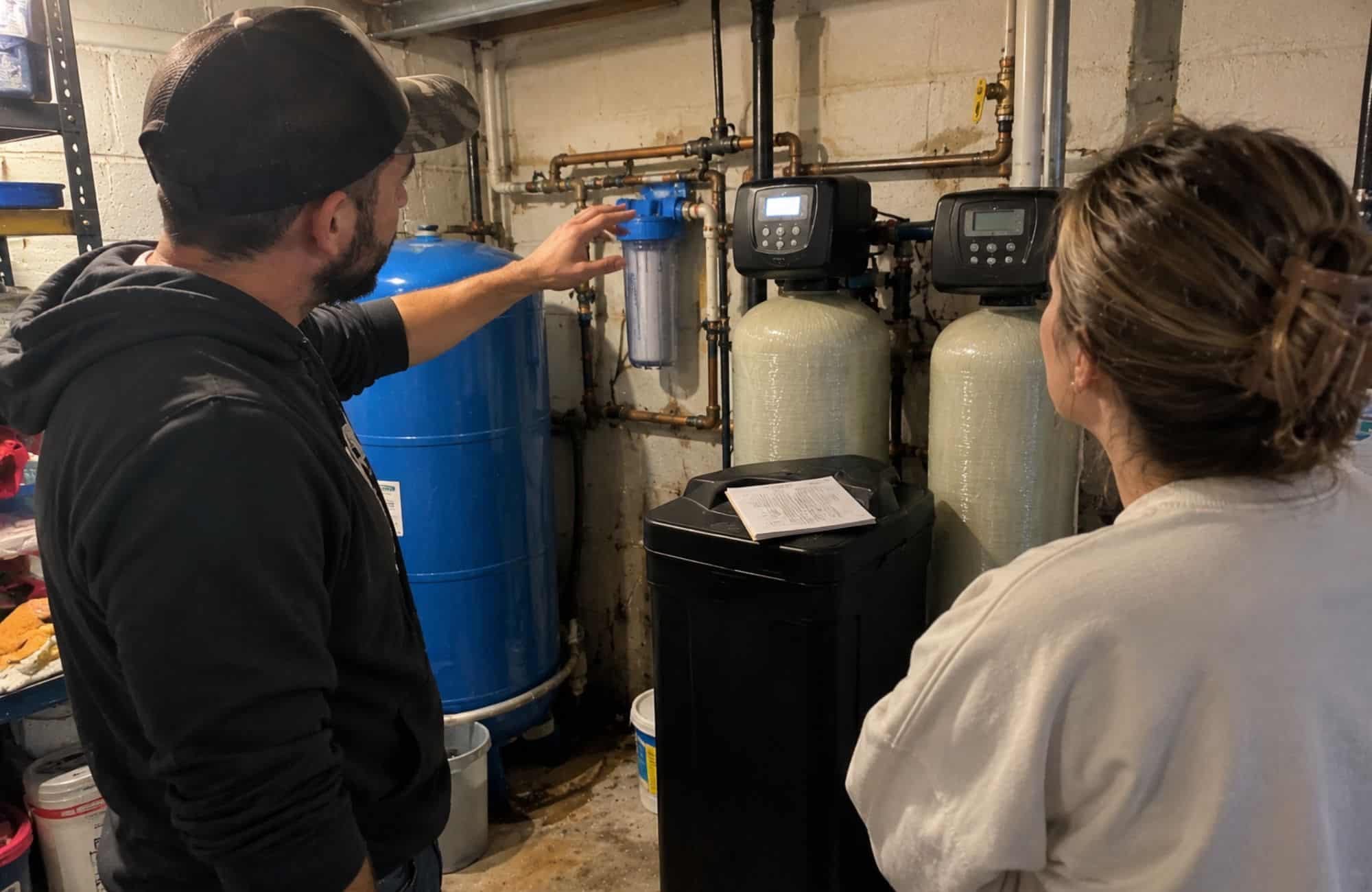
Choosing a water treatment company in Connecticut can be confusing when local installers and national dealers offer different equipment, testing services, and maintenance plans. Both may provide water softeners, whole-house filtration, and drinking water systems, but their recommendations, installation methods, and ongoing support can vary.
For homeowners using private wells, the decision matters because water quality depends on the well, local conditions, and household plumbing. Understanding how providers differ can help you compare your options, ask better questions, and choose water treatment equipment that fits your home’s needs.
What Does a Water Treatment Company Do?
A water treatment company evaluates water quality concerns, recommends suitable equipment, installs treatment systems, and provides maintenance or repair services. Residential solutions may include water softeners, sediment filters, reverse osmosis drinking water systems, and whole-house filtration. The right equipment depends on water testing, household demand, and the specific contaminants or conditions that need attention.
Common Residential Water Treatment Services
Water treatment providers may offer several services, but the exact scope differs by company. Understanding available water filtration and treatment services can help homeowners dealing with hard water, iron staining, sediment, or unpleasant odors identify which options are worth discussing.
- Water testing: Evaluating hardness, pH, iron, manganese, bacteria, and other relevant substances.
- Water softener installation: Reducing calcium and magnesium that contribute to hard water scale.
- Whole-house filtration: Treating water where it enters the home to address specific water quality concerns.
- Drinking water filtration: Installing point-of-use systems, including certain reverse osmosis units.
- System maintenance: Replacing filters, servicing equipment, and recommending follow-up testing.
A provider should also explain what its proposed system cannot remove. No single treatment method addresses every possible water quality concern, so equipment should be selected according to test results rather than appearance or taste alone.
Local Installer vs. National Dealer: What’s the Difference?
Local water treatment installers typically serve a defined geographic area, while national dealers operate through larger companies, franchise networks, or authorized dealerships. Both business models can provide suitable water treatment solutions, but their service arrangements may differ. The better choice depends on installer qualifications, equipment options, pricing, and maintenance support after installation.
Comparing Local and National Water Treatment Providers
Company size alone does not determine the quality of an installation or treatment recommendation. Before choosing a provider, compare who will perform the work, what equipment is offered, and who will be responsible for future service.
| Factor | Local Installer | National Dealer |
| Local water concerns | May be familiar with nearby private well conditions | May combine regional knowledge with standardized processes |
| Equipment options | Depend on suppliers and installer experience | May emphasize established or proprietary product lines |
| Installation | Often handled by a local owner or service team | May involve employees, dealers, or subcontractors |
| Maintenance | Depends on local service capacity | Depends on the local dealer and support network |
| Pricing | May provide customized, project-specific quotes | May offer packaged systems or standardized programs |
| Communication | May provide direct access to the installer | May involve separate sales and service departments |
Which Option Is Better for Connecticut Homeowners?
A local installer may be appealing when you want direct communication with the person responsible for installation and maintenance. This can be particularly useful for private well systems where water pressure, plumbing layout, and existing equipment affect treatment choices.
A national dealer may offer established equipment lines, structured service programs, or access to a broader support network. However, brand recognition alone does not establish that a particular dealer will provide better results. Compare the actual contractor, equipment specifications, warranty terms, and written proposal before deciding.
Why Water Testing Comes Before Choosing a System
Water testing is the starting point for choosing a residential treatment system because different contaminants require different solutions. Hardness, iron, bacteria, arsenic, and other substances cannot all be addressed by the same filter. Connecticut homeowners with private wells should use appropriate laboratory testing to understand their water conditions before purchasing major treatment equipment.
Independent Testing vs. Free Water Tests
A free water test may help identify certain basic conditions, such as hardness, but it should not be treated as a complete drinking water safety assessment. Some health-related contaminants require specific laboratory methods that simple on-site tests cannot replace.
The Connecticut Department of Public Health recommends making informed treatment decisions using appropriate water testing. Homeowners should use laboratories certified for the particular substances being analyzed, especially when results will guide treatment for contaminants with potential health effects.
Common Connecticut Well Water Concerns
Private well conditions can vary between nearby properties, even within the same neighborhood. Changes in appearance, taste, or odor may indicate a concern, but testing is needed to identify many contaminants and determine their concentrations.
- Hardness: Calcium and magnesium can leave scale on fixtures, pipes, and water heaters.
- Iron and manganese: These substances may contribute to discoloration and staining.
- Sulfur odors: A rotten-egg smell may be associated with hydrogen sulfide or other sources.
- Bacteria: Microbial contamination requires appropriate testing and evaluation.
- Arsenic and other contaminants: Certain substances may be present without noticeable changes in taste, smell, or appearance.
Connecticut’s private well guidance recommends annual testing for basic water quality indicators. Additional testing for contaminants such as arsenic, uranium, and radon may be recommended based on the well’s history, property conditions, and state guidance. Homeowners should also consider testing when water quality changes, a well is repaired, or local conditions raise new concerns.
Which Water Treatment System Does Your Home Need?
The right water treatment system depends on what needs to be reduced, where treated water will be used, and how much water the household requires. Some equipment treats water throughout the house, while other systems focus on drinking and cooking water. Testing results, flow rate, system sizing, and maintenance requirements should guide the choice.
Common Water Treatment Technologies
Water softeners, filtration equipment, and disinfection systems serve different purposes. Understanding their functions can help homeowners evaluate recommendations without assuming that the largest or most expensive system is necessarily the best fit.
| Treatment system | Common purpose |
| Water softener | Reduces calcium and magnesium responsible for water hardness |
| Sediment filter | Captures certain suspended particles, sand, and debris |
| Iron and manganese filter | Reduces iron or manganese when properly selected and configured |
| Activated carbon filter | Reduces specified tastes, odors, or chemicals depending on system capabilities |
| Reverse osmosis system | Reduces certain dissolved contaminants when designed and certified for those claims |
| UV disinfection | Inactivates susceptible microorganisms under suitable operating conditions |
Whole-House Filtration vs. Drinking Water Filtration
A whole-house filtration system treats incoming water before it reaches household fixtures. It may be useful when a water quality problem affects plumbing, showers, water heaters, or appliances.
A point-of-use drinking water system treats water at a specific location, such as a kitchen sink. These options are not interchangeable, and some homes may benefit from multiple treatment stages. The appropriate setup depends on laboratory findings, household demand, and the location where treatment is needed.
How to Evaluate a Water Treatment Company in Connecticut
A dependable water treatment company should provide clear testing information, explain its equipment recommendations, use appropriately qualified installers, and outline maintenance requirements. Connecticut homeowners should also verify the license required for the proposed work. A convincing sales presentation cannot replace evidence that the contractor and treatment system are suitable for the property.
Verify Connecticut Licensing and Product Certification
Connecticut recognizes several plumbing and water-conditioning license classifications, including P1, P2, J1, and J2, with different permitted scopes of work. Homeowners should verify that the person or business performing the installation holds the appropriate credentials for the planned work.
The Connecticut Department of Consumer Protection explains these licensing classifications. Equipment certifications also deserve attention. Check relevant NSF/ANSI standards and verify the specific contaminant reduction claims instead of assuming that a certified filter removes every harmful substance.
For example, NSF/ANSI 42 addresses certain aesthetic effects, such as chlorine taste and odor, NSF/ANSI 53 covers specified health-related contaminant reduction claims, and NSF/ANSI 58 applies to reverse osmosis drinking water systems. Certification should always be checked against the specific contaminants the system is intended to reduce.
Six Questions to Ask Before Hiring
Asking the same questions when comparing water treatment companies makes it easier to evaluate their recommendations fairly. Written answers can also clarify which services are included and which may involve additional costs.
- What water test results support your recommendation? Ask whether additional certified laboratory testing is needed.
- Who will install the system? Confirm the installer holds the appropriate Connecticut credentials.
- Which contaminants will the equipment reduce? Request the model number and relevant performance documentation.
- What is included in the quoted price? Clarify equipment, plumbing work, setup, and possible additional charges.
- Who handles future maintenance? Ask about replacement filters, scheduled servicing, and support availability.
- What happens if follow-up testing shows a problem? Understand the troubleshooting process and warranty limitations.
Be cautious when a provider recommends expensive equipment without appropriate water testing or refuses to explain system limitations. You should have enough information to review the proposal, compare alternatives, and understand the equipment before agreeing to installation.
What Affects the Cost of a Home Water Treatment System?
Home water treatment costs depend on equipment type, treatment requirements, installation conditions, and household water demand. A basic point-of-use drinking water filter generally costs less than a multi-stage whole-house system. Comparing complete installed costs is more useful than looking at equipment prices alone, especially when plumbing modifications or multiple treatment stages are needed.
A system designed to address hardness may have different installation and maintenance costs than equipment intended to reduce iron, arsenic, or microbial concerns. Because water conditions vary, a meaningful quote should follow an appropriate assessment rather than rely entirely on a standard package price.
Look Beyond the Installation Price
Ask each provider for an itemized proposal separating equipment, labor, plumbing modifications, and other required work. Compare the cost and frequency of filter replacement, treatment media, salt where applicable, electricity, and routine servicing.
A lower upfront price may not represent a lower long-term cost if replacement parts are expensive or difficult to obtain. Review warranty conditions carefully to understand what is covered, which maintenance tasks are required, and who provides service if a problem develops.
Choosing a Water Treatment Partner for the Long Term
Water treatment is an ongoing household responsibility rather than a one-time equipment purchase. Filters, media, membranes, and disinfection components have different maintenance needs, and neglected equipment may lose its intended treatment effectiveness. A suitable provider should explain these responsibilities and help homeowners understand the service requirements before installation.
Keep copies of laboratory results, equipment specifications, warranties, and maintenance instructions. Testing untreated well water helps identify treatment needs, while follow-up testing of treated water helps verify whether the system is reducing the targeted contaminants. This is especially important when treatment addresses substances with potential health effects. Private well owners should continue recommended water testing even after installing treatment equipment.
Choose a Water Treatment Company With Confidence
Choosing between a local installer and a national dealer should come down to water testing, equipment suitability, installation qualifications, transparent pricing, and dependable long-term service. Connecticut homeowners can make a more informed decision by comparing written recommendations and understanding how each proposed system addresses their water conditions.
For homeowners in Litchfield County and Upper Fairfield County, Housatonic Valley Well Pump Services LLC provides local assistance with residential water concerns. If you would like to discuss your water quality results or possible next steps, contact us to learn more.
FAQs
Who Is the Best Water Treatment Company in Connecticut?
The best water treatment company in Connecticut is one that provides reliable water testing, appropriate treatment recommendations, qualified installation, and ongoing support. Look for a provider with verified licensing, suitable equipment certifications, transparent pricing, and experience addressing local water concerns. Compare written estimates and maintenance services before making your decision.
What Does a Water Treatment Company Do?
A water treatment company helps homeowners identify water quality concerns and install equipment designed to address specific issues. Services may include water testing, water softener installation, whole-house filtration, reverse osmosis systems, and routine maintenance. The recommended treatment should match laboratory results, household water demand, and existing plumbing conditions.
Is a Local Water Treatment Installer Better Than a National Dealer?
A local water treatment installer may offer direct communication, familiarity with regional water conditions, and personalized service. National dealers may provide established equipment lines, standardized service programs, and wider support networks. The better choice depends on installation qualifications, treatment recommendations, transparent pricing, warranty coverage, and maintenance availability.
What Is the Average Cost of a Water Treatment System?
The cost of a residential water treatment system varies depending on equipment type, installation requirements, and the water quality issues being addressed. Whole-house systems generally require a larger investment than basic point-of-use drinking water filters, while multi-stage treatment may increase the total cost. Request itemized estimates that include equipment, installation, replacement filters, and ongoing maintenance to understand the full expense.
Should I Test My Well Water Before Buying a Treatment System?
Yes, testing your well water before purchasing treatment equipment helps identify contaminants and determine which solutions may be appropriate. Some substances, including arsenic and certain bacteria, may be present without noticeable changes in water taste, smell, or appearance. Connecticut homeowners should use a certified laboratory for relevant drinking water tests and select equipment based on the findings.
How Can I Verify a Water Treatment Installer’s License in Connecticut?
You can verify a water treatment company’s installer credentials through the Connecticut Department of Consumer Protection’s online license lookup. Ask for the installer’s name, license number, and the type of work the license permits. Confirm that the license covers the proposed installation and ask who will be responsible for completing the work.