




Last updated: September 21, 2026
If your private well suddenly has low pressure, intermittent water, or a pump that keeps turning on and off, testing a pressure switch can help narrow down the cause. The switch controls when many conventional well pumps start and stop, but the same symptoms can also come from the pressure tank, pump, wiring, gauge, or water supply.
For Connecticut homeowners, understanding a few basic checks can make a service call easier and help you spot a developing problem. Some testing can be done by watching the system pressure without touching electrical components. Electrical testing should only be done with the power disconnected and by someone who knows how to verify that the circuit is de-energized. If you prefer professional troubleshooting, Housatonic Valley Well Pump Services provides well pump services for private well systems.
What Does a Well Pressure Switch Do?
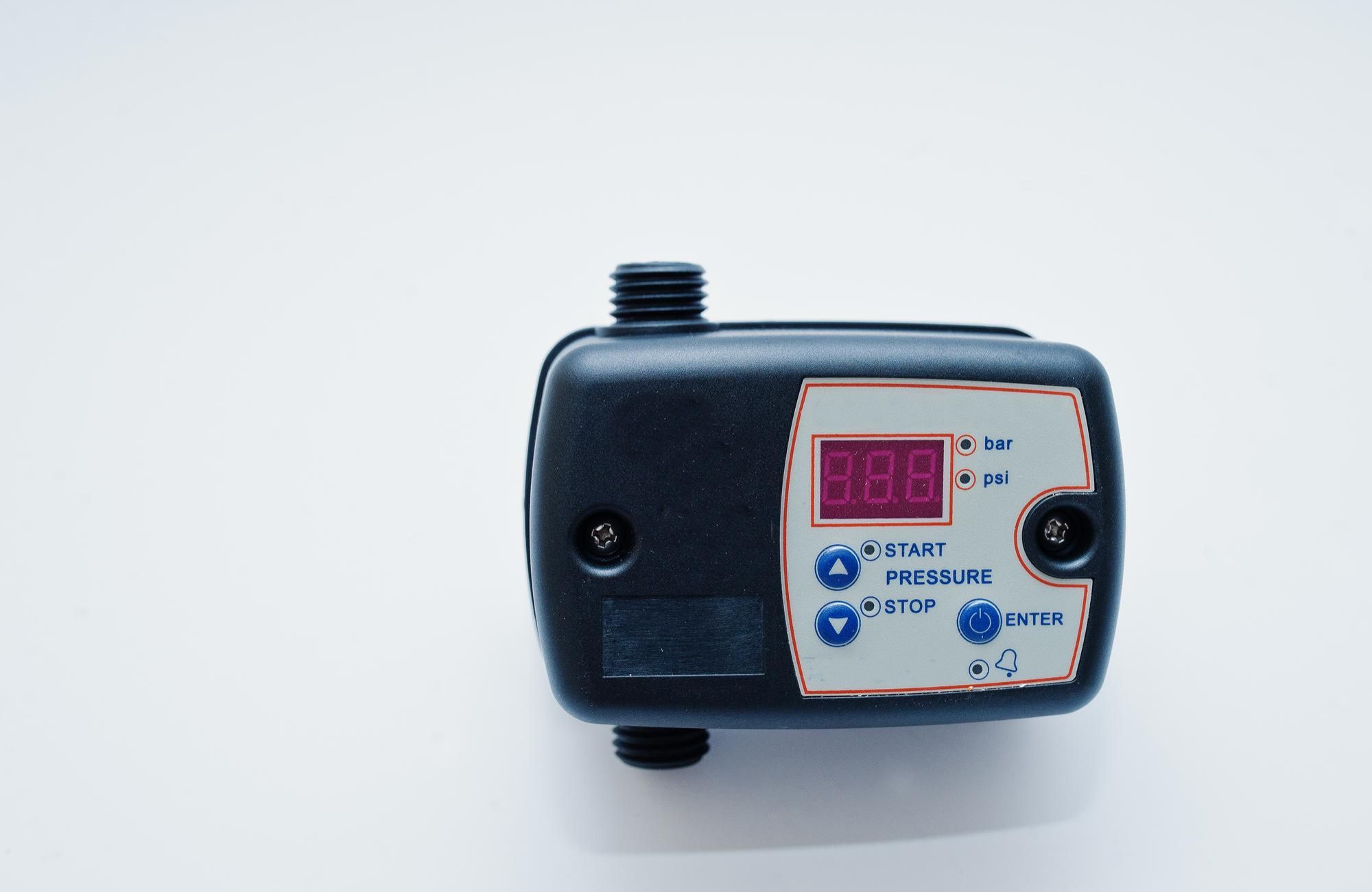
A well pressure switch automatically starts and stops the pump according to pressure in the water system. When pressure falls to the cut-in setting, the switch calls for the pump to run. When pressure climbs to the cut-out setting, the switch stops the pump. This cycle helps maintain usable household water pressure.
Many residential systems use settings such as 20/40, 30/50, or 40/60 PSI. The first number is the cut-in pressure and the second is the cut-out pressure. These numbers are common configurations, not recommendations for every home.
The pressure switch also works closely with your pressure tank system. On many conventional precharged systems, the tank’s air charge is set 2 PSI below the switch cut-in pressure while the tank is empty of water. Pentair, for example, lists 28 PSI tank precharge for a 30/50 system and 38 PSI for a 40/60 system.
Always follow the requirements for your specific tank, pump, and control system because equipment designs vary.
Signs a Well Pressure Switch May Be Failing
A malfunctioning pressure switch can cause the pump to start at the wrong pressure, fail to start, fail to stop, or behave inconsistently. During a professional inspection, burned contacts, corrosion, moisture, or debris may also indicate a problem. Homeowners should not remove the switch cover or inspect internal electrical components themselves. None of these symptoms or findings alone confirms that the pressure switch is faulty.
Short cycling can also point to a pressure tank problem, such as incorrect air pressure or a waterlogged tank. Because several well system issues can create similar symptoms, it is better to test the system before replacing the switch.
Low or missing water pressure can also come from the pump, electrical supply, damaged piping, a clogged pressure-sensing connection, a faulty gauge, or well-yield conditions. Testing helps narrow down the cause and reduces the chance of replacing a working component.
What You Need Before Testing a Pressure Switch
Testing a pressure switch involves both water pressure and electrical components, so safety should come first. You can watch the pressure gauge while the system is operating normally, but before removing the switch cover or touching any wires or terminals, turn off power at the breaker and confirm that the circuit is no longer energized.
For basic homeowner checks, use the system’s existing pressure gauge, a flashlight, and the manufacturer’s instructions for your equipment. Record the pressure readings where the pump starts and stops without removing electrical covers. Screwdrivers, multimeters, and other tools used to inspect or test internal electrical components should be reserved for qualified professionals.
If you are unsure about the wiring, the switch condition, or the pressure readings, it is safer to stop and have the system checked professionally. Housatonic Valley Well Pump Services can inspect the pressure switch along with the pressure tank, pump, and related components to help identify the actual cause of the problem instead of replacing parts unnecessarily.
Testing a Pressure Switch: Step-by-Step Process
Testing a pressure switch starts with checking whether the well pump turns on and off near the expected pressure settings. For most homeowners, the best place to start is with the pressure gauge and pump behavior. These basic observations can tell you a lot before you touch any electrical components.
- Identify the pressure settings. Check the switch label or manufacturer information for the intended cut-in and cut-out pressures. Common settings include 30/50 and 40/60 PSI, but not every well system is set up the same way.
- Check the pressure gauge. Make sure the gauge is readable and responds when water is used. A stuck or inaccurate gauge can make a working pressure switch appear faulty.
- Watch the cut-in pressure. With the switch cover in place, open a faucet and watch the pressure drop. Note the PSI where the well pump starts running.
- Watch the cut-out pressure. Close the faucet and allow the pump to refill the pressure tank. Note the PSI where the pump shuts off.
- Repeat the test. Run the system through another cycle and compare the readings. The pump should generally start and stop at similar pressure points each time.
- Keep the switch cover in place during homeowner checks. After observing the pressure gauge and pump behavior, record any unusual readings or cycling patterns. Do not remove the electrical cover or touch the wiring or contacts.
- Have a qualified professional inspect the switch. A technician can safely isolate the electrical supply, verify that the circuit is de-energized, and inspect the contacts, wiring, and pressure-sensing connection for conditions that may affect operation.
- Leave electrical testing to a qualified professional. Continuity testing can help determine whether switch contacts open and close correctly, but it requires appropriate testing procedures, equipment, and knowledge of the specific switch. Electrical readings must be considered alongside system pressure and pump behavior.
Compare the pump’s starting and stopping pressures with the expected switch settings, then look for patterns across repeated cycles. The table below explains what different pressure readings and pump behaviors may indicate. These observations can help narrow down the cause, but they do not confirm a specific component failure.
Common Pressure Switch Test Results and Possible Causes
| What You Observe | What It May Indicate |
| Pump starts and stops near the expected pressure settings | The pressure switch may be operating normally, although this does not rule out other system problems. |
| Pressure drops below the expected cut-in point, but the pump does not start | A problem with the pressure switch, electrical supply, wiring, pump controls, or pump itself. |
| Pump continues running beyond the expected cut-out pressure | A switch or pressure-sensing problem, an inaccurate gauge, or a pump that cannot reach the intended pressure. If pressure continues rising above the expected shutoff point, shut off power if it is safe to do so and contact a professional. |
| Pump starts and stops rapidly | A pressure tank problem, incorrect tank air charge, restricted sensing connection, or another system fault. |
| Pressure readings vary between cycles | An inaccurate gauge, a restricted pressure-sensing connection, or inconsistent control operation. |
These observations can help narrow down possible causes, but they cannot confirm which component has failed. Avoid adjusting or replacing the pressure switch until the system has been properly evaluated.
What Do Your Pressure Switch Test Results Mean?
An unexpected reading does not always mean the pressure switch needs to be replaced. The switch, pressure tank, pump, gauge, wiring, and pressure-sensing connection all work together, so a problem in one part of the system can affect how the others behave. The goal is to look for a consistent pattern rather than judge the switch from a single reading.
If the pump starts and stops close to the expected cut-in and cut-out settings, the switch may be operating normally. If pressure drops below the usual cut-in point and the pump does not activate, the issue could involve the switch, electrical supply, wiring, pump controls, or the pump itself. If the readings vary from one cycle to the next, check whether the gauge is responding accurately and whether the pressure-sensing line is clear and securely connected.
Rapid cycling can point to a pressure tank problem, restricted sensing connection, or another system issue rather than the switch alone. If pressure rises past the expected cut-out point and the pump keeps running, shut the system down and have the system inspected. Repeatedly adjusting the switch without identifying the cause can make the problem harder to diagnose.
Should You Adjust the Pressure Switch?
Do not change pressure settings simply because the gauge reading differs from what you expected. Switch construction, pump capability, tank precharge, system pressure limits, and manufacturer instructions all affect whether an adjustment is appropriate. Changing one setting without considering the rest of the system can create new problems.
Adjustment methods also vary. For example, Schneider Electric’s Square D Pumptrol instructions distinguish between the main range adjustment and the differential adjustment and tell users to check switch operation several times after changes.
For that reason, use the instructions for the exact pressure-switch model rather than a generic rule about turning a nut clockwise or counterclockwise.
When Should You Call a Well Pump Professional?
Call a professional when testing requires live electrical measurements, the pump will not shut off, wiring or contacts are badly damaged, the system repeatedly short cycles, or pressure behavior remains abnormal after basic checks. The pressure switch may be only one part of the problem, and replacing it without testing the rest of the system can leave the original fault unresolved.
Housatonic Valley Well Pump Services is owner-operated and brings more than 20 years of hands-on experience to Connecticut well systems. Ralph Espinal is licensed in Connecticut and New York and holds full J1 certification. The company also offers 24/7 emergency availability, free quotes, and upfront pricing.
Get Help With Well Pressure Problems in Connecticut
Testing a pressure switch can tell you whether your pump is starting and stopping at the expected pressures, but it does not always identify the cause of a well-system problem by itself. Pressure tanks, pumps, wiring, gauges, controls, piping, and well conditions can produce similar symptoms.
If you’re experiencing low water pressure, frequent pump cycling, or no water at your home in Litchfield County or Upper Fairfield County, Housatonic Valley Well Pump Services can inspect your well pump system and help identify the cause. Contact us for a free quote or 24/7 emergency assistance for urgent no-water problems.
FAQs
Will a well pump run without a pressure switch?
A conventional well pump may be capable of running if controlled another way, but the pressure switch normally provides automatic start-and-stop control in a standard pressure-tank system. Bypassing it can remove an important control function and may allow the pump to operate improperly. Do not bypass a pressure switch as a troubleshooting shortcut.
Why is there no water pressure even though I have a well?
No water pressure can come from several causes, including loss of electrical power, pump problems, pressure-switch faults, pressure-tank issues, wiring failures, piping problems, or conditions in the well itself. Symptoms alone cannot tell you which component has failed. Start with the breaker and pressure gauge, then have the system tested if the cause is not obvious.
How many ohms should a pressure switch have?
There is no single resistance value that applies to every pressure switch. During a properly performed, de-energized continuity test, closed contacts should generally show very low resistance, while open contacts should read as an open circuit. However, continuity results alone cannot confirm that the pressure switch or the entire well pump system is operating correctly. A qualified professional should perform electrical testing and interpret the results alongside pressure readings, pump behavior, and the manufacturer’s specifications.
Can a bad pressure tank make a pressure switch seem faulty?
Yes. A waterlogged tank, failed bladder, or incorrect air charge can cause abnormal pump cycling that may look like a pressure-switch problem. Because the tank and switch work as one pressure-control system, both should be checked before replacing parts. Manufacturer troubleshooting guidance specifically identifies pressure-tank problems as a possible cause of frequent cycling.