


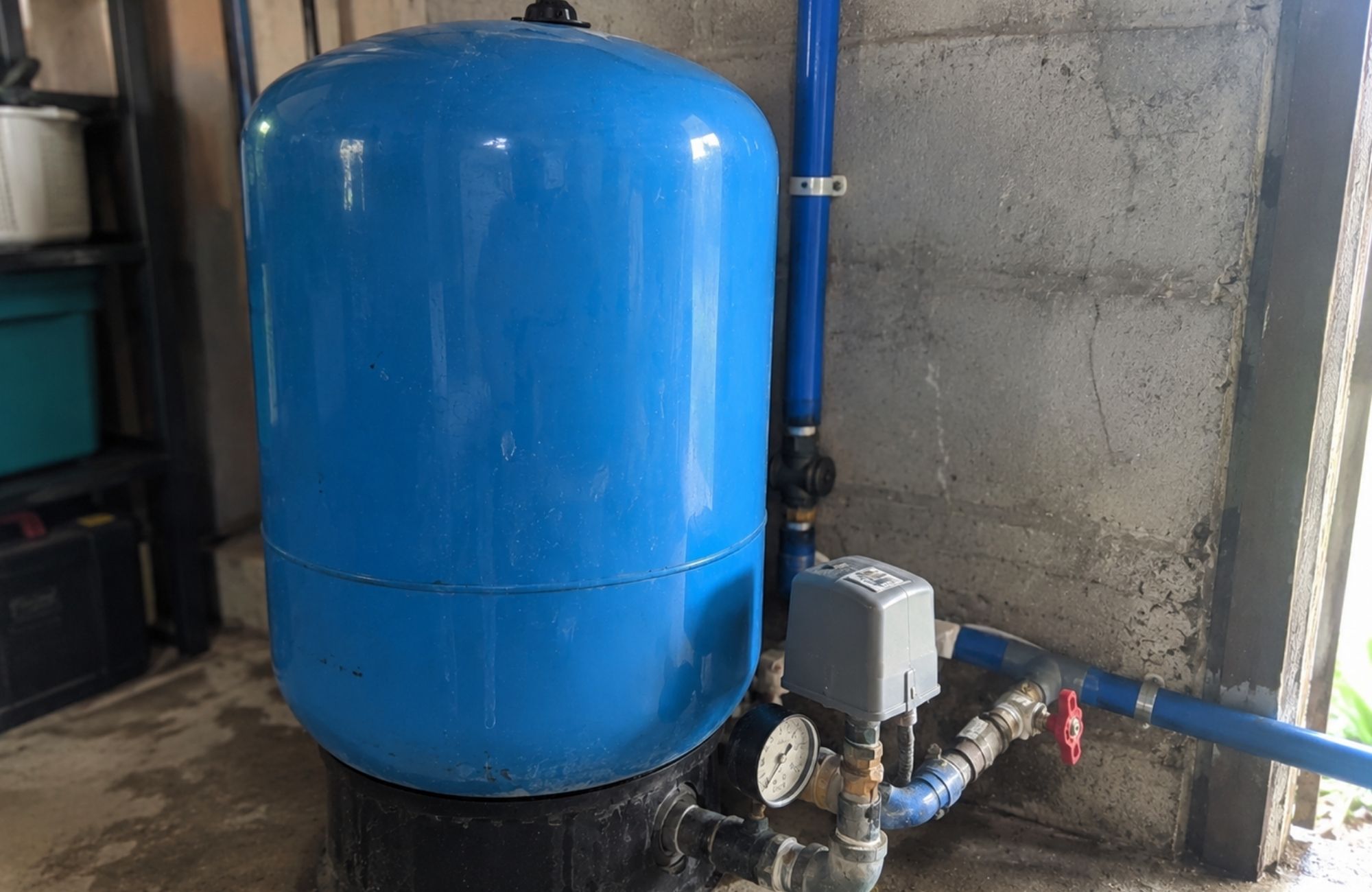
If your home depends on a private well, you may eventually ask, how long do bladder tanks last? A general industry planning range for residential well pressure tanks is about 5 to 15 years, but there is no universal manufacturer replacement age. Tank construction, pump cycling, sizing, air pressure, water conditions, and the installation environment can all affect how long a tank remains serviceable.
Age alone does not tell you whether a tank has failed. Changes such as rapid pump cycling, unstable water pressure, visible corrosion, or repeated loss of air pressure deserve closer attention. If your well system is showing these symptoms, a professional pressure tank inspection and replacement evaluation can help identify the actual cause before equipment is replaced.
How Long Do Bladder Tanks Last?
A commonly cited planning range for bladder-type well pressure tanks is about 5 to 15 years, although some last longer and others fail earlier. There is no universal expiration date set by tank manufacturers. The actual lifespan depends on tank construction, system sizing, pump cycling, pre-charge settings, water conditions, and how the equipment has been maintained.
Homeowners often use bladder tank as a general name for modern well pressure tanks. Some tanks contain a flexible bladder, while others use a diaphragm to keep the water separate from the compressed air. Both designs help maintain water pressure and reduce unnecessary well pump starts.
A tank that has reached 10 or 15 years of service does not automatically need replacement if it is still working properly. At the same time, a newer tank can develop problems if it is incorrectly sized, loses its air charge, corrodes, or has an internal component failure. Condition and system performance are better indicators than age alone.
What Affects the Lifespan of a Bladder Tank?
The life of a bladder tank depends largely on how often it cycles, whether it is correctly sized, whether the air pre-charge matches the pressure switch, and the conditions around the tank. Water chemistry and deposits can also affect parts of the well system, so two tanks installed at the same time may age very differently.
Pump Cycling and Tank Size
A pressure tank stores a usable amount of water under pressure so the well pump does not need to start every time you open a faucet. This usable amount is called drawdown. The tank releases water until pressure reaches the pressure switch’s cut-in setting, which tells the pump to start.
Correct tank sizing depends on factors such as the pump’s flow rate, pressure switch settings, and the desired minimum pump run time. A larger tank generally provides more drawdown and can reduce the number of pump starts. Choosing a tank only by its stated gallon capacity can be misleading because total tank volume and usable drawdown are not the same.
If a tank is too small for the pump or loses much of its usable drawdown, the pump may begin turning on and off more often. This condition is called short cycling, and repeated pump starts can add wear to the pumping system.
Air Pre-Charge and Pressure Switch Settings
A pre-charged pressure tank uses compressed air to help move stored water into your plumbing system. For many conventional well systems, the tank’s air pre-charge should be set 2 PSI below the pressure switch cut-in setting. For example, a system with a 40 PSI cut-in setting would commonly use a 38 PSI pre-charge. Amtrol’s well tank guidance explains this relationship for applicable pressure tanks.
The pre-charge should be checked only after the pump is turned off and water pressure has been drained from the tank. If the tank is corroded, damaged, or repeatedly losing air pressure, avoid adding air until the system has been inspected, since the problem may involve the tank itself or another well-system component.
Water Quality and Tank Environment
Water conditions can affect well equipment over time. The Connecticut Department of Public Health notes that iron and manganese deposits may collect inside plumbing lines, pressure tanks, water heaters, and treatment equipment. These deposits may reduce system performance and contribute to pressure problems.
Corrosive water is another concern. Water corrosivity can be influenced by pH, hardness, alkalinity, chloride, and other characteristics. If you notice recurring rust-colored water, staining, scale, or corrosion problems, water testing can help determine whether water chemistry is contributing to issues in the well system.
What Are the Signs of a Failing Bladder Tank?
Possible signs of a failing bladder tank include rapid pump cycling, sudden pressure changes, repeated loss of air charge, visible corrosion, and leaks around the tank. These symptoms should be investigated, but they do not always mean the bladder itself has failed. Pumps, pressure switches, plumbing leaks, and other system problems can cause similar symptoms.
Looking at several symptoms together gives a better picture than relying on one quick test. A technician can compare tank pressure, pressure-switch operation, pump performance, and system demand before recommending pressure tank replacement.
| What you notice | Possible cause | Recommended next step |
| Pump turns on and off rapidly | Low air charge, reduced drawdown, undersized tank, switch issue, leak, or tank failure | Check the tank, pump, switch, and plumbing as a system |
| Water pressure rises and falls quickly | Reduced tank capacity or another pump/control problem | Observe the pressure gauge during a pump cycle |
| Low water pressure | Tank issue, pump problem, clogged treatment equipment, leak, or well-yield issue | Have the source of the pressure loss tested |
| Visible rust or corrosion | Moisture exposure or deterioration of the tank shell | Have the tank inspected before adding air |
| Water around the tank | Fitting, connection, tank shell, or nearby plumbing leak | Locate the source before deciding on replacement |
| Air pressure will not stay correct | Air valve leak or internal tank problem | Test according to the tank manufacturer’s procedure |
Rapid Pump Cycling
Short cycling is one of the most common warning signs associated with pressure tank problems. Amtrol lists rapid pump cycling and low system pressure among signs that a well tank may need replacement. The manufacturer also notes that frequent cycling may come from an undersized tank, loss of air charge, incorrect pressure switch settings, or increased water demand.
This is why frequent clicking does not confirm a ruptured bladder by itself. The tank may be involved, but the pressure switch, pump, plumbing, or another part of the water system could be responsible.
Fluctuating or Low Water Pressure
A healthy conventional well system normally operates between the pressure switch’s cut-in and cut-out settings. You may notice pressure changing somewhat as the pump cycles, but large swings, sudden drops, or very short cycles can point to a problem.
Low pressure alone is not enough to diagnose the tank. Restrictions in plumbing, water treatment equipment, a weak pump, low well yield, incorrect switch settings, or leaks can also reduce water pressure.
Rust, Corrosion, or Leaks
Visible rust deserves attention, especially when it is spreading, flaking, or associated with dampness. A pressure tank is a pressurized vessel, so deterioration of the shell should not be treated as a cosmetic issue.
Manufacturer safety instructions warn against adding air pressure to certain tanks when visible exterior corrosion is present or when the system has experienced an unexplained loss of air pressure or shorter pump cycles. Those conditions can indicate internal deterioration that requires professional evaluation.
If your tank is showing several of these warning signs, a well pressure tank service appointment can help determine whether the problem calls for adjustment, repair, or replacement.
How Can You Check a Well Pressure Tank?
A basic pressure tank check starts by watching the pressure gauge and pump cycle rather than assuming the tank is bad from one symptom. A proper pre-charge test requires shutting off power to the pump, releasing the water pressure, and following the tank manufacturer’s procedure. Damaged or heavily corroded tanks should be left to a qualified professional.
Watch the Pressure Gauge
When you open a faucet, pressure should gradually fall toward the switch’s cut-in setting. The pump starts at cut-in, then raises the system pressure until the switch reaches its cut-out setting and shuts the pump off.
If the gauge falls and rises very quickly while the pump repeatedly turns on and off, the tank may have too little usable drawdown. That observation helps identify a cycling problem, but more testing is needed to find its cause.
Check the Air Pre-Charge Correctly
Pentair instructs users to shut off electrical power to the pump, open a faucet near the tank, and drain the tank completely before checking its air pressure. For applicable systems, the air charge should then read 2 PSI below the pump pressure switch’s cut-in setting.
A pressure gauge reading taken while the tank still contains pressurized water does not give the correct pre-charge measurement. You should also avoid opening electrical controls or changing pressure switch settings unless you have the training to work safely with the system.
When Is It Time to Replace a Bladder Tank?
Pressure tank replacement makes sense when testing confirms a failed internal component that cannot be serviced, the tank shell is leaking or badly corroded, or the tank can no longer maintain proper pressure and drawdown. Age can help guide the decision, but replacement should be based on tank condition, system testing, and equipment design.
A low air charge alone may not mean the tank needs replacement. The problem could come from an air valve leak, an incorrect initial setting, or another serviceable condition. The cause should be confirmed before installing a new tank.
Some Tank Problems Can Be Repaired
Not every tank design is built the same way. Some models have serviceable or replaceable internal air cells or bladders, while others use sealed internal components that are not intended for field replacement. Pentair, for example, publishes replacement procedures for the air cell in certain Pro-Source pressure tanks.
The model number and manufacturer instructions should guide the repair decision. A repair that makes sense for one bladder tank may not be available for another.
Replacement Is Also a Sizing Opportunity
If the existing tank is undersized, installing another tank with the same capacity may bring the same cycling problem back. Correct sizing should account for pump flow rate, pressure-switch settings, required pump run time, and system demand.
A replacement is also a good time to inspect the pressure switch, gauge, tank tee, relief valve, fittings, and pump operation. Pressure tank problems often make more sense when the entire well system is evaluated together.
How Can You Help a Bladder Tank Last Longer?
The best way to support pressure tank life is to keep the full well system working within the equipment manufacturer’s specifications. Correct sizing, normal pump cycling, the proper air pre-charge, dry surroundings, and prompt attention to leaks or corrosion can reduce unnecessary stress on the tank and well pump.
Maintenance intervals can vary by tank model. For example, one Pentair Pro-Source manual calls for checking the tank’s air charge every six months, while broader groundwater guidance recommends an annual inspection of the private well system. Follow the instructions for your specific equipment rather than relying on one maintenance schedule for every tank.
Annual well inspections can also catch problems outside the tank. The National Ground Water Association recommends checking system output, pump performance, the pressure tank, pressure-switch contacts, and water quality as part of regular well maintenance.
For Connecticut private wells, routine water testing can help identify changing conditions that may affect plumbing or treatment equipment. The state recommends regular testing because private well water quality can change over time.
Know When Your Pressure Tank Needs Attention
A bladder tank does not need replacement simply because it reaches a certain age. Pay more attention to how the tank and pump are working together, including pump cycling, pressure changes, pre-charge, corrosion, and leaks. When several warning signs appear at once, testing can show whether the problem is the tank or another part of the well system.
Housatonic Valley Well Pump Services provides owner-operated well and pressure tank service backed by more than 20 years of hands-on experience, free quotes, and upfront pricing. Contact us to schedule a well system evaluation or request a quote.
FAQs
How do you tell if your bladder tank is going bad?
Common warning signs include rapid pump cycling, fluctuating or low water pressure, repeated loss of air pressure, leaks, and serious corrosion. Amtrol identifies rapid cycling and low system pressure as possible signs that a tank needs replacement, but similar symptoms may come from pressure-switch settings, an undersized tank, plumbing leaks, or other well-system problems, so testing should confirm the cause before the tank is replaced.
How much does it cost to have a bladder tank replaced?
National 2026 cost data from Angi places typical well pressure tank replacement at about $300 to $700, but this is not a Connecticut-specific quote. Tank type, capacity, installation access, local labor costs, fittings, pressure controls, and any additional well-system repairs can all change the final price, so an onsite estimate is more useful than a national average.
How do I tell if I need a new well pressure tank?
You may need a new pressure tank if testing confirms an internal failure, the tank is leaking, serious corrosion has weakened the shell, or the tank can no longer maintain the correct pressure and drawdown. Rapid cycling and pressure changes are reasons to inspect the system, but they do not prove by themselves that the tank has failed because the pressure switch, pump, plumbing, or well can produce similar symptoms.
How often should you replace a pressure tank?
There is no required replacement schedule for every well pressure tank. A general planning range is about 5 to 15 years, but some tanks may fail sooner or continue operating beyond that range. Instead of replacing a healthy tank solely because of its age, monitor older equipment for changes in pump cycling, pressure, air charge, leakage, and corrosion.
Can a bad pressure tank damage a well pump?
A pressure tank problem can cause the well pump to start and stop far more often than intended, which adds unnecessary operating cycles to the pump motor. Pressure tanks provide drawdown between pump cycles specifically to reduce frequent starting, so persistent short cycling should be investigated promptly, although the tank should not be blamed until the full system has been checked.