


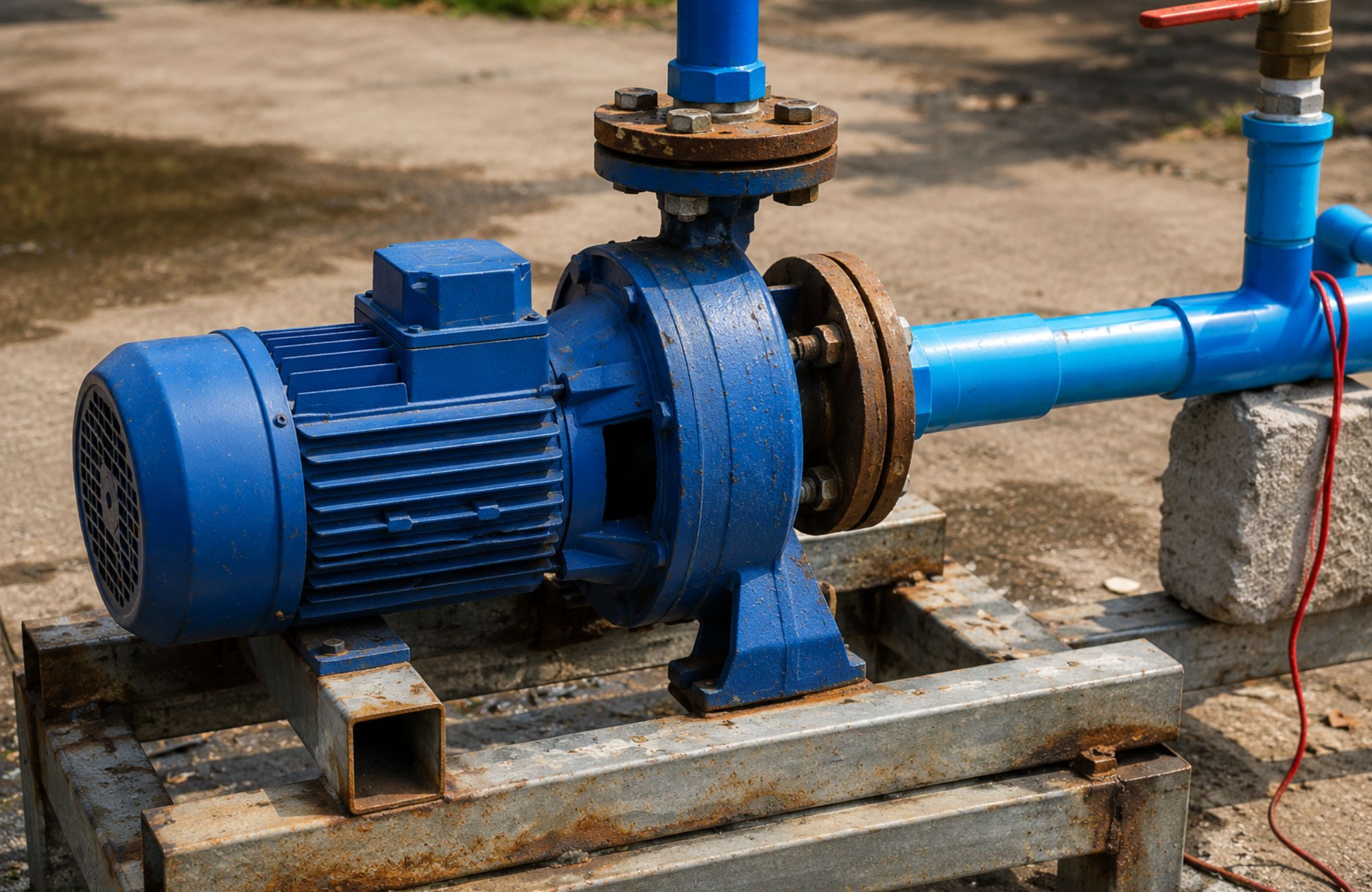
A well pump making noise may have a minor vibration problem, or the sound may point to pressure trouble, mechanical wear, restricted water flow, or an electrical fault. For homeowners in New Milford, CT, the first step is to identify the sound and check whether water pressure, flow, or pump cycling has also changed.
Do not open electrical covers or take the pump apart based on sound alone. Arrange a professional inspection when the noise comes with no water, severe pressure loss, grinding, overheating, smoke, or a breaker that keeps tripping.
Is It Normal to Hear Your Well Pump?
Some sound is normal in a working well system. You may hear a pressure switch click, water move through nearby pipes, or an above-ground jet pump produce a steady motor hum. Loud, new, repeated, or changing noises deserve attention, especially when they occur with weak pressure, air at the faucets, or frequent pump starts.
The type of pump affects what you hear. A jet pump sits above ground and uses suction to draw water toward the home, so its motor is usually easy to hear. A submersible pump sits underwater inside the well and pushes water upward, which often makes the pump itself much less noticeable inside the house.
Pay attention to changes rather than volume alone. A familiar low hum may be normal for your system. A hum that suddenly becomes louder, lasts longer, or occurs without normal water delivery may point to a developing problem.
What Different Well Pump Noises May Mean
The sound can help narrow the problem, but it cannot confirm which part has failed. A pressure tank, pressure switch, control box, motor, check valve, pipe, suction line, or changing water level may create similar symptoms. Consider the sound together with pressure, water flow, cycling frequency, and other changes.
Listen from a safe distance and note when the noise begins. Check whether it happens as the pump starts, while water runs, when the pump stops, or when no fixtures are open.
| Sound | Possible causes | Other signs to watch for | Suggested response |
| Grinding or screeching | Worn bearings, internal contact, debris, or motor trouble | Heat, vibration, low flow, or a burning smell | Turn the system off and arrange service |
| Humming or buzzing | Motor strain, low voltage, control-box trouble, or a pump that cannot start | No water, a tripped breaker, or overheating | Avoid repeated restart attempts |
| Rapid clicking | Short cycling, pressure-switch trouble, low tank air charge, or a damaged tank | Pressure gauge moving quickly or the pump starting every few seconds | Schedule a tank and control inspection |
| Banging or rattling | Water hammer, check-valve movement, loose piping, or mounting vibration | Noise when water flow starts or stops | Check visible pipe supports and seek help if severe |
| Hissing or gurgling | Air leak, low water level, lost jet-pump prime, or restricted flow | Sputtering faucets, uneven flow, or falling pressure | Reduce water use and arrange testing |
| Gravel-like popping | Cavitation or a pump that is not receiving enough water | Vibration, reduced flow, or unstable pressure | Stop heavy water use and have the system evaluated |
Grinding should not be treated as a harmless age-related sound. It can result from worn bearings, debris, or internal parts making contact. Continued operation may increase mechanical stress and lead to motor burnout or more extensive damage.
Rapid clicking often points beyond the pump itself. A pressure tank that has lost its proper air charge may cause the pump to start and stop too often. A failing pressure switch, plumbing leak, damaged tank bladder, or incorrect system settings may produce similar short-cycling symptoms.
Why Is the Well Pump Humming but Not Pumping Water?
A well pump that hums without delivering water may be receiving power but failing to start or move water correctly. Possible causes include low voltage, a faulty capacitor or control component, a seized impeller, motor trouble, lost prime in a jet pump, or a low-water condition inside the well.
Do not keep turning the pump off and on in an attempt to make it start. Repeated restart attempts can place extra strain on the motor and electrical components. If the pressure gauge does not rise and the home has little or no water, turn off the pump and arrange professional testing.
A technician may need to check voltage, motor amperage, the control box, pressure-switch response, water level, and pump operation. Those tests help separate an electrical problem from a mechanical fault or water-supply issue.
Why Is the Pressure Switch Clicking Rapidly?
Rapid clicking usually means the pump is short cycling. Short cycling occurs when the pump starts and stops more frequently than the system was designed to operate. It can shorten pump life because each startup creates heat and mechanical stress.
Common causes include:
- A waterlogged or damaged pressure tank
- Incorrect pressure-tank air charge
- A failing or obstructed pressure switch
- A leak in the plumbing or well system
- A faulty check valve
- A tank that is too small for household demand
- Sudden pressure changes caused by restricted water flow
There is no single pressure range that applies to every private well system. Adjustments should follow the tank manufacturer’s instructions and should be made only after the tank has been safely isolated and drained.
What Can You Check Safely?
Start with observations that do not expose you to electricity, pressurized parts, or moving equipment. The goal is not to diagnose the failed component. It is to collect useful details and identify conditions that may make continued operation unsafe.
Check the system while keeping your hands away from wiring, switches, and hot motor surfaces. Write down what you find so the sound can be compared with pressure and cycling behavior.
- Test more than one faucet. A problem at one fixture may be a clogged aerator. Weak flow throughout the home points toward the main water system.
- Watch the pressure gauge. Note whether pressure rises normally, remains near zero, drops when no water is being used, or moves up and down quickly.
- Time the pump cycles. Repeated starts every few seconds may indicate short cycling.
- Look for visible leaks. Check around the pressure tank, exposed pipes, filters, and accessible fittings.
- Listen for pipe vibration. A loose clamp or a pipe touching a wall can make normal pump vibration sound much louder.
- Check the breaker once. Do not continue resetting a breaker that trips again.
- Record the sound. A short recording may help identify whether the noise comes from the tank area, pipes, control equipment, or an above-ground pump.
Do not change pressure-switch settings, add air to a damaged or corroded tank, open a control box, or disassemble the pump unless you are trained to work on well systems.
When Should You Turn Off a Noisy Well Pump?
Turn off the pump when the noise suggests mechanical contact, electrical trouble, dry running, or severe pressure loss. Grinding, a burning smell, smoke, repeated breaker trips, intense vibration, or humming without rising pressure may place the motor and other components at risk.
Arrange urgent service when:
- The home has no water.
- The pump runs but pressure does not rise.
- Grinding or screeching continues.
- The breaker trips again after one reset.
- The motor or control area smells hot or burned.
- Water sputters while the pump runs for long periods.
- The pump starts and stops every few seconds.
- Water appears around electrical controls.
- The pressure tank is leaking or visibly damaged.
Reduce household water use if the system begins pulling air or losing pressure during heavy demand. The state’s overview of groundwater flow in Connecticut explains that groundwater is recharged mainly by precipitation and that pumping lowers the water table around a well. When water is withdrawn faster than the well can recover, flow may weaken and the pump may experience added strain.
How Is a Noisy Well Pump Diagnosed?
A technician should test the whole system instead of recommending a replacement based only on sound. Diagnosis may include pressure readings, tank performance, pressure-switch response, voltage, motor amperage, water flow, well level, pipe condition, and control-box tests.
For example, rapid clicking may come from a pressure tank that no longer provides proper drawdown. A humming motor may have a power problem, control fault, blocked impeller, or mechanical issue. Gurgling may involve air in a jet-pump suction line, a low-water condition, a leaking check valve, or another flow problem.
Testing also helps determine whether repair or replacement makes sense. Pump type, age, condition, well depth, well yield, household demand, wiring, plumbing conditions, and system sizing can all affect the recommendation.
Get Help With a Noisy Well Pump
A well pump making unusual noises may have a problem with the pressure tank, pressure switch, check valve, pump motor, or household plumbing. A professional inspection can identify the source of the sound, restore reliable operation, and reduce the risk of a sudden no-water problem.
Housatonic Valley Well Pump Services helps homeowners in New Milford and nearby Connecticut communities diagnose and repair noisy well pump systems. Contact us to schedule an inspection or request 24/7 emergency service.
FAQs
What does a failing well pump sound like?
A failing well pump may grind, screech, buzz, rattle, or produce a gravel-like sound. It may also become louder than usual or run longer while water pressure falls. Because several parts can make similar noises, pressure, electrical performance, flow, and tank operation should be tested before replacing the pump.
What does a water pump sound like when it is going bad?
A pump with mechanical wear may make grinding, scraping, or high-pitched noises. Electrical or starting trouble may cause humming or buzzing without normal water delivery. Clicking every few seconds often points to short cycling, which may involve the pressure tank, pressure switch, a leak, or another system condition.
Should you be able to hear your well pump?
You may hear an above-ground jet pump hum while it runs. With a submersible system, you are more likely to hear the pressure switch click and water move through nearby pipes than the pump deep inside the well. Any new, harsh, or rapidly repeating sound should be checked, even when some system noise has always been present.
What are the signs that a well pump is failing?
Possible signs include no water, weak or changing pressure, long run times, short cycling, unusual noise, air at the faucets, and repeated breaker trips. These symptoms can also come from a pressure tank, switch, control box, pipe leak, low water level, or clogged filter. A full system test is needed to identify the cause.
Why is my well pump clicking on and off?
A pump that clicks on and off every few seconds is likely short cycling. Common causes include a damaged pressure tank, low air charge, pressure-switch trouble, a plumbing leak, or a faulty check valve. Prompt testing can help prevent unnecessary motor wear.
Can a noisy well pump still work?
A noisy pump may continue delivering water for a time, but that does not mean the system is operating correctly. Worn bearings, cavitation, electrical strain, and short cycling can worsen while the pump still runs. New grinding, buzzing, banging, or rapid clicking should not be ignored.