


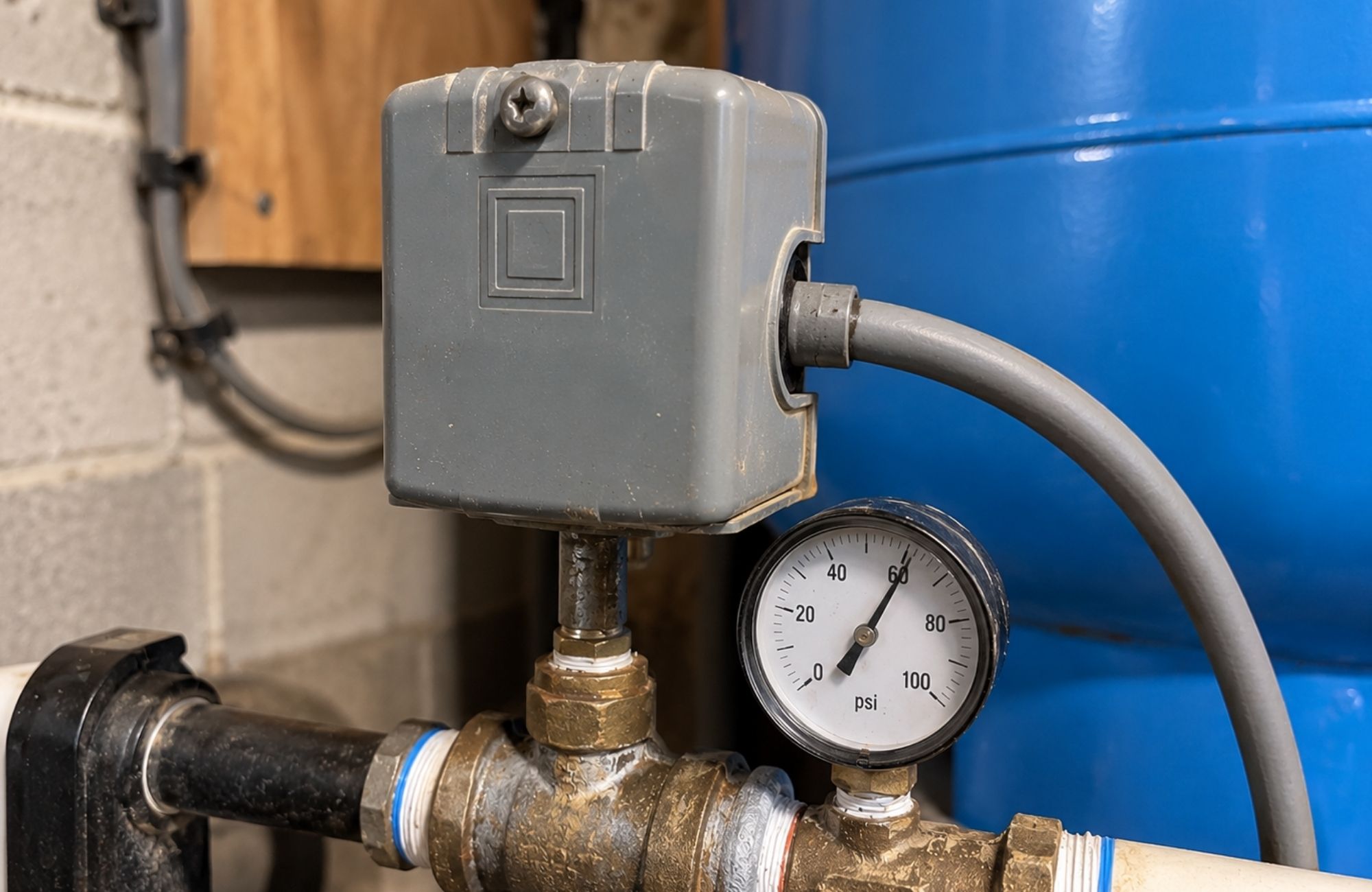
Common well pump pressure switch problems and symptoms include no water, low or changing pressure, rapid pump cycling, repeated clicking, and a pump that will not start or shut off. These warning signs may point to the pressure switch, but problems with the pressure tank, well pump, plumbing system, check valve, or electrical controls can cause similar symptoms.
For Connecticut homeowners with private wells, watching the pressure gauge and pump behavior can help narrow down the problem before parts are replaced. If you lose water completely, the pump runs continuously, or you notice a burning smell or repeated breaker trips, professional evaluation is safer than continuing to troubleshoot electrical components yourself.
How Pressure Switch Problems Affect a Well Pump
A well pump pressure switch tells the pump when to start and stop as water pressure changes. If the switch does not respond at the correct pressure, the pump may fail to start, keep running, or cycle at the wrong time.
Common settings include 30/50 and 40/60 PSI, which refer to the approximate cut-in and cut-out pressures. Watching the pressure gauge can help show whether the switch is cycling normally or whether another part of the well system may be causing the problem.
A single low pressure reading does not confirm switch failure. For example, pressure below 40 PSI can still be normal on a 30/50 system before the pump turns on.
Well Pump Pressure Switch Problems: Symptoms to Watch For
The most common well pump pressure switch problem symptoms are a pump that will not start, a pump that runs continuously, rapid cycling, changing water pressure, and unusual noises such as clicking or chattering. Burned or corroded contacts can provide another clue, but no single symptom confirms the cause.
The best troubleshooting approach is to compare the symptom with gauge readings and pump behavior. A pressure tank, pump, plumbing leak, electrical circuit, or well problem can create many of the same warning signs.
| Symptom | Possible Pressure Switch Problem | Other Possible Causes |
| Pump will not start | Contacts fail to close or switch does not sense pressure | Breaker, loss of power, wiring, pump motor, controls |
| Pump will not stop | Contacts stick or fail to open | Leak, weak pump, low well yield, incorrect setting |
| Pump short cycles | Switch operates inconsistently | Low tank air charge, failed bladder or diaphragm, leak |
| Water pressure rises and falls | Unstable switching | Pressure tank, restriction, gauge, pump performance |
| Repeated clicking or chattering | Worn contacts or sensing problem | Rapid pressure changes, wiring issue, tank problem |
The Well Pump Will Not Start
If water pressure drops below the expected cut-in point and the pump stays off, the pressure switch could be part of the problem. Corrosion, worn contacts, a blocked sensing connection, or a mechanical problem inside the switch may prevent it from responding correctly.
However, a loss of power, tripped breaker, damaged wiring, failed pump motor, or another control issue can cause the same symptom. If you have a submersible pump, the problem may also involve components away from the visible pressure-switch assembly.
The gauge is useful here. If pressure is below cut-in and the pump still does not start, the switch is not the only component that should be checked. Further testing can help determine whether the problem is in the switch, electrical circuit, pump, or controls.
The Well Pump Runs Without Shutting Off
If the pump reaches its normal cut-out pressure but keeps running, the pressure switch or another control may be the problem. Stuck or damaged contacts can sometimes keep power flowing after the system should have shut the pump off.
If the gauge never reaches cut-out, the cause may be elsewhere. A leak, weak pump, low well yield, plumbing restriction, or incorrect setting can keep the system from building enough pressure.
Avoid opening the pressure switch or touching electrical components. If the pump behaves abnormally or the cause is unclear, professional testing can help determine whether the problem is the switch, tank, pump, plumbing, or controls.
The Well Pump Turns On and Off Rapidly
Frequent starting and stopping, also called well pump cycling on and off, is known as short cycling. The pressure switch can contribute, but the pressure tank is often part of the diagnosis.
When a tank loses its proper air charge or its bladder or diaphragm develops a problem, pressure can rise and fall too quickly. The switch may simply be reacting to those rapid changes rather than causing them.
A pump that cycles frequently should not be diagnosed from the clicking sound alone. Tank air charge, leaks, pump performance, switch operation, and household water use may all need to be checked together.
Your Water Pressure Keeps Rising and Falling
If your water pressure keeps fluctuating, the pressure switch is only one possible cause. Pressure tank problems, clogged filters, restricted pipes, changing household demand, and weak pump performance can also affect water flow.
If the system is losing pressure while no fixtures are being used, a leak or check-valve problem may need attention. If pressure drops mainly when you run water from several faucets, demand or pump capacity may be part of the issue.
Watch the gauge while water is running and note where the pump starts and stops. If those points remain consistent, the switch may be operating normally even though the pressure still feels uneven. An inaccurate or blocked pressure gauge can also make a working system appear to have pressure-control trouble.
The Pressure Switch Clicks or Chatters
A single click when the pump starts and another when it stops is usually normal. Rapid clicking, chattering, buzzing, or other unusual noises are more likely to signal a problem.
Possible causes include worn contacts, unstable pressure, loose electrical connections, a clogged sensing passage, or a pressure tank that lets pressure change too quickly. Corrosion, moisture, carbon buildup, or burned contacts can also interfere with normal switch operation.
Do not remove the pressure-switch cover or handle wiring, terminals, or other internal electrical components yourself. Burning smells, excessive heat, moisture around electrical equipment, or repeated breaker trips are reasons to stop troubleshooting and arrange professional service.
Is It the Pressure Switch or the Pressure Tank?
Pressure-switch and pressure-tank problems can look similar, especially with short cycling or changing water pressure. A working switch may simply be reacting to a tank problem.
Understanding how a well pressure tank works helps explain why. If the tank loses its air charge or develops an internal problem, pressure can change quickly and make the pump cycle more often.
Do not add air or replace the switch based on short cycling alone. The tank, switch, pump, and plumbing should be considered together.
How Do You Diagnose a Well Pressure Switch Problem Safely?
Start by watching the pressure gauge and noting when the pump starts and stops. Check for visible leaks and listen for unusual clicking or cycling.
Avoid opening the pressure switch or touching electrical components. If the pump behaves abnormally or the cause is unclear, professional testing can identify whether the problem is the switch, tank, pump, or another part of the syst
Can a Clogged Pressure Switch Cause Problems?
Yes. Sediment, iron buildup, corrosion, or debris can block the passage that allows the switch to sense water pressure. When the sensing path is restricted, the switch may respond late or operate at unexpected pressure levels.
A clogged sensing connection can cause symptoms that look like switch failure, including delayed pump operation, irregular cut-in or cut-out behavior, or inconsistent pressure.
Because the sensing connection is close to electrical and pressurized components, cleaning or removing it may involve added risk. Professional help is a better choice when the cause is not obvious or electrical components need to be handled.
What Can Be Fixed, and When Should You Call a Professional?
The right repair depends on the cause. A failed switch may need replacement, while short cycling, low pressure, or continuous pump operation can come from the tank, pump, plumbing, check valve, or controls.
Call for professional help if you have no water, repeated breaker trips, burning smells, water around electrical equipment, or a pump that will not shut off. Persistent short cycling or a pump that cannot reach cut-out pressure also needs further diagnosis, and professional well pump repair can help confirm the cause before parts are replaced or settings are changed.
Get the Right Diagnosis Before Replacing Parts
Well pump pressure switch symptoms are useful clues, but the switch should be evaluated as part of the complete water-pressure system. Watching cut-in and cut-out pressure, pump run time, tank behavior, and pressure loss can help distinguish a pressure-switch problem from a pressure tank, pump, plumbing, or electrical issue.
Housatonic Valley Well Pump Services provides well pump and pressure tank service for homeowners in Litchfield County and Upper Fairfield County, Connecticut, with 24/7 emergency availability for urgent no-water situations. Contact us for a free quote and upfront pricing.
FAQs
What Is the Typical Lifespan of a Well Pump Pressure Switch?
There is no single lifespan that applies to every pressure switch. Service life depends on cycling frequency, moisture, corrosion, sediment, electrical conditions, switch design, and the condition of the rest of the well system. Testing current operation is more useful than replacing a switch only because of its age.
Will a Well Pump Run Without a Pressure Switch?
A conventional pressure-tank system needs a suitable control to tell the pump when to start and stop. Many systems use a mechanical pressure switch, while some use electronic sensors or variable-speed controls. Bypassing a pressure switch to force a pump to run removes normal automatic control and is not a suitable troubleshooting method.
What Are the Common Problems With Well Pressure Switches?
Common problems include worn or burned contacts, corrosion, moisture damage, clogged sensing passages, wiring faults, mechanical wear, and incorrect settings. Sediment or iron buildup may also interfere with pressure sensing. Similar symptoms can come from the pump, pressure tank, check valve, plumbing, or electrical supply, so the full system should be checked before replacing the switch.
How Do I Reset the Pressure Switch on a Well Pump?
Not every pressure switch has a manual reset. Some models include a low-pressure cut-off feature with a reset lever, while standard models may operate differently or have no manual reset at all. Follow the instructions for the exact installed switch rather than assuming every model uses the same reset method.
Can a Waterlogged Pressure Tank Make the Pressure Switch Click?
Yes. A waterlogged or improperly charged pressure tank can cause pressure to change very quickly, making the switch open and close more frequently. The clicking may be the pressure switch responding to a tank problem rather than proof that the switch itself has failed.
Can a Bad Pressure Switch Cause Low Water Pressure?
A malfunctioning pressure switch can contribute to low or inconsistent water pressure if the pump does not start at the correct cut-in point. However, low pressure can also come from a weak pump, clogged filter, pressure-tank problem, plumbing restriction, leak, low well yield, or heavy water demand. Gauge readings and system testing are needed to identify the cause.