


A main water line replacement may be necessary if your house has low water pressure, repeated leaks, rusty water, or wet areas in the yard. This article explains the signs, causes, replacement options, cost factors, and what Connecticut homeowners should do next to prevent property damage and protect water quality.
Many Connecticut homeowners mistake these warning signs for well pump problems. A damaged water line can affect water quality, increase your water bill, and create costly property damage if ignored. Housatonic Valley Well Pump Services helps homeowners determine whether the issue requires a well pump repair.
What Are the Signs You Need a Main Water Line Replacement?
A failing main water line often causes low water pressure, water discoloration, wet spots in the yard, or repeated plumbing leaks. Older water lines made from galvanized steel, lead, or aging copper materials may develop corrosion underground over time.
Some homeowners notice pressure problems slowly. Others experience sudden water loss after pipe breaks or freezing ground conditions.
Common Signs of Water Line Problems
- Low water pressure throughout the house
- Wet or muddy areas in the yard or lawn
- Rust-colored water
- A sudden increase in the water bill
- Water sounds when fixtures are off
- Repeated pipe leaks
- Sinking ground near the service line
- Water pooling near the driveway or landscaping
Before deciding on a complete line replacement, it helps to understand what these signs may mean.
| Symptom | Possible Cause | Urgency |
| Low water pressure | Leak or pipe blockage | Moderate to high |
| Wet yard | Underground leak | High |
| Rust-colored water | Corrosion inside the pipe | Moderate |
| Rising water bill | Hidden water leak | High |
| Recurring leaks | Aging galvanized pipe | High |
Older galvanized steel water lines often collect iron buildup and corrosion inside the pipe. This reduces water flow and may eventually require a new line installation.
Could the Problem Be the Main Water Line, Well Pump, or Pressure Tank?
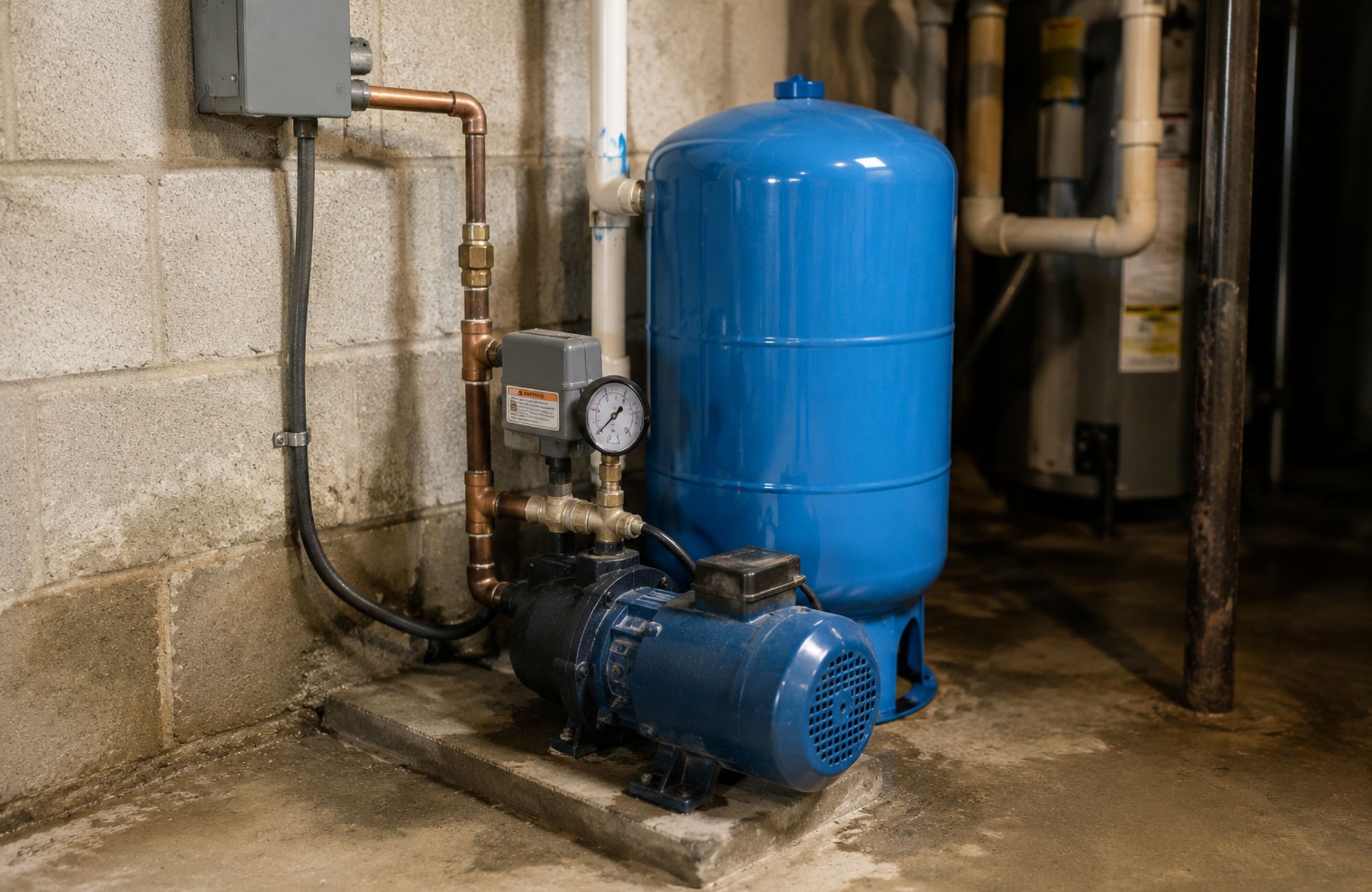
Low water pressure and water quality issues do not always mean a replacement of the main water line is needed. In homes with private wells, the problem may involve the well pump, pressure tank, filtration equipment, or underground water service line.
This is why professional inspection and troubleshooting matter before excavation begins.
Symptom → Likely Cause → What to Inspect First
| Symptom | Possible Cause | First Step |
| No water | Pump or electrical issue | Inspect the breaker and controls |
| Low pressure | Water line leak | Check pressure readings |
| Dirty water | Pipe corrosion or sediment | Schedule water testing |
| Pulsing pressure | Pressure tank issue | Inspect tank cycling |
| Wet ground | Underground service line leak | Inspect the yard and property |
Homes with older water lines may have several connected problems at the same time. A failing pressure tank can create pressure swings that feel similar to underground pipe leaks. Sediment, iron, or clogged filtration equipment can also reduce water flow before the water reaches your fixtures.
What Causes Main Water Lines to Fail?
Main water lines usually fail because of corrosion, aging materials, shifting ground, freezing temperatures, or root intrusion. Most main water lines last between 50 and 100 years, depending on the pipe material, water quality, soil conditions, and installation quality. Connecticut homeowners with older galvanized steel or lead service line materials may face higher risks over time.
Freeze-thaw cycles place stress on underground pipe systems every winter. Soil movement can also damage buried water lines beneath landscaping, sidewalks, and driveways. Over time, even a small crack or a weak fitting can turn into a larger leak.
Homeowners should schedule a pipe inspection every 1 to 3 years, especially if the house has older water lines, low water pressure, or a history of leaks. Regular inspections help determine whether the service line, fittings, or underground pipe materials are starting to fail before the problem becomes more expensive to fix.
Corrosion and Aging Pipe Materials
Galvanized steel pipe systems can corrode internally over time. Corrosion reduces water flow and weakens the pipe walls. As the inside diameter narrows, homeowners may notice low water pressure even when the well pump is working properly.
Older lead and steel service line materials may also create water quality concerns in aging homes. If the pipe material is outdated, replacement may be safer and more reliable than repeated repairs. A new pipe can improve flow and provide a longer lifespan when installed correctly.
Tree Root Intrusion
Roots naturally seek moisture underground. Small cracks in the pipe can attract roots that eventually block or damage the line. This problem is more likely when water lines run near mature trees, shrubs, or older landscaping.
Root damage may start as a slow leak. Over time, it can create pressure loss, wet ground, or repeated breaks in the same location. If roots have entered the line, a simple patch may not resolve the full problem.
Ground Movement and Freezing Temperatures
Frozen water expands inside the pipe. This pressure may crack older water lines or damage compression fittings underground. Shifting ground can also place stress on joints, fittings, and older pipe materials.
Connecticut homes can face added strain during winter because the ground expands and contracts. Pipes near driveways, streets, or compacted soil may face more stress. A proper inspection can determine whether the damage is isolated or part of a larger line issue.
Hard Water Mineral Buildup
Hard water minerals can build up inside copper, steel, or galvanized pipes. This buildup affects water flow and may shorten the lifespan of the line. Homes with iron or sediment issues may also see water quality problems alongside pressure changes.
Mineral buildup does not always mean the water line needs replacement. Sometimes filtration, water treatment, or pressure tank service may help resolve the issue. A full system inspection can determine whether the pipe, treatment system, or well equipment needs attention.
When Should You Repair vs Replace a Main Water Line?
A repair may work for one isolated leak, but a complete replacement of the main water line is often the better long-term solution when the pipe has severe corrosion, repeated breaks, or outdated materials. The right choice depends on the pipe age, material, leak history, and location of the damage.
Repeated repairs can eventually cost more than replacing the full line. If the same pipe keeps failing, each repair may only delay the larger issue. Homeowners should compare short-term cost with long-term reliability before deciding.
Before choosing a repair method, homeowners should compare the age of the pipe, the material condition, and the long-term reliability.
| Repair May Be Best | Replacement May Be Best |
| One small leak | Multiple leaks or breaks |
| Newer pipe materials | Aging galvanized steel |
| Easy pipe access | Severe corrosion |
| Minor damage | Low water pressure throughout the house |
Questions Homeowners Should Ask
These questions can help you decide whether repair or replacement makes more sense. They also make it easier to discuss options with a professional.
- How old is the water service line?
- Is the pipe galvanized steel, lead, copper, PVC, or PEX?
- Have there been repeated leaks?
- Has water pressure changed recently?
- Is excavation already required?
- Would a new pipe provide a longer lifespan?
In many cases, installing a new service line improves both water pressure and reliability. It can also reduce the chance of future leaks if the old pipe is badly corroded. The best decision should come after the line is inspected and the cause is confirmed.
What Are the Main Water Line Replacement Options?
Homeowners usually choose between trench excavation and trenchless line replacement methods. The best process depends on pipe condition, property layout, landscaping, depth, and where the line connects to the water main, well system, or house.
Before replacement begins, technicians usually mark underground lines to help avoid accidental damage. The process may include removing the old pipe, installing a new line, pressure testing, and restoring the property.
Some homes need full trench access when the old pipe has collapsed or is difficult to pull. Others may qualify for a less disruptive method that helps protect the yard, driveway, or landscaping. Most main water line replacement projects take one to three days, depending on access, depth, and weather.
| Method | Advantages | Limitations |
| Traditional trench excavation | Full access to the pipe | More lawn and landscaping disruption |
| Trenchless replacement | Less visible damage | Not ideal for all pipe conditions |
Traditional Trench Excavation
This process involves digging a trench across the property to access the old pipe and install a new line. Contractors may need to work beneath landscaping, sidewalks, or driveways, depending on the location of the water main connection. This method gives full access to the damaged pipe, which can help when the line has multiple breaks.
Traditional excavation may disturb the lawn, soil, or nearby hardscaping. However, it can be the most reliable option when pipe damage is severe. It also allows the installer to inspect the full line path and correct installation issues.
Trenchless Main Water Line Replacement
Trenchless methods reduce digging by replacing the pipe underground through smaller access points. This method may help protect landscaping and reduce surface damage. It can be useful when the pipe route crosses a driveway, walkway, or finished yard.
Trenchless replacement does not work for every property. The old line must be in a condition that allows the new pipe to be pulled or installed safely. A professional inspection helps determine whether this method is possible.
Common Pipe Materials Used Today
Modern water line installation may use different pipe materials based on local conditions. The right material depends on soil, water quality, flexibility needs, and local code requirements.
- Copper
- PEX
- PVC in approved applications
Each material offers different benefits depending on soil conditions, water quality, flexibility needs, and local installation requirements. Copper is durable but may cost more. PEX is flexible and often easier to route, while PVC may be used in approved settings.
How Much Does a Main Water Line Replacement Cost?
Replacement of the main water line costs vary based on pipe length, installation depth, soil conditions, landscaping obstacles, and the replacement method used. Emergency service and difficult excavation conditions may also affect total costs. A short, easy-to-access line will usually cost less than a deeper line under a driveway or sidewalk.
Most homeowners need a professional inspection before receiving an accurate estimate. The inspection helps determine the pipe route, material, depth, and source of the leak. It also helps confirm whether replacement is truly needed or whether another system issue is causing the symptoms.
Factors That Affect Line Replacement Costs
- Length of the water service line
- Pipe diameter
- Pipe materials used
- Excavation depth
- Landscaping or driveway access
- Street connection requirements
- Permit requirements
- Emergency scheduling needs
A short service line with easy access will usually cost less than a deeper underground pipe running beneath landscaping, concrete, or sidewalks. Some homeowners’ insurance policies may help cover damage caused by sudden water line leaks. Coverage varies by policy, so homeowners should review their insurance details carefully.
What Should You Do if You Suspect a Water Line Leak?
A water line leak can quickly damage landscaping, increase water costs, and create underground erosion. Homeowners should act quickly if they notice signs of a damaged service line or main water line. Early action can limit property damage and help prevent a small leak from becoming a larger break.
Avoid digging near underground utilities unless the location has been verified first. Buried electric, gas, communication, and water lines may run through the same area. A licensed professional can inspect the property and recommend the safest next step.
Emergency Water Line Checklist
Use this checklist if you notice low pressure, wet ground, or sudden water changes. These steps can help you collect useful details before service begins.
- Check for low water pressure
- Inspect the yard for wet ground
- Watch for rusty or cloudy water
- Monitor the water bill for sudden increases
- Reduce unnecessary water use
- Contact a licensed professional for inspection
Signs the Situation Is Urgent
Some water line issues need fast attention. If the problem affects the whole house or water is surfacing through the ground, the line may be actively leaking.
- No water inside the house
- Flooding near the property
- Large wet areas in the lawn
- Rapid pressure loss
- Water seeping through the ground
Homes with private wells should also inspect the pressure tank and well controls during emergency situations. A no-water issue may involve the pump, pressure switch, wiring, or underground line. Housatonic Valley Well Pump Services can help determine the source and explain the right fix.
Conclusion
A failing main water line can lead to low water pressure, rising water bills, poor water quality, and costly property damage if the issue is not addressed early. In Connecticut homes with private wells, symptoms may also point to problems with the pressure tank, well pump, or underground water service line. If old lead or galvanized steel pipes were removed, water quality testing is also recommended after replacement.
If you notice leaks, wet areas in the yard, rusty water, or pressure loss inside the house, Housatonic Valley Well Pump Services can inspect the system and determine the source of the problem. The team can explain whether repair or replacement of the main water line is the better option for your property. Contact us to protect your water supply and prevent larger water system problems.
FAQs
How much does it cost to replace a mains water pipe?
The replacement cost of a main water line depends on the pipe length, depth, materials, excavation requirements, and property conditions. A service line beneath landscaping or a driveway may cost more because additional work is needed to access the pipe. Most homeowners need an inspection before receiving an accurate estimate.
What is a main water line called?
A main water line is often called the water service line. This pipe connects the water source or water main to the house. In homes with private wells, the service line connects the well system to the property plumbing system.
How expensive is it to install a water line?
Water line installation costs vary based on pipe materials, depth, soil conditions, and the installation method used. Copper, PEX, PVC, and galvanized replacement materials may affect pricing differently. The total process may also involve trench excavation, compression fittings, permits, and landscaping restoration.
Who is responsible for the water pipe from the meter to the house?
In many areas, homeowners are responsible for the water service line running from the meter to the house. Responsibility can vary depending on the property location and local utility rules. Homeowners should verify service line responsibility with their local water provider or municipality.