


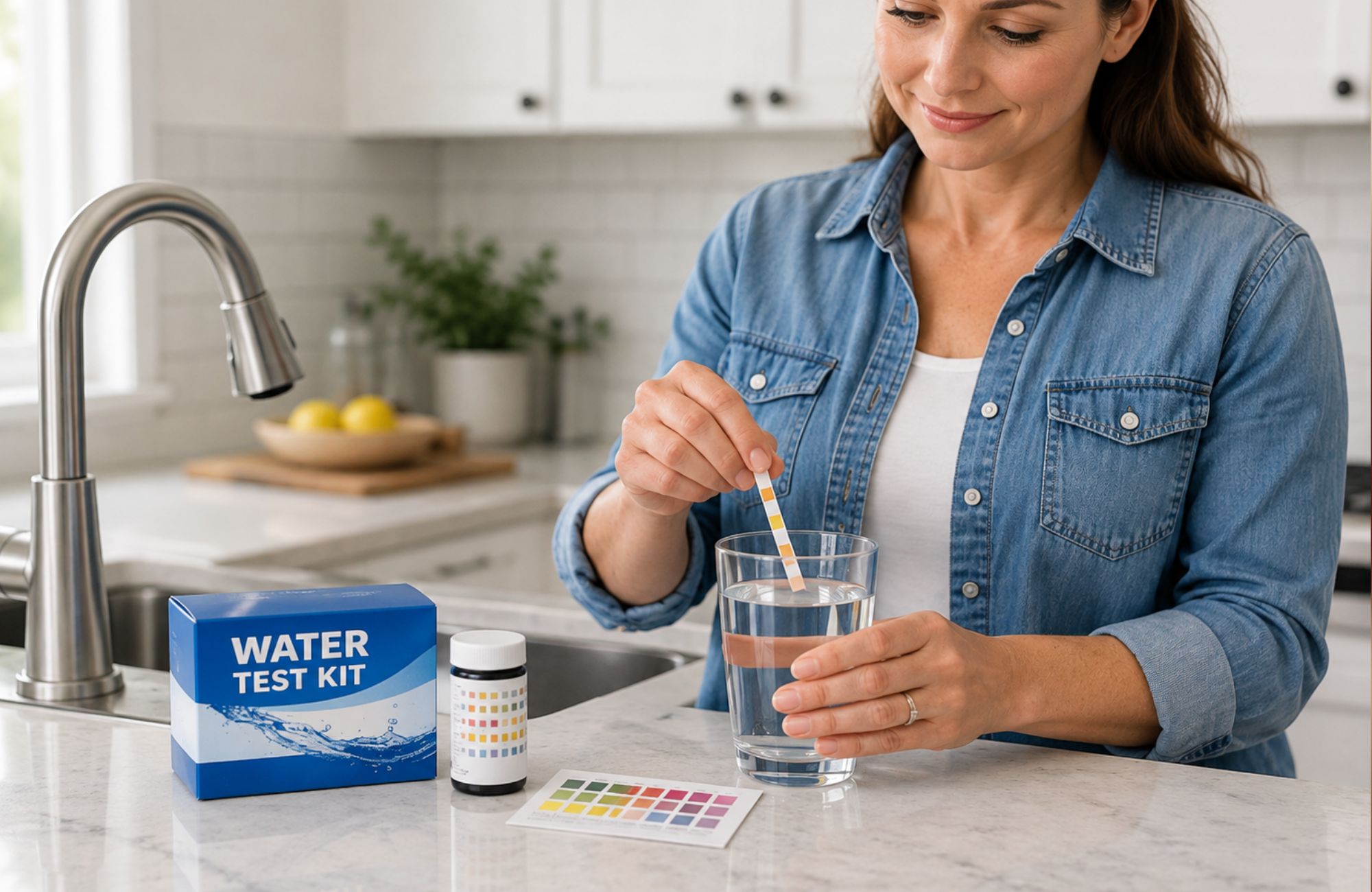
The right way to treat well water is to test it first, identify the exact problem, and choose treatment designed for that contaminant. Sediment filters, water softeners, iron filters, ultraviolet systems, activated carbon, and reverse osmosis all perform different jobs. No single treatment method fixes every water-quality concern.
This is especially important for homeowners in New Milford and other parts of Connecticut, where groundwater conditions can vary between neighboring properties. One home may have hard water and iron staining, while another may need treatment for bacteria, arsenic, uranium, low pH, nitrate, PFAS, or another contaminant.
A properly designed water filtration and treatment system must also work with the well pump, pressure tank, available flow, and household demand. Poor system design can cause weak pressure, excessive backwashing, frequent maintenance, wasted water, or treatment that does not perform as expected.
What Is the Best Way to Treat Well Water?
The best way to treat well water is to test the untreated water through a certified laboratory, inspect the complete well system, and match each confirmed problem to the correct treatment process. Some homes need one device, while others need several treatment stages working together.
Follow four basic steps:
- Test the untreated well water.
- Inspect the well, pump, pressure tank, casing, and plumbing.
- Choose treatment designed for the confirmed contaminant or water-quality problem.
- Retest the treated water and maintain the equipment.
Do not choose equipment based only on staining, taste, smell, or a home test strip. These signs can help determine which laboratory tests to order, but they cannot confirm that the water is safe. The CDC notes that no single home treatment type protects against every germ or chemical and advises homeowners to verify that a system is designed for the specific concern found in their water.
Why Are Visible Signs Not Enough?
Clear, odorless water can still contain bacteria, arsenic, uranium, nitrate, PFAS, or other contaminants. Conversely, orange stains, white scale, or a rotten egg odor do not automatically indicate that the water is unsafe to drink.
A rotten egg smell may originate from hydrogen sulfide, sulfur bacteria, the water heater, plumbing, or treatment equipment. Orange staining may suggest iron, but the iron concentration, water pH, available flow, and presence of iron bacteria can all affect the correct treatment method. Connecticut DPH recommends testing hydrogen sulfide when treatment decisions depend on its concentration because the gas can escape from a sample unless it is collected and preserved correctly.
An assessment may also identify problems that treatment equipment alone cannot correct, such as a damaged well cap, failing pressure tank, rapid pump cycling, insufficient well yield, or surface water entering the casing.
Test Your Well Water Before Choosing Treatment
Water testing must come before equipment selection because different contaminants require different treatment methods. Use a Connecticut-certified drinking-water laboratory and follow its instructions for sample containers, collection, handling, cooling, and delivery. Test untreated water whenever possible so the results reflect the water entering the treatment system.
Sampling requirements can vary by contaminant. Some tests require the water to sit in the plumbing, while others require flushing before collection. Samples may also need special bottles, preservatives, or short delivery times. Connecticut DPH warns that incorrect sampling or handling can produce results that do not accurately represent the water supply.
What Should a Private Well Water Test Include?
The appropriate testing panel depends on the property, well construction, nearby land use, previous results, and household concerns. A useful starting panel may include:
- Total coliform bacteria
- E. coli
- Nitrate and nitrite
- pH
- Turbidity
- Hardness
- Iron
- Manganese
- Sodium
- Chloride
- Sulfate
- Arsenic
- Uranium
- Radon in water
- Lead
- Volatile organic compounds
- PFAS when property conditions or contamination concerns support testing
Connecticut DPH recommends regular testing for basic indicators and additional testing following flooding, repairs, or noticeable changes in the water. Testing required for a new well or mortgage transaction may not cover every naturally occurring or man-made contaminant that could affect a private water supply.
A laboratory report identifies what was detected and at what concentration. It does not determine the entire treatment design. Equipment selection must also account for well yield, pump flow, pressure-tank condition, peak household use, drainage, installation space, and the flow required to operate or backwash the proposed equipment.
When Should You Test Well Water?
Test the water on a regular schedule and whenever the well or water quality changes. Common reasons to order testing include:
- A change in taste, smell, color, or clarity
- Repairs to the well, pump, pressure tank, or water line
- Opening or replacing the well cap
- Flooding or standing water near the casing
- Buying or selling a home
- A nearby contamination problem
- Sudden staining, scale, or plumbing corrosion
- Treatment equipment that stops performing properly
Test the treated water after a system is installed. Comparing untreated and treated samples confirms whether the equipment is reducing the intended contaminant and provides a baseline for future maintenance. Connecticut DPH recommends periodic before-and-after testing because treatment systems are contaminant-specific and can lose effectiveness over time.
How Do You Treat Common Well Water Problems?
Each well-water problem requires treatment designed for the confirmed contaminant and concentration. Bacteria may require disinfection, hardness requires ion exchange, and iron or manganese often require oxidation followed by filtration. Acidic water may need neutralization, while arsenic, uranium, PFAS, or nitrate require contaminant-specific treatment.
The following table provides general treatment categories, not a substitute for laboratory testing or system design.
| Water problem | Common signs | Testing needed | Potential treatment |
| Bacteria | Often no visible sign | Total coliform and E. coli | Correct contamination source, shock chlorination, UV, or continuous disinfection |
| Iron | Orange stains or metallic taste | Iron, manganese, pH, bacteria | Oxidation and iron filtration |
| Manganese | Black stains or particles | Manganese, iron, pH | Oxidation and filtration |
| Hardness | Scale and poor soap lather | Hardness test | Ion-exchange softener |
| Hydrogen sulfide | Rotten egg odor | Source inspection and concentration test | Aeration, oxidation, catalytic filtration, carbon, or bacterial treatment |
| Sediment | Grit or cloudy water | Turbidity and sediment assessment | Cartridge or backwashing sediment filter |
| Low pH | Blue-green stains or corrosion | pH, alkalinity, hardness | Calcite or blended neutralizing media |
| Arsenic | Usually no visible warning | Certified laboratory test | Adsorptive media, ion exchange, or reverse osmosis |
| Uranium | Usually no visible warning | Certified laboratory test | Ion exchange, reverse osmosis, or specialty media |
| PFAS | Usually no visible warning | Certified laboratory test | Certified activated carbon or reverse osmosis |
| Nitrate | Usually no visible warning | Nitrate test | Certified reverse osmosis or anion exchange |
How Do You Treat Bacteria in Well Water?
Bacteria in well water may require disinfection, correction of a structural problem, or both. A positive total coliform result indicates that a pathway may exist for contamination to enter the supply. E. coli requires immediate attention because it can indicate fecal contamination. Connecticut DPH advises using bottled water or properly boiled water for drinking and cooking until the problem is resolved.
Shock chlorination may be appropriate after certain repairs, flooding, or a positive bacterial test. However, it may provide only temporary improvement when bacteria enter through a loose cap, cracked casing, poor drainage, damaged plumbing, or another ongoing source. University of Georgia guidance states that recurring bacteria should not be addressed by repeatedly shock chlorinating without identifying and correcting the contamination pathway.
UV or continuous chlorination may provide ongoing microbial control after the source has been addressed. UV should normally be installed after filtration because suspended particles can shield microorganisms from the light. Ultraviolet radiation does not remove minerals, sediment, hardness, or chemical contaminants.
How Do You Treat Iron, Manganese, and Sulfur?
Iron may leave orange or reddish stains, while manganese can cause dark brown or black deposits. Hydrogen sulfide commonly creates a rotten egg odor. Although these problems can occur together, one filter will not necessarily treat all three.
Treatment may use air, chlorine, ozone, peroxide, catalytic media, or another oxidizing method to convert dissolved contaminants into particles that can be filtered. The correct method depends on concentration, pH, dissolved oxygen, available flow, well yield, and whether iron or sulfur bacteria are present.
A sulfur odor also requires source diagnosis. When the smell occurs only in hot water, the water heater may be involved. When it appears in both hot and cold water, the source may be the well, plumbing, or treatment system. Connecticut DPH lists aeration, activated carbon, oxidation, and specialized filtration among the possible options, depending on the measured level and source.
How Do You Treat Hard or Acidic Well Water?
A water softener treats hardness caused mainly by dissolved calcium and magnesium. Most residential systems use ion exchange, replacing hardness minerals with sodium or potassium ions. A softener does not disinfect bacteria, correct low pH, remove heavy sediment, or reliably reduce every health-related contaminant.
Iron and sediment can interfere with softener performance, so pretreatment may be necessary. The unit must also be sized for the hardness level, household water use, available flow, regeneration frequency, and any iron or manganese present.
Low-pH water can corrode copper pipes, fixtures, valves, and other plumbing components. A neutralizer typically uses calcite or blended mineral media to increase pH. Because neutralizing media can also increase hardness, a home with acidic and hard water may need a neutralizer followed by a softener.
How Do You Treat Arsenic, Uranium, PFAS, or Nitrate?
These contaminants generally have no reliable taste, smell, or visible warning. Treatment must be selected for the specific substance, concentration, water chemistry, household demand, and treatment goal.
Possible options include adsorptive media, granular activated carbon, ion exchange, and reverse osmosis. Activated carbon can reduce certain organic chemicals and PFAS but is not considered effective for bacteria or nitrate.
Arsenic treatment also depends on its chemical form. Arsenic III is harder to remove than arsenic V and may require pre-oxidation before reverse osmosis, adsorptive media, or anion exchange. Connecticut DPH advises testing treated water regularly because system performance can change as media or membranes are used.
Which Well Water Treatment System Do You Need?
The right system depends on what the laboratory finds, how much water the household uses, and whether the concern affects one drinking tap or every fixture. Many homes need a treatment chain rather than a universal filter.
A typical sequence might include sediment removal, oxidation, softening, activated carbon, UV disinfection, or reverse osmosis. Equipment order matters because one stage may protect or interfere with the next.
| System | Common use | Does not automatically solve |
| Sediment filter | Sand, silt, grit, rust | Dissolved minerals, chemicals, or bacteria |
| Iron filter | Iron, manganese, related staining | Hardness or unrelated chemicals |
| Water softener | Calcium and magnesium hardness | Bacteria, low pH, most health contaminants |
| Activated carbon | Certain chemicals, tastes, and odors | Hardness, nitrate, or microorganisms |
| UV system | Microorganisms in clear water | Minerals, sediment, or chemicals |
| Chlorination | Microbial control and oxidation | Chemicals needing separate removal |
| Reverse osmosis | Selected dissolved contaminants | Whole-house problems unless designed for high flow |
| Neutralizer | Low pH and corrosive water | Bacteria or unrelated contaminants |
Whole-House Versus Under-Sink Treatment
A whole-house or point-of-entry system treats water before it is distributed throughout the home. It may be appropriate for hardness, staining, corrosive water, sediment, bacteria, or another condition affecting plumbing, appliances, bathing, laundry, and multiple fixtures.
An under-sink or point-of-use system treats water at one faucet. It may be more practical for a drinking-water contaminant when exposure is mainly through ingestion. Reverse osmosis is frequently used this way because it produces reject water and may not be practical for treating every gallon used in the home.
Check the Exact Product Certification
Certification applies to a particular product model, standard, flow, capacity, and contaminant-reduction claim. A filter certified for taste and odor does not automatically reduce arsenic, PFAS, nitrate, lead, or bacteria.
Before buying equipment, verify:
- Exact model number
- Applicable certification standard
- Named contaminant-reduction claim
- Rated service flow
- Treatment capacity
- Required water pressure
- Required pretreatment
- Filter, membrane, or media life
- Replacement and operating costs
The equipment must treat the confirmed contaminant at the home’s actual service flow. It should not cause excessive pressure loss or require more backwash flow than the pump can provide.
How Does Professional Well Water Treatment Installation Work?
Professional installation begins with laboratory results and an assessment of the complete water system. The design should account for household demand, number of bathrooms, well yield, pump capacity, pressure range, drainage, electrical needs, and existing treatment equipment.
A treatment device that performs correctly at a low flow may not work when several fixtures operate at once. A backwashing filter also needs enough pump flow to lift and clean its media. If that flow is unavailable, the media can foul and treatment performance may decline.
What Happens During Installation?
The installer should:
- Review the laboratory report and treatment goals.
- Inspect the pump, pressure tank, pressure switch, plumbing, well cap, and casing.
- Confirm the available service and backwash flow.
- Place each treatment stage in the correct order.
- Provide bypass valves and suitable drainage.
- Flush, sanitize, or backwash the equipment as required.
- Set control valves and regeneration schedules.
- Check for leaks, pressure loss, and correct operation.
- Explain maintenance and arrange follow-up testing.
A common sequence is:
Well → Pump → Pressure tank → Sediment or oxidation stage → Softener or specialty media → UV or final treatment → Household plumbing
The exact order may change. Heavy sediment may need removal first, iron treatment may precede softening, and UV usually belongs near the end after the water has been clarified.
How Do You Maintain Treated Well Water?
Maintenance protects water quality and prevents unnecessary pressure loss, pump run time, salt use, chemical use, and wastewater. Each component should be serviced according to its manufacturer’s instructions and the contaminant levels found in the untreated water.
Use this checklist:
- Retest untreated and treated water as recommended.
- Replace sediment cartridges before they restrict flow.
- Check softener salt and watch for salt bridging.
- Clean UV sleeves and replace lamps on schedule.
- Check UV alarms and indicator lights.
- Refill chemical-feed tanks when required.
- Confirm that backwashing filters drain correctly.
- Replenish neutralizing or adsorptive media.
- Inspect pump cycling and pressure-tank operation.
- Keep records of testing, service, repairs, and filter changes.
Filters and treatment media collect or concentrate contaminants. Delayed replacement can reduce effectiveness or increase pressure loss. Regular testing is especially important for health-related contaminants because clear water does not prove that a system is still working.
When Should You Call a Well Water Professional?
Call a well-water professional when testing identifies a health-related contaminant, bacteria return after disinfection, household pressure drops, treatment repeatedly fails, or the well cap, casing, pump, or pressure tank appears damaged.
Professional evaluation is also appropriate when several treatment stages must work together or when available pump flow must be compared with an equipment manufacturer’s service and backwash requirements.
Warning signs include:
- A positive E. coli result
- Repeated total coliform results
- Floodwater around the well
- A damaged or loose well cap
- A cracked or corroded casing
- No water in the home
- Sudden pressure loss
- Rapid pump cycling
- Black, orange, or gritty particles
- A chemical, fuel, or solvent odor
- A filter that causes severe pressure loss
- Treatment that no longer improves the water
Should You Shock-Chlorinate a Well Yourself?
Shock chlorination involves concentrated chlorine, electrical components, plumbing, and treatment equipment. The correct chlorine amount depends on the well diameter, standing water depth, water volume, bleach strength, and plumbing configuration. Guessing can result in inadequate disinfection, excessive flushing, or damage to equipment.
Before removing a well cap, power must be handled safely. Carbon filters, reverse osmosis units, and other treatment devices may need to be bypassed or disconnected because strong chlorine can damage some components. UGA guidance also advises using protective equipment, providing an alternate water supply during treatment, and retesting after the procedure.
Emergency disinfection of a container of drinking water is not the same as shock-chlorinating an entire well and plumbing system. EPA emergency directions are intended for short-term situations and warn that boiling or chlorine disinfection will not remove heavy metals, salts, or most chemicals.
Get the Right Well Water Treatment for Your Home
The right treatment plan begins with certified laboratory testing and a complete assessment of the well system. Identify each contaminant, inspect the pump and pressure tank, confirm the available flow, verify the product’s exact reduction claim, and plan for follow-up testing and maintenance. This approach helps protect water quality without creating avoidable pressure loss, unnecessary equipment costs, or treatment that does not solve the actual problem.
For well water treatment in New Milford, CT, Housatonic Valley Well Pump Services can review your water test results alongside the well pump, pressure tank, household demand, and existing equipment. Contact us to schedule an assessment and determine the appropriate next step for your home.
FAQs
The correct treatment depends on the laboratory results and the condition of the complete well system. These answers address common homeowner decisions but do not replace contaminant-specific testing.
What Is the Best Way to Treat Well Water?
Test untreated water through a certified laboratory, identify each contaminant, and select treatment designed for the results. Also evaluate the pump, pressure tank, flow rate, drainage, and household demand before sizing the equipment.
Does a Water Softener Make Well Water Safe?
No. A softener reduces hardness minerals but does not make every contaminated water supply safe. It does not reliably disinfect bacteria or remove every chemical contaminant.
What Removes Iron and Rotten Egg Odor?
Iron and sulfur problems may require oxidation, aeration, catalytic filtration, activated carbon, or another process chosen from testing and water chemistry. The odor source should be identified before equipment is selected.
Should All Well Water Be Filtered Before Drinking?
Treatment is appropriate when testing identifies a contaminant or water-quality condition that requires correction. A basic sediment or carbon filter should not be assumed to make untested water safe.
How Do You Know Whether Treatment Is Working?
Test the treated water for the contaminant the system is intended to reduce. Continue testing on a schedule based on the contaminant, equipment type, manufacturer’s guidance, and previous results.