


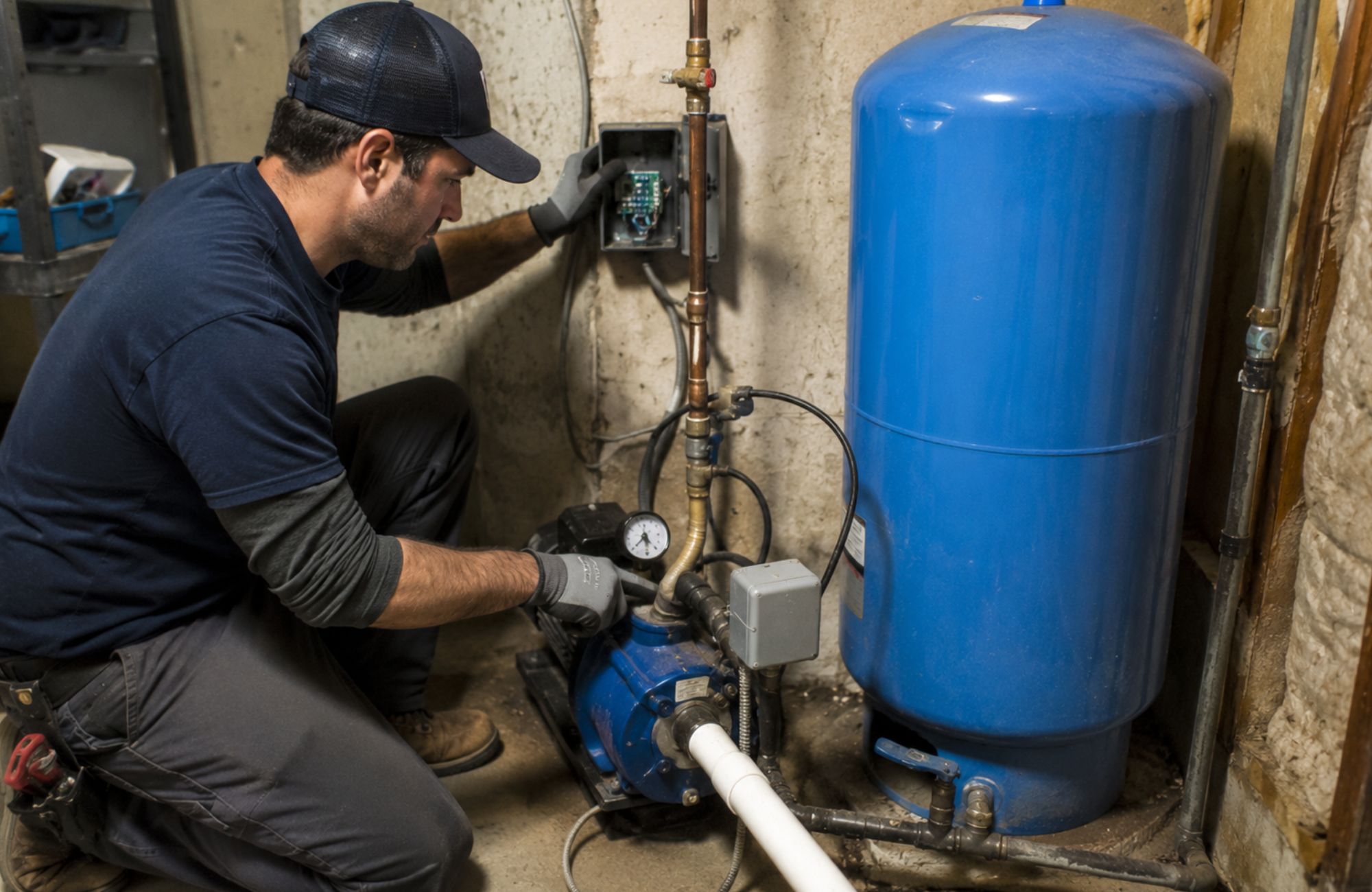
Well pump overheating is usually caused by low water levels, rapid cycling, clogged filters, pressure tank failure, or electrical problems. If a well pump overheats, homeowners should shut off power immediately and schedule a professional inspection before the motor becomes permanently damaged.
For homeowners in New Milford, Danbury, Brookfield, Litchfield, and nearby Connecticut towns, an overheating well pump can quickly disrupt daily life. Common symptoms include low water pressure, inconsistent flow, breaker trips, unusual noises, and rising energy costs. Understanding the causes of overheating can help prevent expensive well pump repairs and protect your home’s water supply.
Understanding Well Pump Overheating
A well pump overheats when the motor is forced to work harder than normal or cannot cool properly during operation. This usually happens because of restricted water flow, electrical problems, excessive cycling, sediment buildup, or low groundwater levels.
Most residential properties in Connecticut use one of two pump types:
| Pump Type | Overheating Risk | Common Issues |
| Submersible Pump | Medium | Low water levels, sediment buildup, dry running |
| Jet Pump | High | Rapid cycling, poor ventilation, and pressure tank problems |
Submersible pumps are installed inside the well and use the surrounding groundwater to help cool the motor. If water levels drop too low, the motor can overheat quickly. Jet pumps are installed above ground and are more vulnerable to overheating caused by airflow restrictions, pressure problems, and frequent cycling.
Pump Types and Their Susceptibility to Overheating
The type of pump you use in your well water system can affect how likely it is to overheat. Jet pumps are common in shallow wells and may overheat more easily when they cycle too often, have poor airflow, or work against clogged lines. Submersible pumps used in deeper wells are generally less exposed, but they still need regular inspection to operate safely.
Jet pumps need open space around the motor so heat can escape. Submersible pumps depend on surrounding groundwater for cooling, so low water levels, restricted flow, or sediment buildup can create serious strain.
No matter the pump type, proper installation, regular maintenance, and quick repairs help protect your water supply and reduce the risk of overheating.
Common Causes of Well Pump Overheating
Most well pump overheating results from mechanical strain, electrical issues, or environmental factors affecting flow. Common causes of pump overheating include running dry, continuous cycling, and clogged systems restricting the flow of cooling water. Being aware of these causes helps prevent pump failure and protects your water system.
Frequent causes include:
- Pump runs nonstop – Often caused by a failing pressure tank or clogged line. Continuous operation prevents the motor from resting and cooling down, leading to overheating.
- Continuous cycling – The pump turns on and off rapidly, not allowing enough time for the motor to cool between cycles.
- Blocked water filters, closed valves, or crimped distribution pipes – These create extreme back-pressure that isolates the water inside the pump casing, causing it to heat up.
- Clogged systems restricting the flow of cooling water – Reduced water flow prevents proper cooling, increasing the risk of overheating.
- Electrical surges or wiring issues – Improper wiring or storms can cause overheating. Protect your system with surge devices.
- Low voltage supply – Low voltage forces the motor to draw excess amperage to maintain its output, creating heavy electrical resistance and intense heat.
- Low water levels – Seasonal fluctuations in groundwater or overuse can reduce supply, forcing the pump to work harder.
- Sediment buildup – Iron, sulfur, and mineral deposits increase friction and heat inside the pump shaft, sometimes causing a boil of motor oil or a burning smell.
Homes in New Milford and surrounding towns often have high iron content in well water, making routine maintenance and treatment essential to prevent overheating. Professional inspections can identify and correct these problems in a proper manner, protecting your water supply and equipment.
Warning Signs Homeowners Should Watch For
Overheating pumps often show clear symptoms that alert homeowners to potential problems, helping protect your water system.
Key signs include:
- Pump cycles rapidly or runs constantly
- Low or inconsistent water pressure
- Strange noises or vibration from the pump shaft
- Higher-than-normal electricity usage
- Water stops unexpectedly during normal use
- Thermal overload tripping
- Tripped circuit breakers
- Unexpected hot water
- Burning odors or smoke
- Sputtering faucets
- Scorched components
- Exceedingly hot casing
Noticing these symptoms early can prevent damage to the pump body and motor. If you are aware of any of these warning signs, contact a licensed technician immediately. A professional can inspect your pump, determine the cause, and take corrective action to restore the system.
Repair vs. Replacement: How to Decide
Not every overheating well pump needs to be replaced. In many cases, overheating is caused by another problem within the system, such as clogged filters, pressure tank failure, damaged pressure switches, low groundwater levels, or electrical issues.
Repair may be possible when:
- The pump overheated only once
- The motor runs normally after cooling
- A clogged filter is restricting flow
- The pressure switch or pressure tank is failing
- Electrical components can be repaired safely
- Sediment buildup is causing excess strain
Replacement may be necessary when:
- The pump repeatedly overheats
- Motor windings are damaged
- Breakers continue tripping after cooling
- The motor produces a burning smell
- Water pressure no longer recovers properly
- The pump is old and showing multiple failure signs
A professional inspection can determine whether the pump itself has failed or whether another system component is creating excessive strain. In many Connecticut homes, addressing pressure tank issues, electrical problems, or sediment buildup early can extend pump lifespan and prevent more expensive repairs later.
How to Prevent Well Pump Overheating
Preventive maintenance helps reduce motor strain, improve efficiency, and extend pump lifespan.
Preventive Maintenance Checklist
- Schedule annual well system inspections
- Replace clogged filters regularly
- Test water for iron, sulfur, and sediment
- Monitor pressure tank performance
- Install surge protection devices
- Inspect wiring and electrical connections
- Check for leaks or pressure loss
- Avoid excessive water demand during drought conditions
- Install thermal overload or dry-run protection when appropriate
Seasonal Well Pump Maintenance Checklist
Connecticut weather conditions can place additional stress on private well systems throughout the year.
| Season | What to Check | Why It Matters |
| Winter | Pipes, insulation, and pump operation | Prevent freezing and restricted flow |
| Spring | Well cap, runoff contamination, bacteria | Heavy rain can affect groundwater quality |
| Summer | Pump runtime, irrigation demand, water level | High demand increases overheating risk |
| Fall | Filters, pressure tank, insulation | Prepares the system for winter conditions |
Homes with heavy sediment or iron content may require more frequent maintenance than standard annual inspections.
Well Water System Inspection: Ensuring Long-Term Reliability
A thorough inspection helps catch pump, pressure, electrical, and water-quality problems before they lead to overheating or pump failure. Regular inspections are especially important for homes that rely on private wells every day.
During an inspection, the technician may ask about recent pressure changes, water quality issues, unusual pump noises, breaker trips, or changes in pump runtime. This helps identify whether the issue is caused by the pump itself, the pressure tank, the wiring, restricted flow, or changing well conditions.
Inspectors may check for sediment buildup, damaged wiring, pressure tank issues, well cap problems, shifting ground near the well, and signs of contamination that could affect the pump or water supply.
When to Call a Professional Well Pump Service
Some signs of pump overheating require professional intervention to prevent permanent damage and maintain water system efficiency. If your well pump is overheating, immediately turn off the power and allow the pump to cool for at least 30 to 60 minutes before inspecting.
Operating an overheating pump risks melting components or starting a fire. Once the pump has cooled, a professional should inspect the wellhead and control box for bulging or leaking capacitors, loose or frayed wires, and blockages at cooling vents.
Call a licensed technician if:
- Pump runs constantly despite an adequate water level
- Water flow is inconsistent, or pressure drops unexpectedly
- Water shows unusual color, odor, or taste
- Electrical issues cause repeated breaker trips
Connecticut-Specific Well Pump Overheating Solutions
Connecticut homeowners often deal with well pump overheating caused by seasonal water-level changes, iron buildup, sediment, humidity, and storm-related electrical issues.
Common Connecticut Well Pump Problems
In areas such as New Milford, Danbury, Brookfield, and Litchfield, technicians commonly find overheating caused by clogged sediment filters, failing pressure tanks, low-yield wells during summer demand, and electrical surges after storms.
What a Local Technician Should Check
- Low water levels during dry periods
- Iron or sediment buildup restricting water flow
- Rapid pump cycling caused by pressure tank failure
- Damaged pressure switches or electrical components
- Worn wiring, capacitors, or control box problems
- Poor ventilation around above-ground jet pumps
When to Schedule Service
Homeowners should schedule professional service if they notice frequent breaker trips, low or fluctuating water pressure, burning smells near the pump or control box, constant pump operation, air sputtering from faucets, or sudden changes in water quality.
Energy Efficiency and Safety Considerations
Proper maintenance reduces overheating risk, improves energy efficiency, and helps keep your well pump operating safely.
Recommendations:
- Install energy-efficient submersible pumps for deep wells
- Use surge protection to reduce storm-related electrical damage
- Monitor runtime to reduce energy costs and extend pump lifespan
- Check wiring, pressure switches, and control boxes during service
- Replace clogged filters before they restrict water flow
- Address leaks or pressure loss quickly
An overheating well pump can damage internal components, destroy motor windings, and cause total system failure. Routine maintenance helps reduce motor strain, improve safety, and extend pump lifespan.
Conclusion
Well pump overheating is common but preventable for homeowners in New Milford, CT, and nearby towns. Recognizing warning signs, understanding the causes, and scheduling preventive maintenance can help keep your water system in a safe working condition.
Housatonic Valley Well Pump Services provides licensed local expertise, emergency repair, and maintenance solutions. From inspections to full repairs, our team ensures your water system operates efficiently and safely. Contact us today to protect your well pump and maintain a consistent water supply.
FAQs
What happens if a well pump overheats?
Overheating can damage the motor and internal components, reducing water flow and causing permanent system failure. It is advised to immediately cut power to the well pump if overheating is suspected to prevent permanent damage. Shut off the pump and schedule a licensed inspection to protect your water system and maintain proper function.
What to do if a water pump overheats?
Turn off the pump, check the water level, and avoid running the system further. Contact a professional to correct the issue in a proper manner and prevent further damage.
How long does it take for a well pump to cool down?
Depending on pump size and surrounding air temperature, cooling may take 30–60 minutes. Never restart a pump until safe, or risk permanent motor damage.
How do you tell if your well pump is burned up?
Signs include no water supply, unusual noises from the pump shaft, repeated breaker trips, or burning odors. A professional inspection can determine if replacement is required.
Can overheating affect water quality?
Yes. Stress on the pump may reduce flow and allow sediment or certain chemicals and contaminants that are present in groundwater to enter the water system, impacting drinking water safety. If contamination is suspected, free or low-cost methods such as boiling, shock chlorination, or UV disinfection can help treat the water. Routine inspections and treatment keep the system healthy.
How often should a well pump be serviced to prevent overheating?
Annual inspections and seasonal checks are recommended. High sediment or iron content may require more frequent service to maintain satisfactory condition and a consistent water supply.