


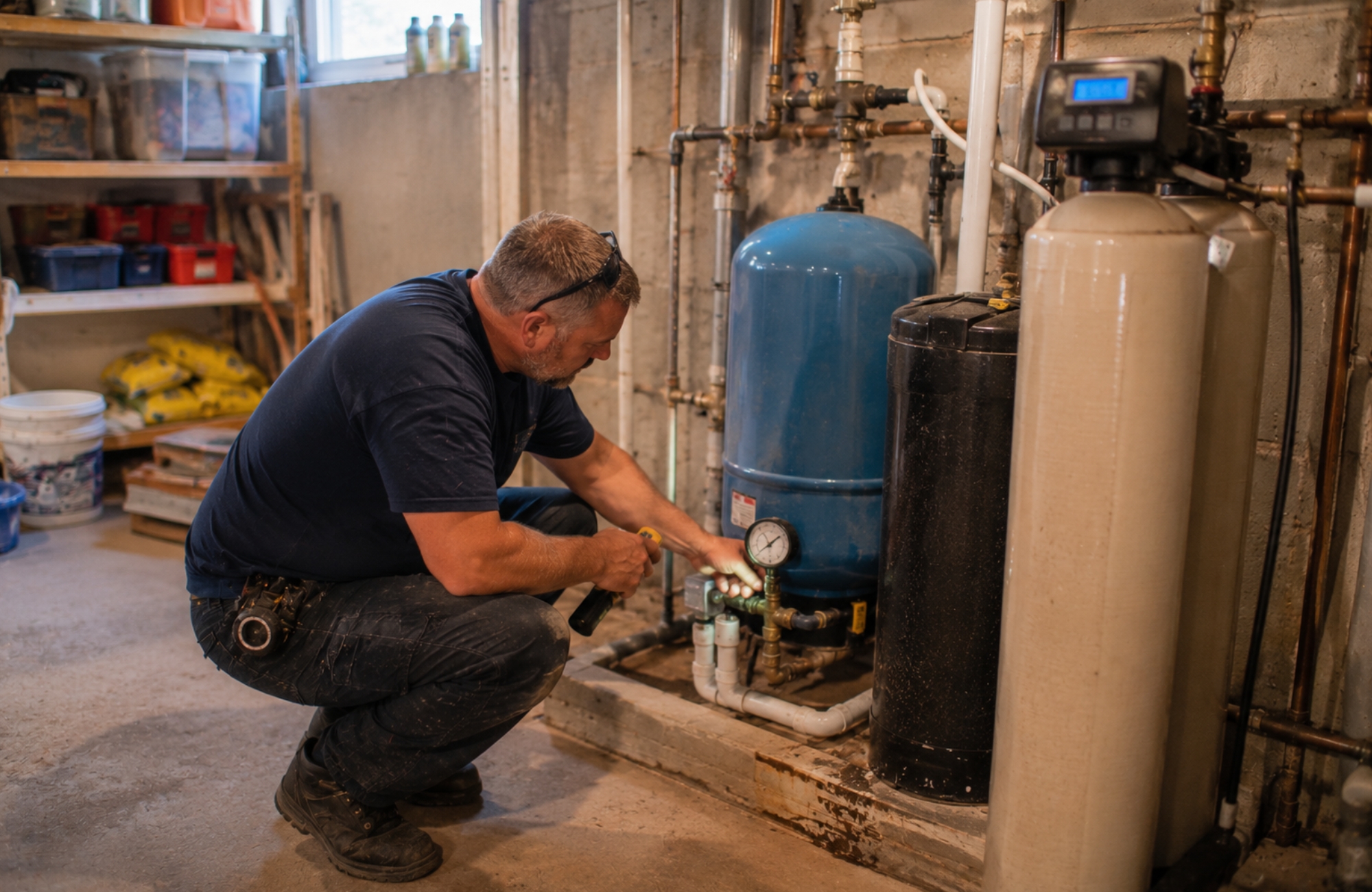
If your home relies on a private well, regular well pump maintenance is one of the best ways to avoid sudden water loss, pressure problems, and expensive emergency repairs. In many Connecticut homes, well system failures begin with small warning signs homeowners overlook, such as fluctuating water pressure, short cycling, cloudy water, or rising electric bills. In our experience servicing homes throughout New Milford and the surrounding areas, pressure tank issues are often mistaken for complete pump failure. Catching these problems early can prevent major repairs and significantly extend equipment life.
For homeowners in New Milford, Danbury, Brookfield, Southbury, and nearby Connecticut communities, understanding how your well system works can help you protect water quality, improve efficiency, and avoid unexpected outages.
What Is Well Pump Maintenance?
Well pump maintenance is the routine inspection, testing, and servicing of your entire well water system to maintain reliable water flow, stable pressure, and safe drinking water. While homeowners often focus only on the pump itself, multiple components work together to keep the system operating properly.
A typical well system includes:
| Component | Purpose |
| Well Pump | Pulls groundwater into the home |
| Pressure Tank | Maintains steady water pressure |
| Pressure Switch | Controls pump cycling |
| Electrical Components | Supply power and system controls |
| Water Treatment Equipment | Improves water quality |
Why does full well system maintenance matter?
A problem with any one of these components can affect overall performance. In older Connecticut homes, technicians frequently discover pressure tank failures, worn pressure switches, or sediment buildup causing symptoms homeowners assume are pump-related.
Routine inspections help identify:
- worn seals
- failing electrical connections
- sediment buildup
- pressure irregularities
- declining pump performance
- tank air charge issues
before they lead to complete system failure.
Why Regular Well Pump Maintenance Matters
Regular maintenance helps homeowners avoid expensive emergency repairs, extend equipment life, improve water quality, and reduce stress on the entire system.egular maintenance helps homeowners avoid expensive emergency repairs, extend equipment life, improve water quality, and reduce stress on the entire system.
Many well pumps operate daily for years without interruption. Over time, motors, pressure switches, tanks, and electrical components naturally wear down. Without periodic inspections, small problems often go unnoticed until the home suddenly loses water.
Prevent Costly Repairs
A routine maintenance visit usually costs far less than emergency service or premature pump replacement.
| Maintenance Visit | Emergency Failure |
| Lower cost | Higher repair costs |
| Scheduled service | Unexpected outage |
| Minor adjustments | Major replacement |
| Preventive approach | Reactive repair |
In many Connecticut homes, we see pumps fail prematurely because pressure tank problems were ignored for too long. When a waterlogged tank forces the pump to cycle continuously, the additional strain can shorten the life of the motor significantly.
Extend Well Pump Lifespan
A properly maintained submersible well pump can often last 15 to 25 years, but when wear or damage progresses too far, professional well pump replacement in Connecticut may be necessary. Jet pumps commonly last 10 to 15 years depending on water quality, sediment levels, and household demand.
Several factors affect pump lifespan:
- sediment-heavy groundwater
- hard water mineral buildup
- frequent short cycling
- power fluctuations
- oversized or undersized pressure tanks
- neglected filtration systems
Annual inspections help technicians identify these conditions before they damage major components.
Improve Water Quality
Well maintenance also supports safer drinking water. Sediment intrusion, damaged well caps, bacterial contamination, and aging filtration equipment can all affect water quality over time.
Many homeowners first notice well problems through:
- cloudy water
- sulfur odors
- metallic taste
- discoloration
- sediment buildup
A professional inspection helps determine whether the issue involves the pump, well casing, pressure system, or water treatment equipment.
Signs Your Well Pump Needs Maintenance
Changes in water pressure, unusual noises, dirty water, or increasing electrical costs often indicate developing problems within the system.
Low Water Pressure
Low pressure is one of the most common warning signs. The issue may involve:
- pump wear
- clogged filters
- pressure switch failure
- sediment buildup
- pressure tank problems
In older Connecticut homes, low pressure frequently traces back to failing pressure tanks rather than the pump itself.
Pump Runs Constantly
A pump that runs continuously often indicates:
- pressure tank failure
- hidden leaks
- short cycling
- declining pump efficiency
- pressure switch malfunction
Continuous operation places excessive strain on the motor and increases electricity usage.
Dirty or Cloudy Water
Cloudy water may signal:
- sediment intrusion
- mineral buildup
- damaged well casing
- filtration problems
- groundwater disturbance
Excess sediment can accelerate wear on pump components and reduce overall efficiency.
Air Coming From Faucets
Air sputtering through faucets may indicate:
- low water levels
- suction leaks
- pressure irregularities
- seasonal groundwater fluctuations
During dry Connecticut summers, low-producing wells sometimes experience temporary pressure and airflow issues.
Higher Electric Bills
When a pump struggles to maintain pressure, energy usage often increases. Rising utility costs may point to:
- failing motors
- excessive cycling
- electrical issues
- restricted flow
- pressure tank problems
| Warning Sign | Possible Cause |
| Low Water Pressure | Pump wear or pressure tank issue |
| Constant Cycling | Pressure tank failure |
| Dirty Water | Sediment contamination |
| Air in Water Lines | Water level or pressure issue |
| High Electric Bills | Pump motor strain |
| No Water | Pump or electrical failure |
Well Pump vs. Pressure Tank Problems
Many homeowners assume the well pump has failed when the real problem involves the pressure tank. The pressure tank helps regulate water pressure while reducing wear on the pump. When the tank loses air charge or becomes waterlogged, the pump cycles more frequently than normal.
| Symptom | Pump Problem | Pressure Tank Problem |
| No Water | Common | Rare |
| Short Cycling | Possible | Very Common |
| Pressure Fluctuations | Common | Common |
| Constant Running | Common | Possible |
| Loud Noises | Possible | Possible |
In many service calls throughout Litchfield County, short cycling turns out to be a pressure tank issue rather than a complete pump failure. Correct diagnosis can often save homeowners thousands in unnecessary replacement costs.
Common Connecticut Well Problems That Affect Pump Performance
Connecticut groundwater conditions create several regional challenges that many national maintenance guides overlook.
Iron and Sediment Buildup
Homes throughout New Milford, Brookfield, and surrounding areas commonly experience elevated iron and sediment levels. Over time, sediment can:
- clog filters
- reduce water flow
- damage switches
- increase pump wear
- restrict pressure tank performance
Hard Water Scale
Hard water minerals gradually build up inside, making water softener systems an important consideration in many homes:
- pipes
- pressure tanks
- pump components
- fixtures
- filtration equipment
This buildup forces the system to work harder to maintain pressure.
Seasonal Groundwater Changes
Dry summer periods sometimes lower groundwater levels in shallow wells. This can cause:
- intermittent pressure loss
- air in water lines
- increased pump cycling
- reduced recovery rates
Winter Freeze Risks
Cold temperatures can damage:
- exposed pipes
- pressure switches
- outdoor well components
- poorly insulated system areas
Preventive winter inspections help identify vulnerable areas before freezing temperatures arrive.
What Happens During a Professional Well Pump Inspection?
A professional inspection evaluates the entire well system rather than focusing only on the pump itself, and in some cases may recommend expert well pump installation in New Milford, CT when replacement is the safest long-term solution.
A standard inspection may include:
- water pressure testing
- pressure tank air charge testing
- electrical inspection
- voltage testing
- amp draw measurement
- pressure switch evaluation
- flow rate testing
- water quality review
- sediment inspection
- pump performance assessment
Technicians also evaluate cycling patterns, system efficiency, and signs of premature wear that homeowners may not notice during everyday use.
Connecticut Well Pump Maintenance Schedule
A consistent maintenance schedule helps homeowners prevent sudden failures and extend equipment life.
Monthly Checks
Homeowners should:
- monitor water pressure
- listen for unusual noises
- check for visible leaks
- observe water clarity
- watch for pressure fluctuations
Seasonal Inspections
Seasonal checks should include:
- inspecting the well cap
- checking seals
- monitoring winter freeze exposure
- reviewing filtration equipment
- watching for sediment changes
Annual Professional Inspection
A yearly inspection should include:
- pressure tank testing
- electrical testing
- voltage checks
- water testing
- pressure switch inspection
- flow testing
- system performance review
Many homeowners avoid emergency outages simply by identifying small problems during annual maintenance visits.
When Should You Call a Professional?
Some issues can wait for routine service. Others require immediate attention.
| Situation | Monitor | Call Now |
| Minor Pressure Changes | ✓ | |
| One-Time Noise | ✓ | |
| No Water | ✓ | |
| Frequent Short Cycling | ✓ | |
| Dirty Water | ✓ | |
| Repeated Breaker Trips | ✓ |
If your system suddenly loses pressure, repeatedly trips breakers, or produces no water, immediate diagnosis is important. Fast action often prevents additional damage to the pump motor and electrical system.
Conclusion
Well pump maintenance helps homeowners protect water quality, prevent emergency outages, and extend the life of expensive equipment. Many well system failures begin with small warning signs that routine inspections can catch early.
For homeowners in New Milford, Danbury, Brookfield, Southbury, Litchfield, and nearby Connecticut communities, Housatonic Valley Well Pump Services provides professional well inspections, pressure tank service, water testing, and emergency well pump repair. Contact our team today to schedule maintenance or request a system evaluation.
FAQs
What Maintenance Should Be Done on a Well Pump?
Well pump maintenance typically includes pressure testing, pressure tank inspection, electrical testing, pressure switch evaluation, flow testing, and water quality monitoring. Homeowners should also watch for warning signs such as low pressure, cloudy water, unusual noises, or frequent cycling.
How Often Should a Well Be Flushed?
Most wells do not require scheduled flushing unless problems develop. Flushing may be necessary after repairs, flooding, sediment contamination, pump replacement, or extended inactivity.
How Long Does a Well Pump Usually Last?
Submersible well pumps commonly last 15 to 25 years with proper maintenance. Jet pumps often last 10 to 15 years, depending on water conditions, sediment levels, and system demand.
How Much Does Well Pump Maintenance Cost?
Routine maintenance visits generally cost significantly less than emergency repairs or premature pump replacement. Inspection pricing varies based on the system size, testing requirements, and overall condition of the equipment.