


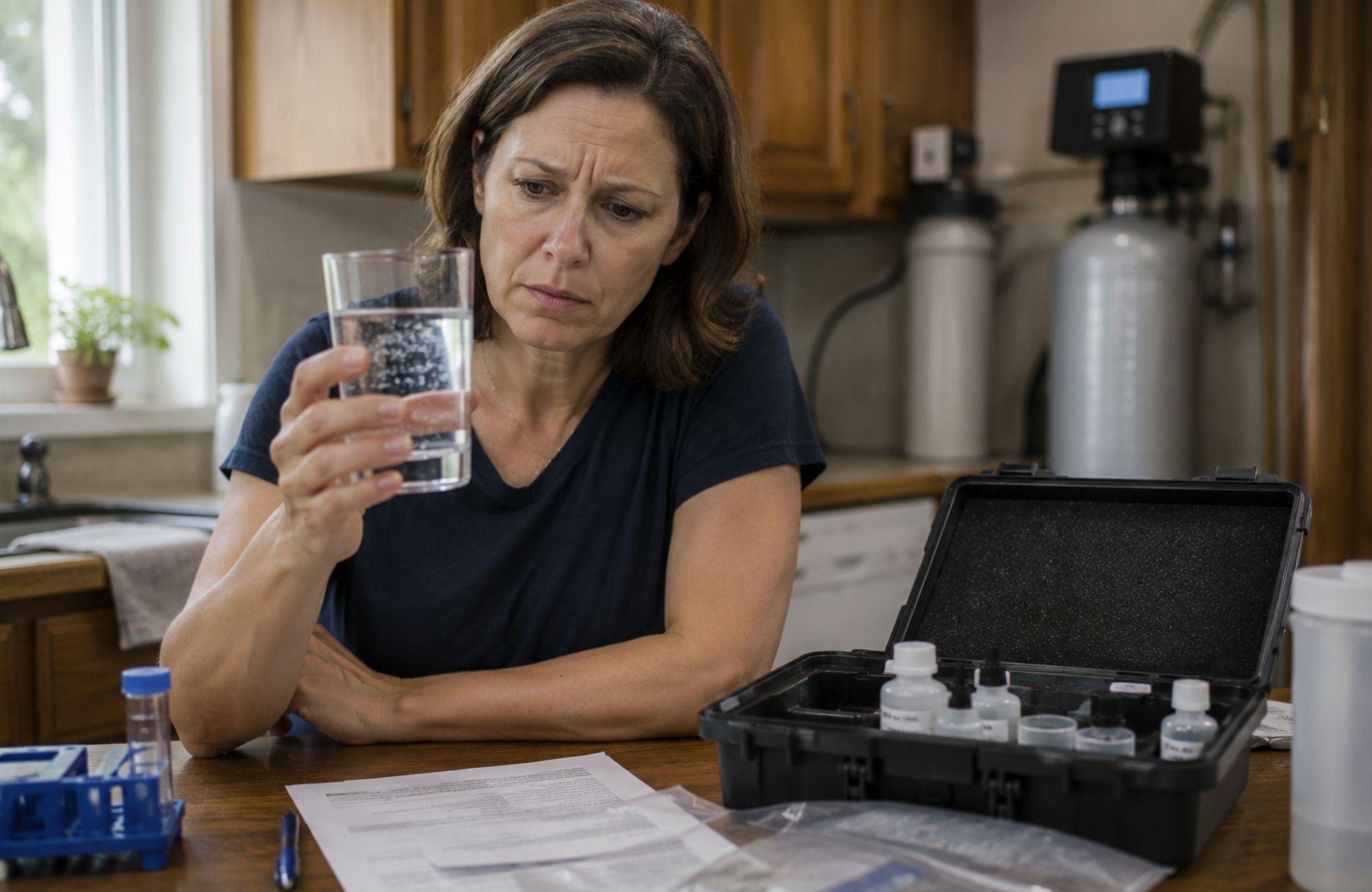
Many Connecticut homeowners worry about what may be hiding in their private water supply, especially when it comes to PFAS in well water. These “forever chemicals” have raised concerns across the country because they can stay in groundwater for years and may affect drinking water quality. If you rely on a private well in New Milford or nearby areas, understanding PFAS contamination helps you make safer choices for your household.
Unlike public water supplies, private wells do not receive the same routine federal monitoring. That means private well owners are responsible for testing drinking water and deciding when treatment makes sense. If you want help understanding your water quality or choosing the right filtration system, Housatonic Valley Well Pump Services can guide you through water testing, well inspections, and water treatment options designed for Connecticut homes.
What Are PFAS in Well Water?
PFAS are man-made chemicals linked to water contamination in some private drinking water wells. These compounds resist heat, grease, and water, which is why manufacturers used them for decades in consumer products, firefighting foams, and industrial processes. Because they break down very slowly, many people now call them “forever chemicals.”
PFAS stands for per- and polyfluoroalkyl substances. Thousands of PFAS compounds exist, but two of the most discussed are perfluorooctanoic acid (PFOA) and PFOS. Studies from the EPA and public health agencies show that elevated PFAS concentrations may contribute to adverse health effects after long-term exposure.
How PFAS Can Contaminate Private Wells
Private wells can become contaminated when PFAS chemicals move through soil and groundwater. Common sources include:
- Certain manufacturing facilities
- Waste disposal sites
- Firefighting training areas
- Septic systems
- Areas exposed to firefighting foams
Many homeowners assume contaminated drinking water always has a bad smell or taste. PFAS contamination usually does not create visible warning signs, which makes testing drinking water especially important for private well users.
How Do PFAS Get Into Private Wells?
PFAS contamination often reaches groundwater through industrial runoff, waste sites, and older firefighting materials. Once these chemicals enter the soil, they can travel into aquifers that feed private drinking water supplies. Rural and semi-rural areas in Connecticut may face risks because many homes rely on individual wells instead of municipal water systems.
Groundwater movement plays a major role in how contamination spreads. Even if your property has no direct pollution source, nearby activity may still affect your private water supplies over time.
Several factors can increase the likelihood of PFAS exposure in private wells:
| Possible Source | How It Affects Groundwater |
| Firefighting training areas | PFAS from certain firefighting foams can seep into soil |
| Manufacturing facilities | Industrial waste may contaminate water supplies |
| Landfills and waste disposal sites | Chemicals can migrate into groundwater |
| Septic systems | Long-term chemical buildup may affect nearby wells |
| Contaminated neighboring wells | Shared aquifers can spread contamination |
In parts of Litchfield County and Upper Fairfield County, homeowners already deal with hard water, iron staining, and sulfur odors. Adding PFAS concerns to the mix makes regular water quality testing even more valuable for families who rely on private drinking water wells.
Should Connecticut Homeowners Test for PFAS?
PFAS testing helps homeowners understand whether their well water contains elevated PFAS levels that may affect drinking water safety. While not every private well needs immediate PFAS testing, homeowners near contamination sites or older industrial areas should strongly consider it.
The EPA recommends testing water if there is concern about nearby contamination or known PFAS exposure. Connecticut homeowners should also pay attention to local advisories and neighboring test results. Since private well owners manage their own water supplies, waiting for visible symptoms is not a reliable strategy.
When PFAS Testing Makes Sense
PFAS testing may be worth considering for homeowners who want a more complete understanding of their water quality, especially for properties with private wells, older well systems, or nearby environmental concerns. Testing can also help establish a baseline before installing new filtration or water treatment equipment.
PFAS testing requires specialized lab analysis because these compounds can exist at very low concentrations. Standard well water tests often check for bacteria, nitrates, minerals, and other common issues, but may not include PFAS analysis unless specifically requested.
A professional well inspection may also help identify related issues such as aging pressure tanks, sediment buildup, or water treatment systems that are no longer operating efficiently. Identifying these problems early can help homeowners maintain more consistent water quality and system performance.
Signs Your Well Water May Need Testing
PFAS contamination usually does not create obvious symptoms, but other water quality problems can signal that your private drinking water supply needs attention. Water testing can help identify contaminants, mineral imbalances, and other water quality concerns that may not be visible through taste, smell, or appearance alone.
What Many Homeowners Overlook About PFAS Testing
Standard annual well water testing does not always include PFAS analysis unless it is specifically requested. Because PFAS contamination usually has no visible warning signs, homeowners may not realize additional testing is needed when evaluating overall water quality.
Some warning signs relate directly to well system problems, while others point toward contamination concerns or treatment failures.
| Symptom | Possible Cause | Recommended Action |
| Cloudy water | Sediment or groundwater disturbance | Schedule water testing |
| Rotten egg smell | Sulfur bacteria | Inspect treatment systems |
| Orange staining | Iron contamination | Analyze drinking water |
| Low water pressure | Pressure tank or well pump issue | Schedule service |
| Metallic taste | Mineral imbalance | Water quality evaluation |
| No visible issue but concern remains | PFAS or invisible contaminants | PFAS testing |
Many New Milford homeowners only test their well after a major problem appears. However, annual testing helps reduce consumer exposure before contamination becomes more serious. Families using private well water supplies should think of testing as preventive maintenance rather than an emergency-only step.
PFAS Testing vs. Regular Well Water Testing
Standard well testing and PFAS testing serve different purposes. A routine water test checks for common contaminants like bacteria, nitrates, pH levels, and hardness. PFAS testing focuses specifically on detecting multiple PFAS compounds linked to contaminated drinking water.
Many homeowners assume one test covers everything. In reality, PFAS testing requires different EPA testing methodologies and specialized laboratory equipment.
| Test Type | What It Checks | Best Use |
| Standard well test | Bacteria, minerals, nitrates | Annual water safety |
| PFAS testing | PFAS compounds and forever chemicals | Suspected contamination |
| Real estate well inspection | Flow rate, pressure, system condition | Home purchases |
| Water treatment evaluation | Filtration performance | Choosing treatment technologies |
Testing results also help homeowners avoid wasting money on the wrong system. For example, some water treatment devices treat iron or sulfur effectively but may not reduce PFAS concentrations.
Homeowners in Brookfield, Danbury, and nearby Connecticut communities often benefit from a full water quality evaluation before installing a whole-house filtration system. Matching the right treatment technologies to your actual test results leads to better long-term performance and lower maintenance costs.
What Removes PFAS From Well Water?
Several water treatment technologies may help reduce PFAS in well water, but the right solution depends on factors such as your household water usage, overall water quality, and the specific contaminants identified during testing. Because not all filtration systems address the same issues, professional testing can help homeowners choose a treatment option that fits their needs.
Activated Carbon Filters
Granular activated carbon systems can reduce certain PFAS compounds when maintained correctly. These systems work by trapping contaminants as water passes through specialized carbon media.
Activated carbon systems are commonly used to help reduce certain PFAS compounds and improve overall water quality when properly maintained. Like most water treatment systems, activated carbon filters require regular maintenance to continue performing effectively. Replacement schedules can vary depending on water usage, overall water quality, and the specific filtration system installed
Reverse Osmosis Systems
Reverse osmosis systems are commonly installed at individual faucets to improve drinking water quality. These systems use a specialized membrane designed to help reduce a range of contaminants, including certain PFAS compounds.
A reverse osmosis system may work well for:
- Drinking water
- Cooking and food preparation
- Homes with elevated PFAS concerns
Many Connecticut homeowners choose reverse osmosis for kitchen sinks while using separate filtration for the rest of the house.
Whole-House Treatment Systems
Whole-house, or point-of-entry (POE), treatment systems filter water as it enters the home before reaching faucets, showers, and household appliances. These systems are often considered by homeowners who want water treatment throughout the property rather than at a single tap.
Proper system sizing is important because water usage, flow rates, and overall water quality can vary significantly from one household to another. Factors such as existing filtration equipment, pressure levels, and the specific contaminants identified during testing may all influence which treatment setup is most appropriate
Before investing in a new filtration system, homeowners may benefit from professional water testing and a full evaluation of their well system. Understanding the specific water conditions and contaminants present can help determine which treatment options are most appropriate for the property.
PFAS Treatment Options Compared
Different treatment technologies solve different water quality problems. Comparing options side by side helps homeowners choose systems that match their household needs and long-term maintenance goals.
| Treatment Option | Best For | Homeowner Notes |
| Reverse osmosis | Drinking and cooking water | Installed at sink |
| Activated carbon | Whole-house filtration | Requires media replacement |
| Ion exchange | Certain PFAS compounds | Needs expert sizing |
| Bottled water | Temporary emergency use | Not a permanent solution |
Water treatment recommendations should be based on current water test results rather than assumptions alone. Different filtration systems are designed to address different water quality concerns, so a treatment option that works well for hard water or iron staining may not be the best choice for PFAS reduction.
For many homeowners, combining water testing with a professional well inspection can provide a more complete understanding of both water quality and overall system condition before selecting new treatment equipment.
What to Do If PFAS Is Found in Your Well Water
Learning that PFAS may be present in well water can be concerning for homeowners. In many cases, the next steps involve reviewing test results, considering treatment options, and determining whether additional testing may be needed.
Start with these steps:
- Review your water test results carefully.
- Contact your local health department if needed.
- Determine whether additional testing is recommended.
- Compare treatment options based on your water quality results.
- Retest water periodically to monitor performance.
Because filtration systems vary in design and maintenance needs, choosing a treatment option based on actual water test results can help homeowners make more informed decisions about long-term water quality.
Local Well Water Concerns in New Milford and Nearby Areas
Many Connecticut homeowners with private wells already deal with common groundwater issues such as hard water, iron staining, sulfur odors, and sediment buildup. As PFAS awareness grows across the state, more homeowners are also looking for testing and treatment options that help them better understand overall water quality
Common local concerns include:
- Hard water buildup
- Iron staining
- Sulfur odors
- Sediment
- Low water pressure
- Aging pressure tanks
- Seasonal groundwater fluctuations
Homes in New Milford, Danbury, Brookfield, and surrounding areas often rely heavily on private wells. Because groundwater conditions vary from property to property, one neighbor’s system may perform very differently from another’s.
Because groundwater conditions can vary significantly from one property to another, homeowners often benefit from working with well professionals who are familiar with local water quality concerns and common well system maintenance issues.
When to Call a Well Water Professional
Homeowners should call a professional when water quality concerns go beyond simple maintenance or when contamination may affect health and safety. Addressing water quality or well system concerns early may help homeowners avoid more complicated maintenance or treatment issues over time.
Professional support becomes especially important when:
- Water test results show elevated PFAS
- Water pressure drops suddenly
- Filters clog repeatedly
- Water smells unusual
- The home has no water
- A property sale requires inspection
- Treatment systems stop working correctly
A qualified well professional can analyze drinking water results, inspect pumps and pressure tanks, and recommend treatment technologies based on your actual water conditions.
Conclusion
PFAS in well water has become an important concern for many Connecticut homeowners, especially those who rely on private drinking water wells every day. Since these chemicals often have no smell, taste, or visible warning signs, testing remains the best way to understand what may be affecting your water supply.
The good news is that homeowners have practical options. With the right testing, treatment system, and professional guidance, families can improve water quality and make informed decisions about their private water supplies. Contact us today if you need PFAS testing guidance, a well inspection, or help choosing a whole-house treatment system. Housatonic Valley Well Pump Services provides reliable, straightforward support for homeowners throughout New Milford, Litchfield County, and nearby Connecticut communities.
FAQs
Can there be PFAS in well water?
Yes. PFAS can enter private wells when contaminated groundwater moves through aquifers near industrial sites, firefighting areas, landfills, or waste disposal locations. Because PFAS usually has no taste, smell, or visible signs, laboratory testing is the most reliable way to identify contamination in well water.
How to remove PFAS from well water?
Several treatment technologies may help reduce PFAS, including activated carbon filters, reverse osmosis systems, and certain ion exchange systems. The best option depends on your water quality, household usage, and PFAS concentrations. A professional water treatment evaluation helps homeowners avoid installing the wrong system.
Why are you not supposed to drink well water?
Many private wells provide safe drinking water, but problems can develop when homeowners skip testing or maintenance. Contaminants such as bacteria, nitrates, iron, sulfur, and PFAS may affect water quality over time. Since private wells are not regulated like public water supplies, homeowners must monitor and maintain their own systems.
Can you flush PFAS out of your body?
PFAS can leave the body slowly over time, but some compounds remain in the body for years. Research on human health effects continues, and exposure reduction remains an important goal. Reducing contaminated drinking water exposure through testing and treatment may help lower long-term risks.