


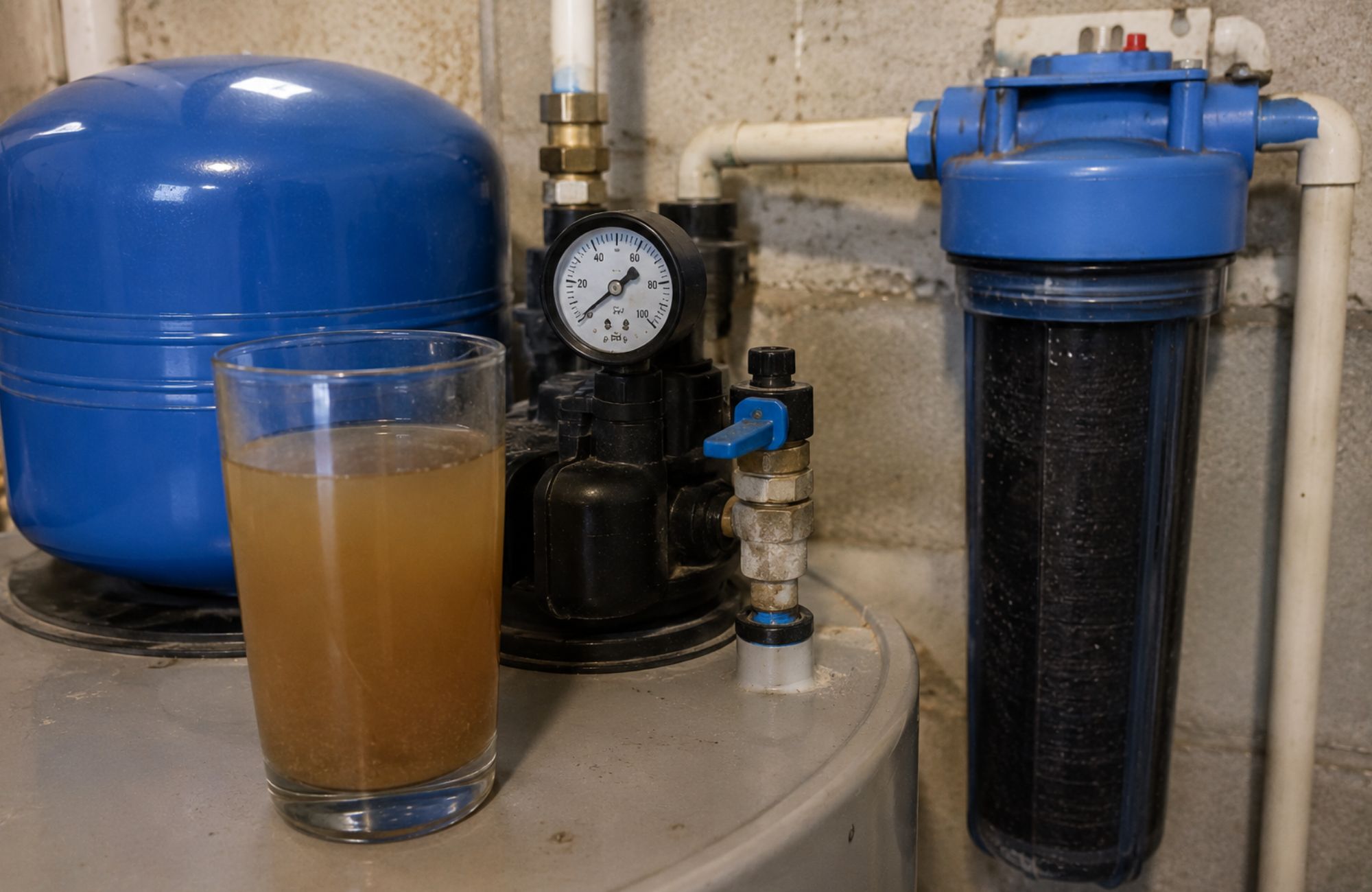
Clean, safe drinking water is essential for any household, but private wells can contain hidden contaminants like manganese in well water, a naturally occurring mineral found in soil and rock formations. While small amounts are an essential nutrient, excessive manganese concentration can affect water quality, cause a metallic taste, stain laundry and plumbing fixtures, and even impact sensitive individuals.
Homeowners in New Milford, CT, often notice black stains in sinks, tap water discoloration, or solid particles in toilets and shower heads. These signs indicate too much manganese, which requires professional water testing and targeted water treatment. Housatonic Valley Well Pump Services provides expert inspections and installs water treatment systems to remove manganese, restoring safe and clean water for New Milford homes and nearby towns like Danbury, Brookfield, and Litchfield.
What is Manganese in Well Water?
In the well water, it is a naturall occurring mineral that dissolves into private wells when groundwater flows through manganese-rich soil or rocks. While small levels are safe and considered an essential nutrient, higher concentrations can cause staining, unpleasant metallic taste, and impact water quality.
Manganese often occurs alongside iron in private wells. These iron and manganese deposits can accumulate in plumbing, clog pumps, and reduce system efficiency. Over time, dissolved manganese may oxidize into precipitated manganese, forming manganese particles that settle in water systems, tap water, and retention tanks. The Environmental Protection Agency recommends a secondary standard of 0.05 mg/L to prevent aesthetic and operational issues.
| Parameter | Typical Range in Wells | EPA Standard |
| Manganese (mg/L) | 0.01–0.3 | 0.05 (secondary standard) |
| Iron (mg/L) | 0.1–0.5 | 0.3 (secondary standard) |
Signs Manganese is Affecting Your Well Water
Excessive manganese can manifest through physical or sensory indicators. Homeowners should look for:
- Black stains on sinks, toilet tanks, or laundry.
- Metallic taste in drinking water or tap water.
- Cloudy water containing dissolved manganese or solid particles.
- Reduced water flow caused by precipitated manganese buildup in water systems.
- Occasional discoloration from surface water intrusion or seasonal fluctuations.
Regular water testing helps detect manganese contamination before it damages pipes or appliances. Housatonic Valley Well Pump Services provides thorough inspections for New Milford, Danbury, and Brookfield homeowners, offering tailored water treatment solutions to restore water quality.
Health and Home Risks of Manganese
Exposure at high levels can pose health risks. While safe in small amounts, excessive concentration can affect infants and sensitive individuals, potentially impacting motor skills and nervous system function.
Home systems also experience:
- Mineral buildup in pumps and water systems.
- Staining in tap water, sinks, toilet tanks, and laundry.
- Reduced system efficiency due to iron and manganese accumulation.
- Impaired water quality from dissolved metals and manganese particles.
A New Milford homeowner noticed black stains and clogging in the washing machine. Professional water testing revealed elevated dissolved manganese, and installation of a greensand filter with proper retention tank and filter media restored both water quality and system efficiency.
Causes of Manganese Contamination
Contamination originates from natural and environmental factors:
- Geology: Groundwater passing through manganese-rich soil dissolves all the manganese into the well.
- Stagnant water or low dissolved oxygen: Allows manganese to accumulate.
- Water pH and hardness minerals: Influence manganese solubility.
- Surface water intrusion or seasonal runoff: Can temporarily increase concentration.
- Human activity or excessive water extraction: May mobilize dissolved manganese and other metals.
| Cause | Impact on Well Water |
| Natural geology | Dissolved manganese and iron |
| Low dissolved oxygen | Precipitated manganese formation |
| Surface water | Temporary manganese spikes |
| Seasonal changes | Fluctuating manganese levels |
Testing Your Well for Manganese
Accurate water testing is essential to identify contamination. Testing measures dissolved manganese, iron and manganese, hardness minerals, hydrogen sulfide, and water pH.
Options include:
- Home collection sent to certified labs.
- Professional in-field testing by licensed technicians.
Testing frequency:
- Annual testing for ongoing monitoring.
- Seasonal testing if water changes in color, taste, or flow.
Testing ensures the most effective treatment methods, such as ion exchange, water softeners, or potassium permanganate solutions, are chosen based on concentration.
Treatment and Filtration Solutions
Once testing identifies high manganese concentration, several water treatment methods are available:
Common Solutions
| Treatment | Best Use | Notes |
| Oxidizing filters (greensand filters, catalytic carbon) | Whole-house removal | Converts dissolved manganese to precipitated manganese |
| Water softeners with softener resin | Low to moderate levels | Combines hardness removal with manganese; requires frequent regeneration |
| Potassium permanganate solution | High manganese | Used with a retention tank to precipitate all the manganese |
| Point-of-use filters | Drinking water | Removes remaining manganese particles and improves tap water |
Other effective methods include hydrogen peroxide, chlorine, and ion exchange, which oxidize or remove dissolved manganese. Proper installation and maintenance are crucial for effective manganese removal, preventing solid particles from clogging water systems.
Housatonic Valley Well Pump Services provides installation, maintenance, and service for greensand filters, water softeners, and potassium permanganate solutions to ensure safe drinking water and high water quality in New Milford, Danbury, and Brookfield homes.
Preventing Manganese Build-Up
Preventive maintenance reduces manganese contamination risk:
- Annual inspections of wells, pumps, and water systems.
- Maintaining proper dissolved oxygen levels to prevent mineral buildup.
- Water softeners and filter media should be cleaned and regenerated regularly.
- Monitor surface water intrusion and seasonal fluctuations in manganese concentration.
These steps help prevent too much manganese from affecting tap water, reducing metallic taste, black stains, and precipitated manganese buildup.
Conclusion
Manganese in well water is a common issue for homeowners with private wells in New Milford, CT, and nearby areas. While small amounts are naturally present in groundwater, higher levels can lead to black staining, metallic taste, clogged plumbing fixtures, and reduced water quality. Proper water testing is the best way to identify manganese concentration and determine the right treatment solution for your home. Systems like greensand filters, water softeners, and oxidation treatment with potassium permanganate can help improve water clarity, protect plumbing, and provide cleaner drinking water for your household.
If you are dealing with manganese stains, unusual water taste, or concerns about your private well system, Housatonic Valley Well Pump Services can help. Their team provides professional well inspections, water testing, and customized water treatment solutions designed for Connecticut homeowners. Contact us today to schedule a water quality evaluation and find the right solution to keep your home’s water safe, clean, and reliable.
FAQs
Is manganese in well water safe?
Small amounts of manganese are an essential nutrient and safe. High concentration can stain fixtures, cause a metallic taste, and affect water systems. Professional water testing ensures safe drinking water and proper removal.
What should the manganese level be in well water?
The Environmental Protection Agency recommends no more than 0.05 mg/L to prevent black stains and taste issues. Levels above this require water treatment using methods like ion exchange, water softeners, or greensand filters.
How to fix too much manganese in water?
Solutions include oxidizing filters, water softeners with softener resin, potassium permanganate solution, and point-of-use filters. Professional installation ensures effective manganese removal and long-term water quality.
How to tell if your water is high in manganese?
Watch for metallic taste, black stains, cloudy water, and solid particles in tap water. Accurate water testing confirms manganese concentration and guides proper treatment methods.
Can manganese be prevented in my well?
Routine inspections, proper water systems maintenance, seasonal water testing, and maintaining dissolved oxygen levels prevent too much manganese from accumulating in private wells.
Which water treatment system works best for manganese?
System selection depends on concentration, water quality, and household needs. Greensand filters combined with water softeners or potassium permanganate solutions typically provide the most effective removal for New Milford and surrounding towns.