


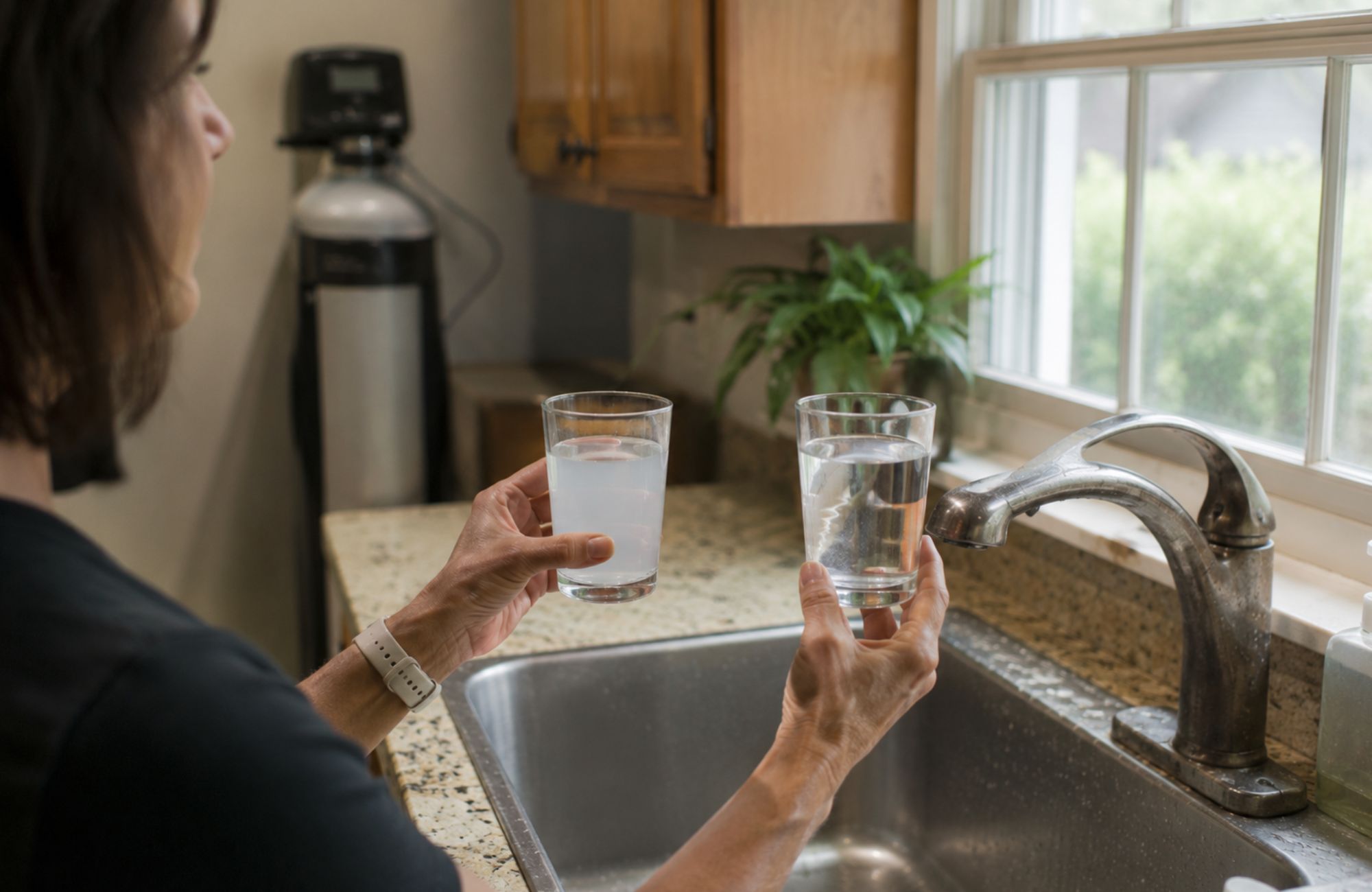
If you’re comparing hard water vs soft water, you’re probably dealing with white stains, dry skin, cloudy dishes, low water pressure, or buildup around faucets. For Connecticut homeowners with private wells, especially in New Milford, Danbury, Brookfield, and nearby towns, water hardness can affect comfort, plumbing, and appliance performance.
Hard water is common in many well systems because groundwater picks up dissolved minerals as it moves through soil and rock. If you notice staining, scale buildup, or changes in your water quality, Housatonic Valley Well Pump Services can test your water and recommend the right water softening system for your home.
What Is the Difference Between Hard Water and Soft Water?
Hard water contains higher levels of calcium and magnesium, while soft water contains fewer hardness minerals. A water softening system usually creates soft water through ion exchange, which replaces calcium and magnesium ions with sodium or potassium ions.
Hard water is not always unsafe. In fact, it can contain essential minerals like calcium and magnesium. The problem is what those minerals do inside your home. They can leave mineral deposits on sink faucets, shower heads, water heaters, washing machines, and plumbing systems.
Soft water, on the other hand, rinses cleaner and helps reduce buildup. Some homeowners notice that soft water feels slippery or gives a slimy feeling in the shower. That happens because soap rinses differently when heavy minerals are no longer present.
| Hard Water | Soft Water |
| Higher calcium and magnesium | Lower hardness minerals |
| Can cause scale buildup | Helps reduce scale buildup |
| May leave soap scum | Allows better soap lather |
| Can affect water heaters | Helps protect appliance efficiency |
| Often found in private wells | Usually created through treatment |
The U.S. Geological Survey classifies water as soft at 0–60 mg/L, moderately hard at 61–120 mg/L, hard at 121–180 mg/L, and very hard above 180 mg/L as calcium carbonate.
Signs Your Connecticut Home Has Hard Water
Hard water often shows up in everyday household problems. You may see white spots, cloudy glass, soap scum, dry skin, dull hair, or lower water flow before you ever see a water test result. These signs matter because they often point to mineral buildup inside fixtures, appliances, and pipes.
Common signs of hard water include:
- White stains on dishes or glassware
- Scale buildup around sink faucets
- Soap scum in tubs or showers
- Dry skin or irritated skin after bathing
- Dull, brittle, or hard-to-rinse hair
- Stiff laundry after washing
- Lower water pressure
- More frequent water heater or appliance issues
In many Connecticut homes, homeowners first notice hard water near fixtures or in hot water performance. For example, a Brookfield homeowner may see white crust around shower heads, while a New Milford homeowner may notice the dishwasher leaving cloudy glasses.
A professional water test can confirm whether water hardness, iron, manganese, or other well water issues are causing the problem.
Is Hard Water Bad for Your Health or Plumbing?
Hard water is generally safe to drink, but it can still create problems for your home. The high mineral content may help provide dietary calcium and magnesium, yet those same dissolved minerals can form scale deposits in pipes, water heaters, and appliances.
For drinking water, private well owners should not guess. The Connecticut Department of Public Health says private well testing gives homeowners information about water quality and helps confirm whether the water supply is safe to use. Testing can also identify nuisance contaminants like iron and manganese.
How Hard Water Affects Skin and Hair
Hard water can dry out skin and hair because minerals make it harder to rinse soap and shampoo fully. That leftover residue can leave skin feeling tight and hair looking dull or brittle. People with sensitive skin or skin conditions like eczema may notice more irritation when their water has high mineral content.
Soft water allows soap and shampoo to rinse more easily. This can help skin and hair keep more natural oils, which may support a healthier look and feel. However, soft water can also feel slippery to some people because there are fewer minerals interfering with soap.
How Hard Water Affects Plumbing
Hard water can cause limescale buildup inside pipes and fixtures. Over time, that buildup can restrict water flow, lower water pressure, and make plumbing systems work harder.
| Area of the Home | Hard Water Problem |
| Water heaters | Scale buildup and higher energy bills |
| Pipes | Restricted water flow |
| Dishwashers | Spots and residue |
| Washing machines | Stiff laundry and mineral deposits |
| Shower heads | Clogging and reduced spray |
| Faucets | White crust and buildup |
This is where water treatment becomes more than a comfort upgrade. Soft water helps protect plumbing, reduces buildup, and may help homeowners avoid costly repairs.
Why Hard Water Is Common in Connecticut Well Water
Connecticut homes with private wells often deal with hard water because groundwater absorbs naturally occurring minerals from local rock and soil. Water hardness varies by region, and wells in the same town can test differently because each water source passes through different geological layers.
In Litchfield County and Upper Fairfield County, homeowners may also deal with iron, sulfur odors, manganese, low pH, or sediment. These issues can appear alongside hard water, which is why a simple “one-size-fits-all” filter may not solve the whole problem.
A proper test should come before choosing water filters, water softeners, salt-free systems, or a whole-house filtration system. Connecticut homeowners with private wells are responsible for maintaining and testing their own water supply, and annual testing is commonly recommended.
Hard Water vs Soft Water for Appliances and Energy Efficiency
Soft water helps protect appliances because it reduces mineral buildup inside water heaters, dishwashers, washing machines, and plumbing fixtures. When hard water creates scale deposits, appliances often need more energy to heat water and run efficiently.
Water heaters feel this problem the most. Scale buildup creates a barrier between the heating element and the water. That means the system has to work harder to heat water, which can raise energy bills and shorten the life of the unit.
| Appliance | Hard Water Effect | Soft Water Benefit |
| Water heaters | Scale reduces efficiency | Better heating performance |
| Dishwasher | Spots and film | Cleaner dishes |
| Washing machines | Stiff fabrics | Softer laundry |
| Coffee makers | Mineral deposits | Fewer clogs |
| Plumbing fixtures | Reduced water flow | Less buildup |
Many homeowners call for help after noticing inconsistent hot water or rising energy bills. During inspections, mineral buildup is often part of the bigger picture. Regular maintenance and the right water treatment systems can help reduce buildup and support fewer repairs.
How Water Softeners and Treatment Systems Work
Most traditional water softeners use an ion exchange process. During water softening, resin beads attract calcium and magnesium ions and exchange them for sodium ions or potassium ions. The system then uses a brine tank and regeneration cycle to flush captured hardness minerals out of the resin.
This process can effectively soften water, but it is not the only option. Some homeowners also consider salt-free water conditioners, salt-free water softeners, or phosphate injection. The right solution depends on your water hardness, sodium concerns, septic setup, water usage, and full water quality test.
| Treatment Option | What It Does | Best For |
| Ion exchange softener | Removes calcium and magnesium | Homes with high water hardness |
| Salt-free conditioners | Change how minerals stick to surfaces | Scale control without brine |
| Filtration system | Targets iron, sulfur, sediment, or other issues | Mixed well water concerns |
| Phosphate injection | Helps prevent scale buildup | Certain plumbing protection needs |
Salt-free systems, including systems that use Template Assisted Crystallization, do not fully remove calcium and magnesium. Instead, they change how hard minerals behave so they are less likely to stick to surfaces. Traditional water softeners can be very effective, but they discharge brine, and chloride from salt can affect waterways and aquatic life.
When Should You Install a Water Softener?
You may need a water softener system if your water test confirms high hardness levels or if your home shows clear signs of scale buildup. The strongest clues include white mineral deposits, soap scum, low water pressure, dry skin, and frequent appliance issues.
Consider water softener installation if you notice:
- White buildup around faucets or shower heads
- Cloudy dishes after washing
- Soap that does not lather well
- Dry skin or irritated skin after bathing
- Dull hair or product residue
- Hard water stains on fixtures
- Reduced hot water performance
- Frequent repairs on water heaters or appliances
For homes with private wells, the best first step is testing. A test can show whether the issue is only hardness or whether iron, manganese, pH, sulfur, bacteria, or arsenic also need attention. If several issues appear together, a combined water softening and filtration system may work better than a basic softener alone.
Hard Water vs Soft Water: Which Is Better for Connecticut Homes?
Hard water and soft water both have pros and cons, but many Connecticut homeowners prefer treated soft water because it protects plumbing, improves cleaning, and reduces appliance strain. It may contain beneficial minerals, but the same minerals can create scale buildup and costly maintenance problems.
The better choice depends on your water test results and household needs. For example, a homeowner on a low-sodium diet may want to discuss potassium ions, bypass options, or salt-free systems. A homeowner with severe scale buildup may need a traditional ion exchange softener because it actually removes calcium and magnesium from the water.
For most private well homes, the goal is not just “soft water.” The goal is safe, balanced, efficient water that fits your plumbing, appliances, and family’s daily use.
Conclusion
Hard water vs soft water is not just a comfort question. For Connecticut homeowners with private wells, water hardness can affect skin and hair, drinking water taste, water heaters, plumbing systems, appliances, and long-term repair costs.
If you notice hard water stains, low water pressure, soap scum, appliance buildup, or water quality concerns, Housatonic Valley Well Pump Services can help with water testing, water softener installation, filtration solutions, well inspections, and practical guidance across New Milford, Danbury, Brookfield, Litchfield County, Upper Fairfield County, and nearby Connecticut communities. Contact us today to schedule service or request a free quote.
FAQs
How do you know if you have hard or soft water?
You can often tell by looking for hard water signs like white spots, soap scum, dry skin, dull hair, and scale around faucets. Soft water usually lathers better and rinses more easily, but it may feel slippery during showers. The most accurate way to know is to test your water hardness in grains per gallon or parts per million.
Which is better, hard or soft water?
Soft water is usually better for cleaning, plumbing protection, appliance efficiency, and reducing scale buildup. Hard water may be fine for drinking water and can contain calcium and magnesium, but it often creates household problems over time. For Connecticut homes with private wells, the best choice depends on water quality testing and the condition of the plumbing system.
What is the #1 healthiest water to drink?
The healthiest water to drink is clean, tested water that meets safety standards for your household. Hard water can be safe to drink, but private well water should be tested for bacteria, arsenic, uranium, nitrates, iron, manganese, and other local concerns. If you rely on a private well in Connecticut, water quality matters more than whether the water is hard or soft.
What are the disadvantages of soft water?
Soft water can taste slightly salty if a system uses sodium ions during the softening process. Some people also dislike the slippery or slimy feeling it creates while bathing. Traditional water softeners require salt, a brine tank, regular maintenance, and periodic regeneration, so homeowners should choose a system that fits their water quality and lifestyle.
Can hard water lower water pressure?
Yes, hard water can lower water pressure when mineral buildup narrows pipes, clogs fixtures, or restricts water flow through shower heads and faucets. The issue often gets worse over time because calcium and magnesium continue to form scale deposits. If your pressure drops along with visible buildup, schedule a well and water system inspection.
What is the best water treatment system for hard well water?
The best system depends on your water test results. A traditional ion exchange water softener may work well for high hardness, while a filtration system may be needed if your well also has iron, sulfur, sediment, or other issues. Some homes may benefit from salt-free water conditioners, but they condition hardness minerals rather than fully remove calcium and magnesium.