


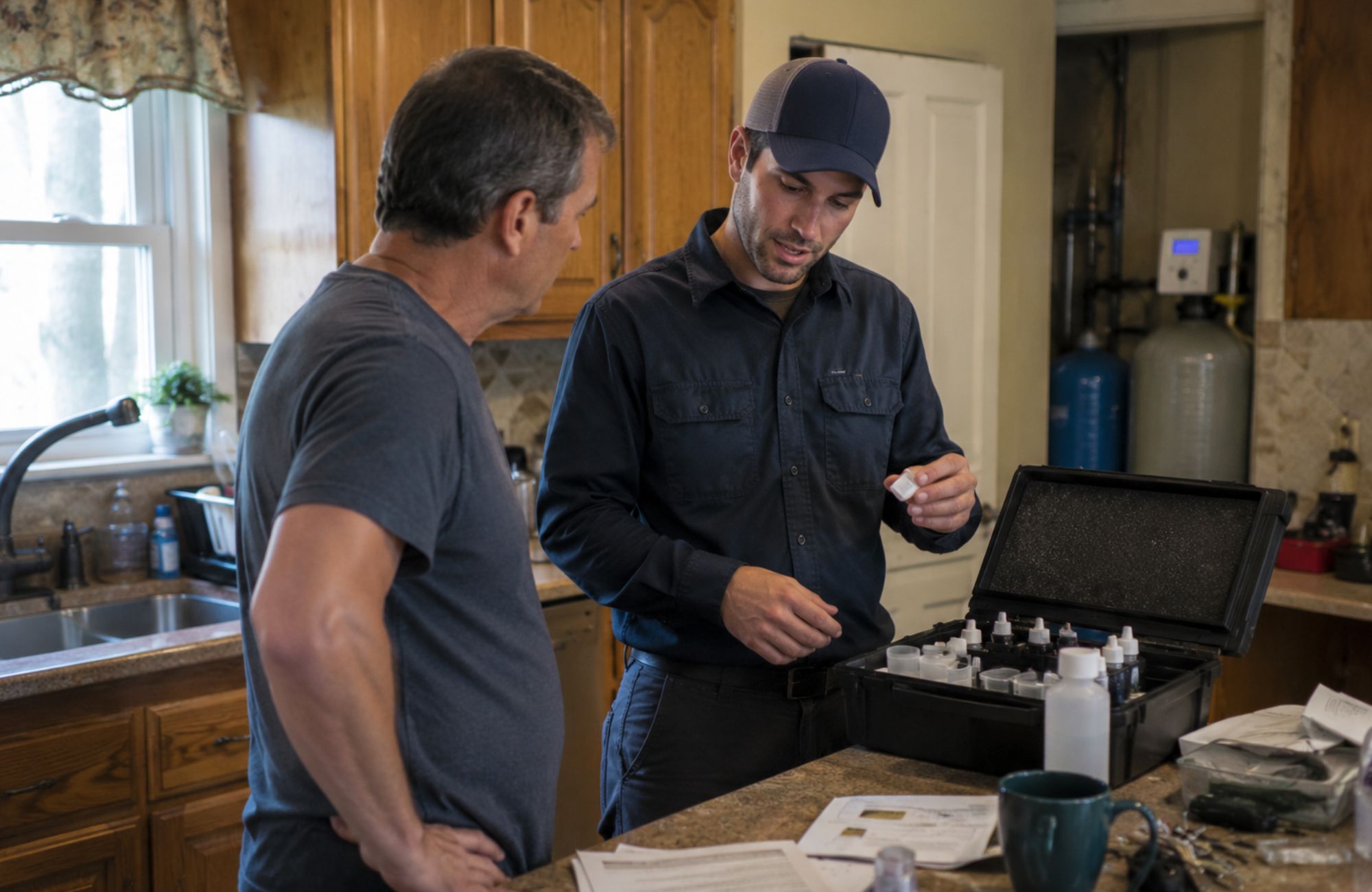
Getting a lab report back after water testing can feel confusing when you do not know what the numbers mean. Many homeowners search for how to read water well test report because they want one clear answer: is my drinking water safe? In New Milford and nearby Connecticut towns, private well water can change because of groundwater conditions, aging wells, flooding, and nearby surface water runoff.
This guide explains how to read your report, understand common contaminants, and know when to take action. If your results show bacteria, high metals, strange odors, or sudden water quality changes, Housatonic Valley Well Pump Services can help with professional water testing and well inspection services so you can review your results clearly and choose the right next step.
What Is a Water Well Test Report?
A water well test report shows what contaminants, minerals, bacteria, or chemicals are present in your private well water. It also shows whether those results fall within recommended safety or quality limits. The report helps homeowners understand health risks, taste issues, staining, plumbing damage, and possible treatment needs.
Private well owners are responsible for testing their own water supply. The Environmental Protection Agency regulates public water systems, but private wells need routine homeowner testing and maintenance. EPA primary standards protect public health by limiting contaminants in drinking water.
Primary Standards vs. Secondary Standards
Water quality issues usually fall into two groups: health-based concerns and aesthetic concerns. This helps homeowners know which results need urgent attention and which affect taste, odor, staining, or comfort.
| Category | What It Means | Examples |
| Primary Standards | Health-related limits | Arsenic, nitrate, bacteria, lead |
| Secondary Standards | Taste, odor, color, staining, or scaling concerns | Iron, manganese, pH, TDS, hardness |
Primary contaminants may create a health risk if levels run too high. Secondary contaminants may not always make water unsafe, but they can still damage fixtures, stain sinks, affect soft water performance, or raise repair costs.
What Most Lab Reports Include
A complete lab report may include:
- Total coliform and E. coli
- Arsenic and lead
- Nitrate
- Iron and manganese
- pH
- Water hardness
- Total dissolved solids
- Turbidity
- Copper
- Sodium
- Fluoride
These results help you see both safety concerns and everyday water quality problems.
How to Read Water Well Test Results Step by Step
When reviewing a well water test report, focus first on bacteria, arsenic, nitrate, pH, and metals like iron or manganese. These results often identify the most important drinking water safety concerns, corrosion risks, staining problems, and treatment needs.
Step 1: Find the Contaminant Name
Start with the first column of your lab report. This usually lists the contaminant name, such as arsenic, nitrate, iron, manganese, total coliform, or lead.
Some contaminants come from natural groundwater. Others may come from surface water, septic systems, fertilizer runoff, old pipes, or damaged well components. If the report says “detected,” “present,” “above limit,” or “unsatisfactory,” read that line carefully.
Step 2: Understand mg/L, µg/L, ppm, and gpg
Most water testing reports use milligrams per liter, written as mg/L. For water, mg/L is generally equal to parts per million, or ppm. Trace elements may appear as micrograms per liter, written as µg/L, which is similar to parts per billion, or ppb.
| Unit | Meaning | Often Used For |
| mg/L | Milligrams per liter | Nitrate, iron, hardness, TDS |
| ppm | Parts per million | Same practical meaning as mg/L in water |
| µg/L | Micrograms per liter | Trace contaminants |
| ppb | Parts per billion | Arsenic and very small amounts |
| gpg | Grains per gallon | Water hardness |
Hardness sometimes appears in grains per gallon. One gpg equals about 17.1 mg/L.
Step 3: Read the pH Result
pH has no unit. It runs from 0 to 14, with 7.0 considered neutral. Drinking water usually falls within a recommended pH range of 6.5 to 8.5, according to EPA secondary drinking water guidance.
Low pH below 7.0 means acidic water. Acidic water can corrode plumbing, damage fixtures, create blue-green staining, and increase copper exposure from pipes.
Step 4: Compare Results With Key Limits
Here are common benchmarks homeowners should know:
| Test Result | Common Limit or Guidance | Why It Matters |
| Arsenic | 0.010 mg/L, or 10 ppb | Long-term health risk |
| Nitrate | 10 mg/L | Higher risk for infants and pregnant individuals |
| Iron | 0.3 mg/L | Rusty color, metallic taste, staining |
| Manganese | 0.05 mg/L secondary standard | Staining and taste issues |
| TDS | 500 mg/L secondary standard | Taste and scaling issues |
| pH | 6.5 to 8.5 | Corrosion or scaling concerns |
EPA secondary standards list iron at 0.3 mg/L, pH at 6.5 to 8.5, and total dissolved solids at 500 mg/L for taste, odor, staining, or appearance concerns.
Common Contaminants Found in Connecticut Well Water
Common well water contaminants include bacteria, nitrate, heavy metals like arsenic and lead, and minerals such as iron and manganese. In Connecticut, homeowners also deal with hard water, sulfur odors, acidic water, staining, and total dissolved solids that affect water quality and home systems.
Bacteria and Total Coliform
Total coliform in a report means bacteria are present. This often points to contamination from surface water, poor drainage, flooding, a cracked well cap, or another pathway into the well.
Any coliform detection needs follow-up. If E. coli appears, stop drinking the water until a professional corrects the source and follow-up testing confirms the water is safe.
Arsenic, Lead, and Other Metals
Arsenic and lead need careful attention because long-term exposure can create serious health risk concerns. EPA’s maximum contaminant level for arsenic is 0.010 mg/L, or 10 ppb.
Drinking water with high levels of certain metals for many years may increase the risk of cancer and other health problems. Arsenic exposure has been linked to long-term risks, including cancer and cardiovascular disease.
Nitrate
Nitrate often comes from fertilizer, septic systems, agricultural activity, or runoff. The U.S. drinking water MCL for nitrate is 10 mg/L as nitrate-nitrogen.
High nitrate creates significant health concerns for infants and pregnant individuals. Short-term exposure to some contaminants, including nitrate and bacteria, can make people sick quickly and may affect the stomach, heart, skin, lungs, kidneys, or nervous system.
Iron and Manganese
Iron and manganese commonly create staining, sediment, metallic taste, and black or orange residue. EPA secondary guidance lists iron at 0.3 mg/L because higher levels can cause rusty color, sediment, metallic taste, and reddish-orange staining.
Manganese also deserves attention. EPA has a lifetime health advisory of 0.3 mg/L for manganese and a short-term advisory of 1.0 mg/L. These levels help protect against possible neurological effects, especially for infants and children.
What Water Quality Metrics Mean for Your Home
Water quality metrics show how your water behaves inside your plumbing, appliances, fixtures, and pressure system. Even when the water does not create an immediate health concern, minerals, acidity, hardness, and dissolved solids can still cause staining, scale buildup, corrosion, poor taste, and higher water-related repair costs.
Total Dissolved Solids
Total dissolved solids, or TDS, measure the total amount of dissolved substances in water. These may include minerals, salts, metals, and other dissolved materials.
EPA secondary guidance lists 500 mg/L as the recommended level for TDS because higher levels can affect taste and cause scaling concerns. High TDS may also make water taste salty, bitter, or mineral-heavy.
Water Hardness
Water hardness comes mainly from calcium and magnesium. Hard water does not always create a health concern, but it can create scale buildup in pipes, water heaters, dishwashers, and fixtures.
A water softener may help when hardness causes:
- White buildup around faucets
- Spots on dishes
- Dry-feeling skin
- Soap that does not lather well
- Scale inside appliances
Low pH and Corrosion
Low pH water can corrode copper pipes, fittings, and fixtures. Over time, that corrosion may lead to leaks, staining, metallic taste, and higher copper levels in drinking water.
In Connecticut homes with older plumbing, low pH can create expensive problems if no one treats it early. A neutralizer system may help raise pH and protect the plumbing system.
How Test Results Affect Your Well Pump, Pressure Tank, and Appliances
Poor water quality can affect more than drinking water. Iron, manganese, hardness, sediment, low pH, and high TDS can strain well pumps, clog filters, reduce water pressure, damage pressure tanks, and shorten the life of water heaters and appliances.
Signs Water Quality Is Hurting Your System
Homeowners often notice visible signs before a major repair issue appears. These clues can help you connect lab results with what you see around the house.
| Home Symptom | Possible Cause |
| Orange staining | Iron |
| Black staining | Manganese |
| Blue-green stains | Low pH or copper corrosion |
| White crust | Hard water |
| Rotten egg smell | Hydrogen sulfide |
| Cloudy water | Turbidity, air, or sediment |
| Pressure drop | Scale, sediment, pump issue, or clogged treatment system |
Homeowners in Connecticut sometimes notice orange staining around sinks, tubs, or toilets when iron levels increase in well water. Over time, iron sediment may also clog filters, restrict water flow, and add strain to pressure tanks or plumbing fixtures.
Why Professional Sizing Matters
Water treatment equipment needs the right size, flow rate, and media type. A generic filter may not fix high iron, bacteria, arsenic, or hard water if it does not match the lab results.
Choosing the right water treatment system depends on the specific contaminants found in the lab report, along with the home’s water usage, plumbing setup, and well system condition. Different water problems may require different solutions, including softeners, sediment filters, UV disinfection systems, neutralizers, or specialized filtration.
Why Regular Well Water Testing Matters
Regular water testing helps confirm that your private well water remains safe and reliable. Annual testing can catch bacteria, nitrate, pH changes, and other contaminants before they create health concerns, plumbing damage, or emergency repairs.
The EPA recommends that homeowners test private wells every year for total coliform bacteria, nitrate, total dissolved solids, and pH. Testing should also happen after flooding, nearby construction, a well repair, a pump replacement, or a sudden change in taste, smell, color, or pressure.
Use a State-Certified Laboratory
A state-certified lab gives more reliable results because it follows approved testing methods. This matters when homeowners need to make decisions about safe drinking water, treatment options, real estate inspections, or long-term health concerns.
Ask the lab which containers to use, how fast to deliver samples, and whether the test needs refrigeration. Poor sample handling can affect results, especially for bacteria.
When to Test More Often
You should test sooner if you notice:
- Rotten egg smell
- Cloudy water
- Brown or orange water
- Salty taste
- Sudden low pressure
- Flooding near the well
- A damaged well cap
- Recent septic issues
Many homeowners schedule well water testing in spring after snowmelt, heavy rain, or seasonal flooding because changing groundwater conditions can affect bacteria levels, sediment, and overall water quality.
When to Call a Professional for Well Water Problems
Call a professional when your water test results show bacteria, arsenic, high nitrate, major pH problems, strong odors, heavy staining, or sudden pressure changes. Fast action helps protect drinking water, prevent equipment damage, and avoid choosing the wrong treatment system.
Problems That Should Not Wait
Some test results need quick action. Do not ignore:
- E. coli or total coliform
- Arsenic above 0.010 mg/L
- Nitrate above 10 mg/L
- Strong sulfur odor
- Sudden no-water issues
- Major pressure loss
- Brown, cloudy, or gritty water
If bacteria are present, avoid drinking the water until disinfection, repairs, and follow-up testing confirm the water is safe.
Conclusion
Understanding your water quality report helps you protect your family’s health, your plumbing, and your well system. A confusing lab report becomes much easier to act on when you know the key units, safety limits, contaminant risks, and warning signs.
If your well water test results show bacteria, arsenic, high nitrate, iron, manganese, hard water, or low pH, Housatonic Valley Well Pump Services can help. Contact us for well inspections, water treatment guidance, filtration recommendations, pressure tank support, and emergency well service across New Milford and nearby Connecticut communities.
FAQs
How do you read water test results?
Read the contaminant name, the result, the unit, and the recommended limit. Most lab reports use mg/L, ppm, µg/L, or ppb to show how much of a substance appears in the water. Focus first on bacteria, nitrate, arsenic, lead, pH, and manganese because these can affect health or plumbing. If a result exceeds the recommended limit, schedule follow-up testing or professional treatment guidance.
What is a normal water test result?
A normal water test result shows no harmful bacteria and contaminant levels below recommended health or quality limits. Good drinking water usually has pH between 6.5 and 8.5, no E. coli, nitrate below 10 mg/L, and arsenic below 0.010 mg/L. Some minerals may still appear because groundwater naturally contains dissolved substances. The goal is safe drinking water with no serious health risk and no major taste, odor, staining, or scaling concerns.
Can coliform in well water cause UTI?
Total coliform does not always cause a UTI directly, but it shows that contamination has entered the water supply. That contamination may include harmful bacteria, especially if E. coli is present. Drinking contaminated water can create health concerns, so homeowners should stop using the water for drinking until a professional identifies the source and a lab confirms the water is safe.
What is a good well water test?
A good well water test checks for bacteria, nitrate, arsenic, lead, pH, water hardness, iron, manganese, total dissolved solids, and turbidity. Connecticut homeowners may also need testing for sodium, fluoride, copper, hydrogen sulfide, or other contaminants depending on local conditions. A good test should come from a state-certified lab and include clear units, reference limits, and notes about unsafe results. Comprehensive testing helps match treatment options to the actual water problem.
What does high TDS mean in a water quality report?
High TDS means the water contains a high amount of dissolved minerals, salts, metals, or other substances. The EPA’s secondary drinking water guidance recommends keeping total dissolved solids (TDS) below 500 mg/L because higher levels may affect taste, odor, or scaling inside plumbing fixtures and appliances. High TDS does not always mean the water is unsafe, but it may point to quality issues that need more testing.
Should I install a water softener after a failed water test?
A water softener helps with hard water caused by calcium and magnesium. It does not remove every contaminant, including bacteria, arsenic, nitrate, or many chemicals. Before installing equipment, review the full lab report so the treatment matches the specific contaminants in your well water. Housatonic Valley Well Pump Services can help determine whether you need a softener, filter, neutralizer, UV system, or another solution.