


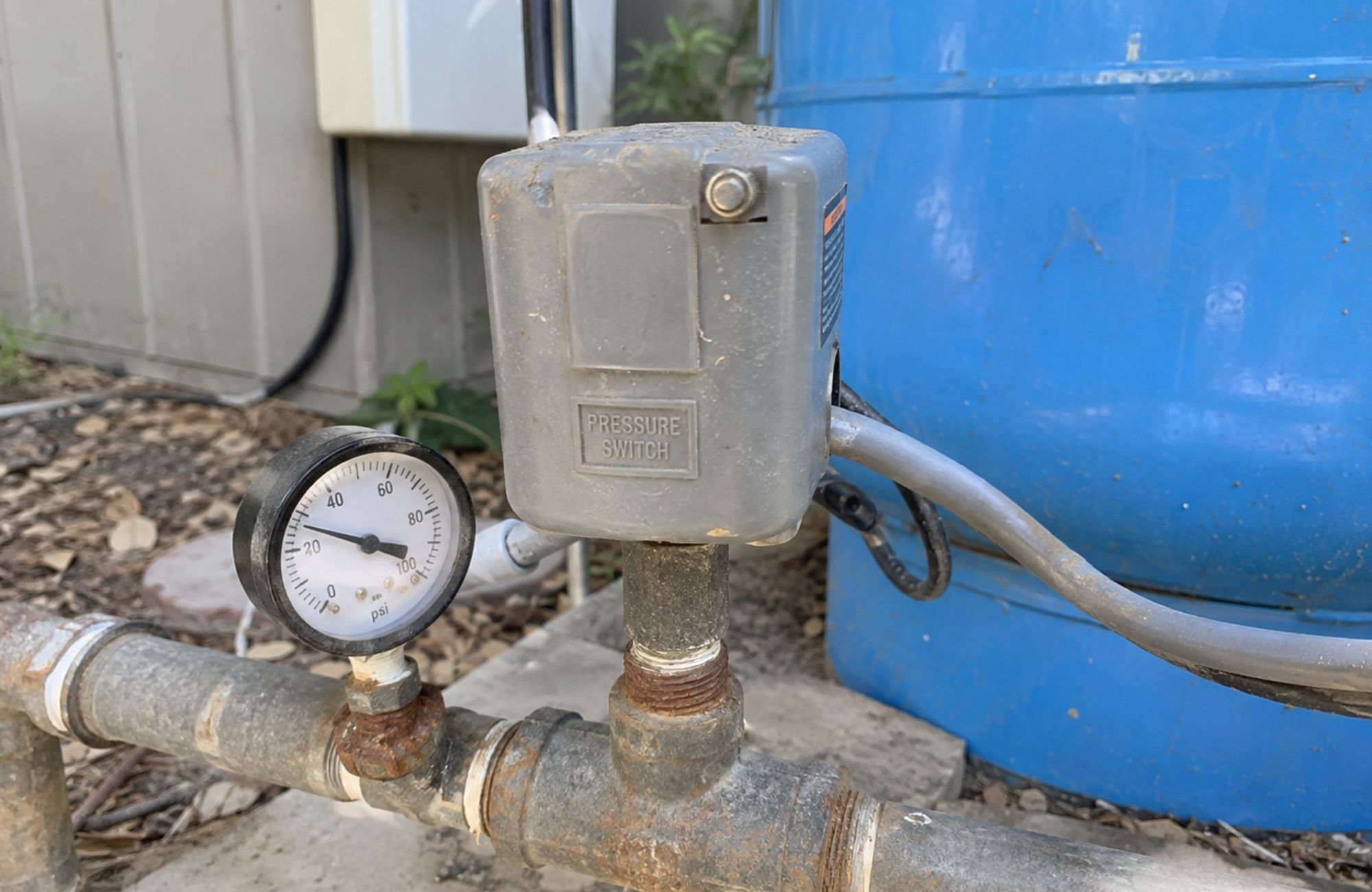
If your well pump will not start, will not shut off, or seems to cycle at the wrong time, you may wonder how to tell if a well pressure switch is bad. The switch is one possible cause, but pressure tank problems, leaks, wiring faults, clogged components, and pump problems can create many of the same symptoms.
For Connecticut homeowners with a private well, watching how the pump and pressure gauge behave together can provide useful clues. Understanding what the switch should do can also help you decide whether the problem needs professional testing.
What Does a Well Pressure Switch Do?
A well pressure switch controls when the well pump starts and stops based on water pressure. During normal operation, the pressure switch responds to changes in system pressure by controlling power to the pump. When pressure falls to the switch’s cut-in pressure, the switch closes the pump circuit. When pressure rises to its cut-out pressure, the switch opens the circuit and stops the pump.
Common residential switches are available in ranges such as 20/40, 30/50, and 40/60 PSI. For example, a 30/50 switch is intended to start the pump around 30 PSI and stop it around 50 PSI. The correct numbers depend on the switch and well system, so pressure below 40 PSI does not automatically mean something has failed.
The pressure switch works with the pump, pressure tank, pressure gauge, plumbing, and electrical controls. A problem with any of those parts can change when the pump starts or how quickly system pressure rises and falls.
How to Tell If a Well Pressure Switch Is Bad
A bad well pressure switch may fail to start the pump at the expected cut-in pressure, fail to stop it after pressure reaches cut-out, chatter repeatedly, or show burned or badly corroded contacts. These signs can point toward the switch, but they do not prove it has failed because other well-system problems can produce similar behavior.
The Pump Does Not Turn On at Cut-In Pressure
Run water while watching the pressure gauge. If pressure falls through the switch’s expected cut-in point but the pump does not start, the switch may not be closing its electrical contacts.
If the breaker keeps tripping, do not continue resetting it. Pressure switch problems can contribute to breaker trips, but wiring, the pump motor, and other electrical issues may also need to be checked.
The Pump Does Not Stop at Cut-Out Pressure
If pressure continues rising above the expected cut-out point, turn off power to the pump and stop troubleshooting. Do not allow the pump to continue running while system pressure keeps climbing; the cause should be professionally diagnosed before the pump is restarted.
There is an important difference if the pressure never reaches cut-out. A weak pump, plumbing leak, low well yield, restricted pipe, clogged filter, or another problem may keep the system from building enough pressure. Changing the switch will not fix a pump or water-supply problem that prevents pressure from rising.
The Switch Clicks or Chatters Rapidly
Repeated clicking or chattering can point to unstable switch operation or worn contacts. It may also happen because system pressure is changing too quickly for another reason.
A waterlogged pressure tank, incorrect tank air charge, system leak, or poor tank sizing can cause frequent pump cycling. Loss of air charge, improper switch settings, tank sizing, and changing system demand can all affect how frequently the pump cycles.
You See Heavy Corrosion or Burned Contacts
Electrical contacts wear as they open and close over time. Heavy pitting, scorching, corrosion, melted material, or other clear physical damage can support a diagnosis of pressure switch failure.
Turn off power to the pump before removing the pressure-switch cover or getting near electrical components. The system combines electricity with pressurized water, so damaged wiring, wet electrical parts, smoke, or a burning smell are reasons to stop troubleshooting and call a qualified professional.
The Pump Short-Cycles
Short cycling means the pump starts and stops more frequently than it normally should. A faulty pressure switch can contribute, but a pressure tank problem is another common condition that should be checked.
The pressure tank provides stored water and an air cushion between pump cycles. When tank performance changes, pressure may rise and fall rapidly, making a working pressure switch open and close frequently. This is one reason short cycling should not be treated as proof that the switch itself is bad.
How Can You Check a Well Pressure Switch Safely?
You can check basic pressure switch behavior by watching the pressure gauge through one normal pump cycle. Compare when the pump starts and stops with the switch’s expected cut-in and cut-out pressures. Turn off power at the breaker before opening the switch cover.
- Check the switch’s pressure rating.
- Run water and note the PSI when the pump starts.
- Stop using water and note the PSI when the pump stops.
- With power off, look for corrosion, burned contacts, insect debris, or visible damage.
- Stop if you find damaged wiring, moisture, scorching, or repeated breaker trips.
Compare your readings with the switch’s actual settings rather than assuming every system uses 40/60 PSI. The 40/60 pressure switch setting guide explains how cut-in and cut-out pressures work.
Is It the Pressure Switch or the Pressure Tank?
Pressure-switch and pressure-tank problems can cause similar symptoms, especially short cycling and uneven water pressure. The main clue is whether the switch responds correctly as pressure rises and falls. A tank problem can make a working switch cycle rapidly, so the switch should not be blamed from symptoms alone.
| What You Notice | Possible Switch Issue | Other Causes to Check |
| Pump does not start at cut-in | Contacts may not close | Breaker, wiring, pump, control box |
| Pump stays on past cut-out | Contacts may remain closed | Gauge or control issue |
| Pump cannot reach cut-out | Setting may be incorrect | Leak, weak pump, low well yield |
| Pump cycles rapidly | Switch may chatter | Low tank air charge, waterlogged tank, leak |
| Low or uneven pressure | Switch may operate at wrong points | Tank, pump, filters, plumbing restrictions |
For many bladder-style tanks, air pre-charge is set below the switch’s cut-in pressure, but the correct setting depends on the equipment. If the cause is unclear, pressure tank installation and replacement or well pump services can help identify the problem.
When Should a Well Pressure Switch Be Replaced?
A well pressure switch may need replacement when testing shows that it no longer opens or closes properly, or when the contacts or internal parts are badly worn, burned, or corroded. The replacement must also match the pump, pressure range, electrical requirements, and pressure tank setup.
- Replace the switch if contacts are badly burned, pitted, or corroded.
- Consider replacement if the switch repeatedly fails to start or stop the pump at the correct pressure.
- Do not replace it based on low pressure or short cycling alone, since other system problems can cause the same symptoms.
- Avoid changing spring adjustments unless the switch and system requirements are clearly understood.
If the pump will not supply water, runs continuously, repeatedly trips the breaker, or shows signs of an electrical problem, professional troubleshooting is safer than continuing to reset or adjust the switch.
Get the Cause Confirmed Before Replacing the Switch
A failing pressure switch can stop a well pump from cycling correctly, but many pressure-switch symptoms overlap with pressure tank, pump, plumbing, and electrical problems. Watching the pressure gauge and pump together can help narrow the possibilities, but professional testing may still be needed to identify the actual cause.
Housatonic Valley Well Pump Services provides well pump and pressure tank service for homeowners in Litchfield County and Upper Fairfield County. If your well pump will not start, will not stop, short-cycles, or leaves you with unreliable water pressure, contact us for a free quote and upfront pricing.
FAQs
How Do You Determine If a Pressure Switch Is Bad?
A well pressure switch may be bad if the pump does not start at the expected cut-in pressure or stop at the expected cut-out pressure. Burned, corroded, or badly pitted contacts can also point to switch failure. Because pump, tank, wiring, and sensing problems can cause similar symptoms, professional testing may be needed to confirm the cause.
What Is the Typical Lifespan of a Well Pump Pressure Switch?
There is no single lifespan that applies to every well pump pressure switch. Service life depends on cycling frequency, electrical load, moisture, corrosion, contact wear, and overall system condition. Replacement should be based on the switch’s condition and test results rather than age alone.
Can You Unstick a Pressure Switch?
A stuck pressure switch may move again, but that does not mean it is safe or reliable. Repeated sticking, burned contacts, corrosion, or heavy pitting can indicate internal wear or damage. Do not rely on tapping, sanding, or forcing the switch as a permanent repair.
How Do I Reset a Well Pressure Switch?
Some well pressure switches have a manual reset lever, but many do not. On certain low-pressure cut-off models, the lever may need to be held in the start position until system pressure begins to recover. Because reset procedures vary by switch, follow the manufacturer’s instructions for your specific model and never force or bypass the switch.
Can a Bad Pressure Tank Act Like a Bad Pressure Switch?
Yes. A pressure tank with low air charge, a damaged bladder, or another tank problem can cause short cycling and rapid pressure changes. The pressure switch may be working normally and simply responding to those changes, so the tank should also be checked before replacing the switch.
Why Does My Well Pressure Switch Keep Clicking?
A well pressure switch may keep clicking because the contacts are chattering or system pressure is rising and falling too quickly. Possible causes include switch wear, pressure-tank problems, leaks, or incorrect settings. Testing the full system can show whether the switch itself is faulty or reacting to another problem.