


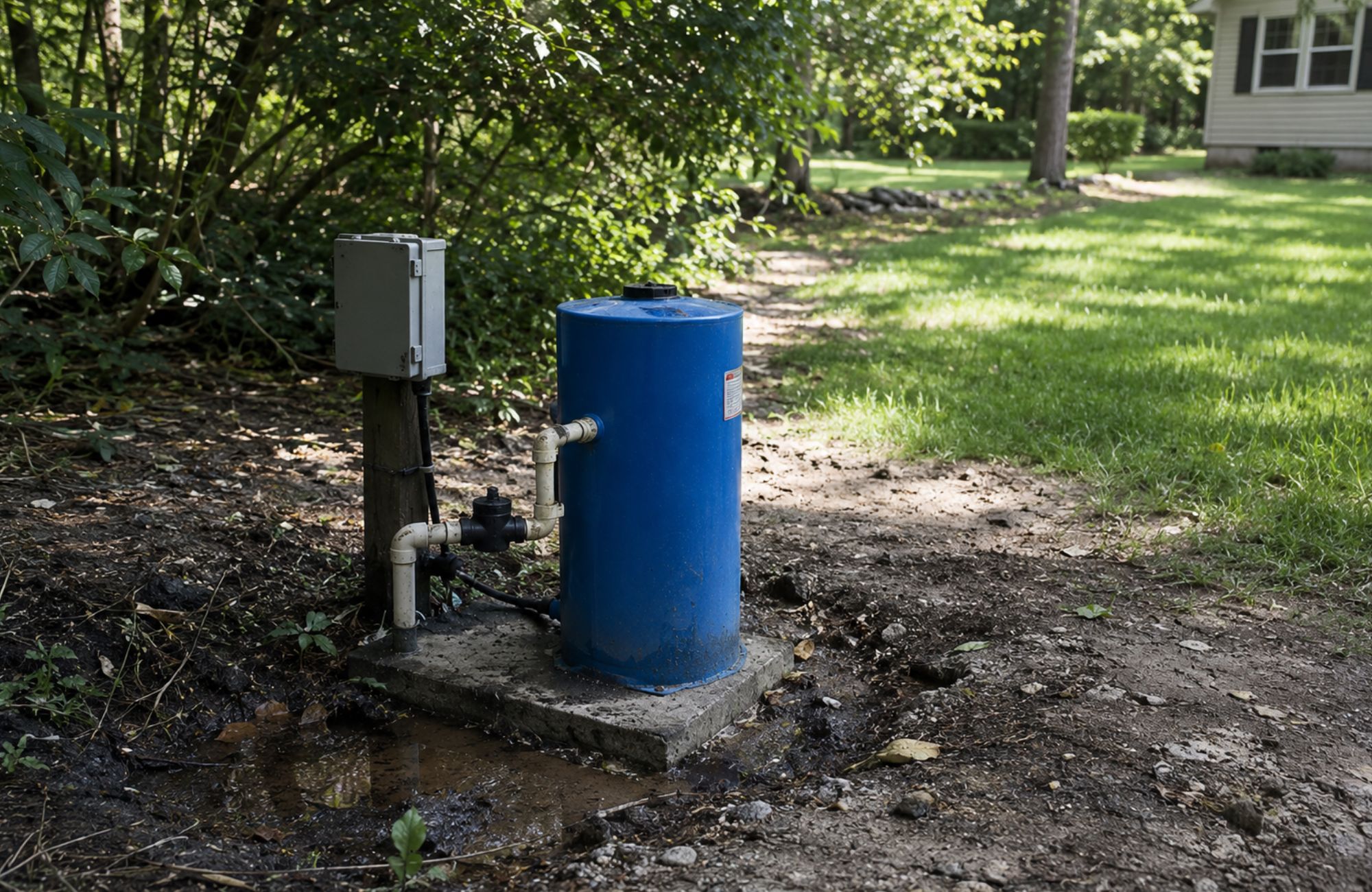
A 4-season water well needs regular care to stay reliable through Connecticut’s changing weather. This guide is for homeowners with private wells who want to protect their water pressure, pump performance, and drinking water quality year-round.
Winter freezing, heavy spring rains, summer heat, and fall debris can all affect how a private well system works. Small changes in pressure, taste, odor, or pump behavior can point to larger issues if they are ignored.
If your water pressure drops, your pump runs nonstop, or your water suddenly tastes or smells different, Housatonic Valley Well Pump Services can do a well inspection of the system before the issue turns into an emergency.
What Is a 4 Season Water Well?
A 4-season water well is a private water system that needs care during winter, spring, summer, and fall. It depends on groundwater, a properly drilled well, a working pump, a secure well cap, stable pressure, and routine testing to provide safe water throughout the year.
Unlike public water, private well care falls on the homeowner. A year-round well can support drinking water, household use, livestock, and equipment, but it also needs regular maintenance, water tests, and seasonal protection as weather changes.
Heavy rain can move surface water, soil, bacteria, fertilizers, and debris toward the well area. Summer heat can reduce water levels, while winter freezing can damage pipes, seals, and pressure lines. The EPA recommends annual testing for total coliform bacteria, nitrates, total dissolved solids, and pH, with added tests when water taste, odor, or clarity changes.
A reliable well system usually depends on:
- Well pump
- Pressure tank
- Pressure switch
- Well cap and seal
- Water lines
- Filtration or treatment equipment
Winter Well Problems
Winter can cause frozen pipes, low pressure, pump strain, and no-water issues in Connecticut homes. In many cases, the well itself is not frozen. The problem often starts with exposed pipes, shallow lines, weak seals, or plumbing connections above ground.
Why Freezing Causes Water Problems
Groundwater below the surface usually stays more stable than outdoor air, but frozen soil can slow recharge. The bigger risk comes from exposed pipes, tank areas, crawl spaces, basement walls, and other unprotected parts of the system.
When water freezes inside a pipe, it expands and creates pressure. That pressure can crack the pipe or damage the line. After thawing, cracks may allow surface water or debris to enter the system.
Watch for these winter warning signs:
- Low pressure at the faucet
- No water from one or more fixtures
- Air sputtering from the faucet
- The pump is running, but no water is coming out
- Water leaks near exposed pipes
- Strange pump noises
- Dirty or cloudy water after thawing
How to Prevent Freezing
The best way to prevent freezing is to prepare before the first hard freeze. Homeowners should inspect exposed pipes, the well cap, drain areas, and visible lines connected to the system.
You can reduce winter problems by insulating exposed pipes, sealing cracks, disconnecting outdoor hoses, and checking that the well cap is secure. For seasonal wells that close for winter, turn off power to the pump, drain the system, and insulate exposed pipes to prevent damage.
Spring Water Quality Risks
Spring can help recharge groundwater, but it can also increase contamination risk for private wells. Heavy spring rains may move surface water, soil, bacteria, nitrates, fertilizers, chemicals, and other contaminants toward the well area.
How Heavy Rain Affects Well Water
Heavy rain can overwhelm poor drainage around a well. If the well cap is loose, cracked, or poorly sealed, surface water may move toward the opening and affect the water supply. This can change the taste, odor, appearance, and safety of drinking water. In some cases, the water may still look normal even when bacteria or nitrates are present. That is why water testing is more reliable than sight, taste, or smell alone.
Common spring warning signs include:
- Cloudy water
- Rotten egg odor
- Metallic taste
- Iron staining
- Sediment in filtered water
- Water changes after rain
- Bacteria found during water tests
When to Test Your Water
Private well water should be tested at least once a year. Testing also makes sense after flooding, heavy spring rains, major plumbing work, pump repairs, or any change in taste, odor, color, or clarity. Spring and fall rains can cause short-term spikes in nitrates and microbial activity, especially when surface runoff reaches the well area. Homeowners can also check with the local health department for area-specific groundwater concerns.
Summer Well Problems
Summer can bring higher water use, lower groundwater recharge, and more strain on the pump. Many homeowners notice seasonal water issues during hot weather, especially when outdoor use, irrigation, laundry, and showers increase at the same time.
Low Water Pressure in Summer
Low pressure during summer does not always mean the well is going dry. A weak pressure tank, failing pump, clogged line, leak, or poor filtration setup can create similar symptoms. Many homes notice that water runs fine in the morning but slows later in the day. This can happen when household demand rises, and the well needs more time to recover.
Common summer warning signs include:
- Lower pressure during peak use
- Pump running longer than normal
- Water sputtering at the faucet
- Air in the line
- Dirty water after heavy use
- Pressure is dropping during outdoor water use
If these signs keep happening, a professional inspection can help identify whether the issue comes from water levels, pump performance, the pressure tank, or filtration equipment.
Pump Stress During Dry Weather
A pump works harder when water levels drop or household demand increases. Long run times can shorten equipment life, raise power use, and increase the chance of pump failure. Summer heat can also affect water quality. Lower water levels may concentrate minerals or change taste and odor. Some homes may notice more iron staining, sulfur odor, or sediment during dry periods.
For homeowners in New Milford, Danbury, Brookfield, and nearby towns, local groundwater conditions can vary from one property to another. A seasonal inspection helps confirm whether the pump, pressure tank, filters, and water quality are still performing correctly.
Fall Well Maintenance
Fall is one of the best times to inspect a private well system before winter freezing arrives. Seasonal maintenance helps homeowners catch weak seals, pressure problems, aging pump parts, and water quality issues before cold weather makes repairs more urgent.
Inspection Checklist Before Winter
A fall inspection should look at both water quality and system performance. The goal is to protect safe water, reduce freezing risk, and lower stress on the pump.
Before winter, homeowners should:
- Inspect the well cap
- Check the seal for cracks
- Clear debris near the well area
- Make sure surface water drains away
- Insulate exposed pipes
- Test the drinking water
- Check pressure tank performance
- Inspect pump operation
- Review filtration or softener settings
Keep vegetation trimmed around the well area. Roots, leaves, soil movement, and poor drainage can affect water safety over time.
Why Preventive Service Matters
Preventive service usually costs less than emergency repair. A weak pressure tank, cracked line, damaged cap, or aging pump can often be repaired before it fails.
For Connecticut homeowners, fall maintenance is not just a seasonal task. It helps protect drinking water, reduce winter emergencies, and keep the well system working year-round.
This is also where local field experience matters. Ralph Espinal, owner of Housatonic Valley Well Pump Services, brings more than 20 years of hands-on experience and full J1 certification in CT and NY. That experience helps homeowners get practical recommendations based on real well system conditions.
Signs You Need Well Service
A private well system often gives warning signs before it fails. Changes in pressure, taste, odor, color, or pump behavior may point to mechanical issues, water quality concerns, or groundwater changes that need attention.
Pump Failure Warning Signs
A well pump should not run constantly. If it does, the system may have a pressure issue, a failing pump, a damaged line, or a low water level.
Watch for these pump-related signs:
- Pump runs nonstop
- The pump turns on and off quickly
- No water at the faucet
- Low pressure throughout the home
- Higher power bills
- Air in the water line
- Water stops during normal use
These signs should be checked before the pump fails. Continuing to run a struggling pump can make the repair more expensive.
Water Quality Warning Signs
Water quality problems may show up as odor, taste, staining, or cloudy water. They can also be invisible, which is why water tests matter.
| Problem | Possible Cause | Recommended Service |
| Low pressure | Pressure tank or pump issue | System inspection |
| Rotten egg odor | Sulfur bacteria | Water treatment |
| Metallic taste | Iron or minerals | Water test and filtration |
| Cloudy water | Sediment or contamination | Water testing |
| No water | Pump or pressure failure | Emergency well service |
| Water changes after rain | Surface contamination | Cap and seal inspection |
Do not rely only on taste or smell. Annual private well testing should include bacteria, nitrates, total dissolved solids, and pH, with added testing when other contaminants are suspected.
Seasonal Well Maintenance Checklist
Seasonal well maintenance helps protect groundwater quality and pump performance throughout the year. It also helps homeowners catch small issues before they become emergency repairs.
A good maintenance plan should include water tests, system inspections, pressure checks, filtration review, and a basic look at the surface area around the well.
| Season | What to Check | Why It Matters |
| Winter | Exposed pipes, pressure, and pump operation | Helps prevent freezing and no-water issues |
| Spring | Well cap, seal, bacteria, nitrates | Heavy spring rains can raise contamination risk |
| Summer | Water levels, flow rate, pump run time | Heat and high consumption can stress the pump |
| Fall | Cap, seal, drain, pressure tank | Prepares the system before winter |
Homeowners should keep the well area clean. Do not store chemicals, fertilizers, fuel, or debris near the well. Make sure rainwater and surface water drain away from the cap.
For added safety, use a state-certified lab for water tests when possible. Testing helps owners understand water quality and decide what to test for based on local risks.
How Local Well Service Helps
A local well service company can help homeowners maintain safe, reliable private water systems year-round. The right service provider should understand local groundwater conditions, seasonal risks, pressure issues, water quality concerns, and emergency no-water problems.
For Connecticut homeowners, this support may include:
- Well pump repair
- Pump replacement
- Pressure tank service
- Water filtration systems
- Water softener installation
- Well inspections
- Emergency no-water service
Clear recommendations matter. A good inspection should explain what is happening, what needs repair, and what can wait. That approach helps homeowners avoid unnecessary work while protecting the well system long term.
Conclusion
A 4-season water well needs regular care to handle Connecticut’s seasonal variation. Winter freezing, heavy spring rains, summer heat, and fall debris can all affect water pressure, groundwater levels, pump performance, and drinking water quality. The best approach is to inspect the system, test the water, protect exposed pipes, keep the well cap sealed, and act early when warning signs appear.
If you need help protecting your private well system, Housatonic Valley Well Pump Services can help with seasonal maintenance, well inspections, water treatment, and urgent well service in New Milford and nearby Connecticut towns. Contact us today to schedule service or request a free quote.
FAQs
How much does a 4-inch well cost?
The cost of a 4-inch well depends on drilling depth, ground conditions, pump size, water line length, and local permitting needs. A shallow project may cost less, while deeper drilling through rock or difficult soil can cost much more. Homeowners should get a site-specific estimate because every property has different groundwater conditions.
Can a well go dry in winter?
Yes, a well can seem dry in winter, but the cause is not always a lack of groundwater. Freezing exposed pipes, a damaged pressure line, a failed pump, or a frozen surface connection can stop water from reaching the home. A professional inspection can determine whether the issue is freezing, pump failure, or an actual water level problem.
Is the water at the Four Seasons free?
At a hotel or resort, water policies depend on the property. Some provide complimentary filtered water, while others charge for bottled water or premium drinking water. For homeowners with a private well, water is not billed like city water, but owners still pay for power, water tests, maintenance, pump service, filtration, and repairs.
Does well water change with seasons?
Yes, well water can change with seasons because groundwater levels, surface water runoff, temperature, and household demand change throughout the year. Heavy spring rains can increase contamination risk, summer heat can reduce water levels, and winter freezing can affect pressure and pump performance. Changes in taste, odor, color, or pressure should be taken seriously.
How often should private well water be tested?
Private well water should be tested at least once a year for bacteria, nitrates, total dissolved solids, and pH. Added testing may be needed when local groundwater risks are known or when water taste, odor, color, or clarity changes. Connecticut homeowners may also need testing for naturally occurring contaminants depending on the area.
What should I do if my well suddenly stops working?
First, check whether the breaker or power switch connected to the pump has tripped. If power is on and there is still no water, avoid repeatedly restarting the pump because that can cause more damage. The issue may involve the pump, pressure tank, water line, well cap, or groundwater level.