


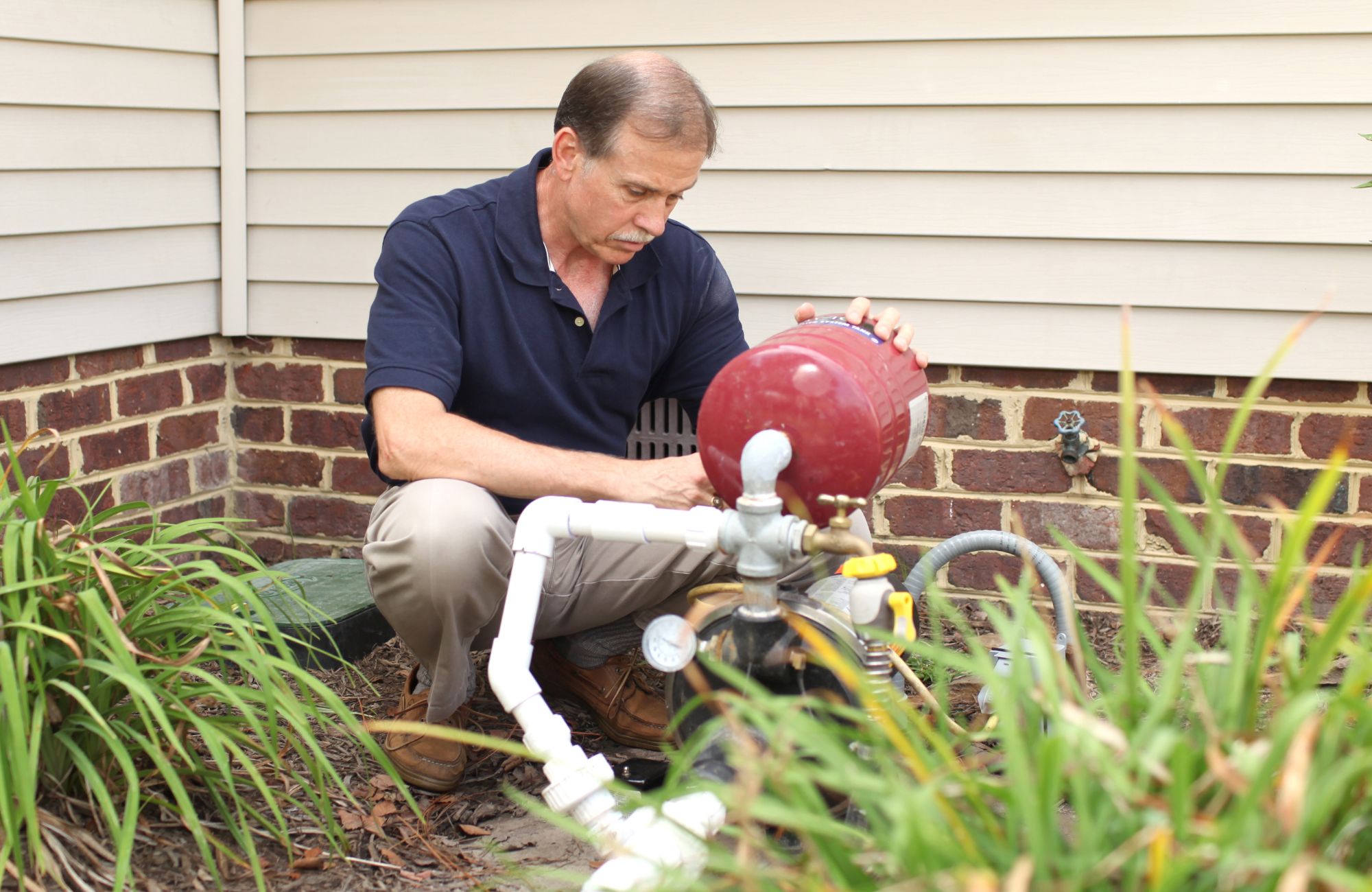
To troubleshoot a well pump, first determine whether the problem affects one fixture or the whole house. Stop all water use, check for visible leaks, inspect the sediment filter, read the pressure gauge, and reset a tripped breaker only once.
This guide covers the safest checks homeowners can make for no water, low pressure, short cycling, nonstop running, unusual sounds, and changes in water quality. If the pump cannot build pressure or the breaker trips again, shut off the system and call a licensed company that provides well pump services.
Well Pump Troubleshooting Steps: What to Check First
Start by finding out whether the problem affects one fixture or the whole house. Next, stop all water use and look for leaks. Check the pump breaker once, read the pressure gauge, and listen to the system. These safe checks help narrow the problem without opening live electrical parts or risking more damage.
Seven Safe Troubleshooting Steps
Work through these checks in order. Write down what you see and hear because those details can help a well technician test the right parts faster.
- Test more than one fixture. A weak faucet may have a clogged aerator, while no water anywhere points to the main well system.
- Stop all water use. Turn off faucets, irrigation, washing machines, dishwashers, and outdoor spigots.
- Look for leaks. Check toilets, exposed pipes, the pressure tank area, and wet ground near buried lines.
- Check the breaker once. Check the breaker marked for the well pump. It may be a double-pole breaker. Reset it only once if it has tripped.
- Read the pressure gauge. Note whether it stays at zero, rises slowly, drops with no water use, or moves up and down very fast.
- Listen to the system. Clicking, humming, grinding, rapid starts, or nonstop running can point to different faults.
- Inspect the sediment filter. A clogged whole-house filter can cut water flow even when the pump works.
A Four-Part Field Check
A useful troubleshooting rule is to diagnose the system, not just the symptom. This guide organizes the problem into four areas: water delivery, pressure, electrical control, and water condition. A no-water complaint may result from a switch, tank, filter, pipe, control, low well level, or pump fault, so testing should come before replacing parts.
Common Troubleshooting Mistakes
The wrong action can turn a small fault into a larger repair. Avoid these common mistakes:
- Resetting a breaker several times after it trips again
- Raising the pressure-switch setting before testing the tank and pump
- Assuming the pump failed without checking the filter, tank, or plumbing
- Letting a pump run when the gauge does not rise
- Touching pressure-switch contacts or live wiring
- Ignoring cloudy water, sand, or a sudden change in smell
Arrange professional well pump service if the gauge stays at zero or the breaker trips again. Do the same if the pump runs without building pressure. Do not keep restarting the system.
Well Pump Troubleshooting Chart by Symptom
One symptom can have several causes, so use the chart as a starting point rather than a final diagnosis. A trained well professional may test flow, voltage, motor amperage, tank air charge, well water level, and pipe integrity. These checks show which part failed and whether repair or replacement makes sense.
| Symptom | Possible causes | Safe first check | Urgency |
| No water anywhere | Power loss, failed switch, low well level, pipe leak, pump failure | Check the breaker once and read the gauge | High |
| Low pressure through the house | Clogged filter, weak pump, pipe blockage, tank problem, leak | Inspect the filter and visible plumbing | Moderate to high |
| Pump turns on and off fast | Waterlogged tank, torn bladder, switch problem, hidden leak | Stop water use and watch the gauge | High |
| Pump runs all the time | Leak, low well level, damaged drop pipe, bad switch, worn pump | Close all fixtures and see whether pressure rises | High |
| Pump clicks or hums | Switch, control box, capacitor, wiring, voltage, or motor fault | Turn off power if it does not start normally | High |
| Water spits air | Low well level, suction leak, pipe leak, or recent repair | Note when it starts and whether flow returns | Moderate |
| Water looks cloudy or sandy | Air, sediment, pump depth, casing, or screen problem | Fill a clear glass and watch what settles or clears | Moderate to high |
The most important clue is how the whole system behaves. A low-pressure faucet, for example, does not prove that the well pump is weak. A blocked aerator or filter can create the same complaint.
Why Is There No Water From the Well?
No water may result from power loss, a failed pressure switch, low groundwater, a damaged pipe, a blocked line, a control problem, or pump failure.
First, test faucets in different parts of the house. If only one fixture is affected, check its aerator, valve, cartridge, and nearby plumbing. If every fixture is dry, check the main shutoff, pump service switch, breaker, and pressure gauge.
A silent pump may have lost power or stopped because of a switch, control, wiring, motor, or low-water fault. A pump that runs without building pressure may be affected by low well levels, a leaking drop pipe, lost jet-pump prime, a blocked line, or internal pump damage. Turn off the system if the pump runs but the pressure gauge does not rise.
Why Is My Well Water Pressure Low or Uneven?
Low pressure at one fixture usually points to a clogged aerator, mineral buildup, a partly closed valve, or a local plumbing restriction. If several fixtures have weak flow, check the whole-house sediment filter and water softener.
Whole-house pressure loss may involve a plumbing leak, pressure-tank problem, low well level, weak pump, or poor well recovery. Watch the pressure gauge while water runs. Rapid pressure changes may point to the tank or pressure switch, while pressure that rises slowly may indicate low pump output, a leak, or limited well recovery.
A professional inspection can determine whether the problem comes from the filter, plumbing, tank, controls, or pump.
Why Does the Well Pump Keep Turning On and Off?
Frequent starting and stopping is called short cycling. Common causes include a waterlogged pressure tank, torn bladder, incorrect air charge, faulty pressure switch, hidden plumbing leak, or a tank that is too small for the home.
Short cycling increases wear on the pump motor, switch, and controls. Do not adjust the pressure switch simply to raise pressure. A technician should test the tank’s air charge, bladder, switch response, and full pump cycle.
Why Does My Well Pump Run Constantly?
A well pump may run nonstop when the system cannot reach its shutoff pressure. Common causes include a hidden leak, low groundwater, a leaking drop pipe, a weak pump, or a faulty pressure switch.
Close all faucets and stop appliances, irrigation, and outdoor water use. Watch the pressure gauge for several minutes. Turn off the system if pressure rises very slowly, stops below the shutoff point, or does not move because continuous running can waste electricity and overheat the pump motor.
Why Is the Pump Clicking, Humming, or Tripping the Breaker?
Clicking, humming, or buzzing can point to an electrical fault. The cause may be the switch, control box, capacitor, wiring, voltage, or pump motor. Repeat breaker trips also need prompt service. Treat these signs as electrical warnings. Do not open covers, touch switch contacts, or keep resetting a breaker that trips after one attempt.
What Different Sounds May Mean
A sound can narrow the search, but it cannot prove which part failed. Tell the technician where the sound comes from and what the pressure gauge does at the same time.
- Repeated clicking: The switch may be reacting to unstable pressure, a tank fault, or worn contacts.
- Humming without starting: The motor, capacitor, control box, or power supply may have a problem.
- Grinding: Internal pump or motor parts may be worn or broken.
- Buzzing at the control box: A relay, capacitor, or voltage issue may be present.
- Sudden silence: Power, wiring, the motor, or a safety control may have shut the pump down.
Inspect only the outside of closed electrical covers. If you notice moisture, rust, heat marks, a burned odor, or visibly damaged components, arrange prompt service. Do not open the cover, touch wiring, or test live electrical parts.
Surge protection, a secure electrical setup, and properly selected dry-run controls can protect some systems. A backup generator must also match the pump’s voltage and starting load.
Why Is My Well Water Sputtering, Cloudy, or Sandy?
Sputtering water often means air entered the system. The source may be a low water level, a leaking suction line, a damaged pipe, or a recent repair. Cloudy or sandy water may come from trapped air, disturbed sediment, poor pump depth, or a casing or screen problem. Lasting changes also call for water-quality testing.
Is It Air or Sediment?
Fill a clear glass with cold water and let it stand. If the cloudiness clears from the bottom upward, tiny air bubbles may be the cause. If grit settles on the bottom, the water likely contains sediment.
Air can enter after a filter change, tank service, or plumbing repair. Ongoing sputtering may point to a suction leak in a jet-pump system, low well water, or a damaged pipe.
Sand may appear when the pump sits too close to the bottom. It can also show up when the water level falls or the well screen or casing has a problem. Reduce heavy water use until the well is checked. Continued pumping can move more grit into pipes, fixtures, and treatment equipment.
When Should You Test the Water?
Test private well water after system service and whenever its taste, smell, color, or clarity changes. The U.S. Environmental Protection Agency recommends annual testing for total coliform bacteria, nitrates, total dissolved solids, and pH. Homeowners should also test for contaminants of local concern, which may include arsenic or other naturally occurring substances.
Testing is especially important when:
- The well has been opened or repaired.
- Floodwater has reached the well area.
- Sand or sediment keeps returning.
- The water develops a new color, taste, or smell.
- The system loses pressure and contamination may have entered.
- The well has never been tested for local contaminants.
Iron, manganese, sulfur odor, hardness, bacteria, and arsenic require different treatment methods. Housatonic Valley can inspect the mechanical system and recommend water filtration and treatment based on certified laboratory results rather than guesswork.
Is It the Pump, Pressure Switch, or Pressure Tank?
The pump, pressure switch, and pressure tank work as one system, so their symptoms often overlap. Short cycling and sharp pressure swings often point to the tank or switch. No flow or failure to build pressure may involve the pump, water level, pipes, check valve, power supply, or controls.
The pressure switch reads system pressure and tells the pump when to start and stop. The pressure tank stores water under air pressure, limits pump starts, and helps keep flow steady. The pump moves water from the well into the home.
| Component | Main job | Common warning signs | Professional test |
| Well pump | Moves water from the well | No flow, weak output, nonstop running, motor noise | Flow, pressure, voltage, amperage, and water-level tests |
| Pressure switch | Starts and stops the pump | Clicking, no start, no shutoff, uneven cycling | Contact, pressure, voltage, and sensing-line checks |
| Pressure tank | Stores pressurized water and cuts pump starts | Short cycling, sharp pressure swings, low drawdown | Bladder and air-charge tests |
| Drop pipe or check valve | Carries water and holds pressure | Pressure loss, nonstop running, slow recovery | Leak and pressure-hold tests |
| Sediment filter | Traps suspended grit | Low household flow with normal pump pressure | Filter and before-and-after pressure check |
The field lesson is simple: a symptom does not name the failed part. A torn tank bladder can make a good pump cycle too often. A clogged filter can cause low flow while the pump and tank remain sound.
Schedule a complete well inspection before approving pump replacement. Housatonic Valley tests the connected parts and explains the findings with upfront pricing.
Should You Repair or Replace the Well Pump?
The choice to repair or replace should start with test results. Also consider pump condition, past repairs, energy use, well yield, home demand, and available parts. Age matters, but it should not decide the answer by itself. A bad switch, tank, filter, pipe, or check valve can copy the signs of pump failure.
| Repair may make sense when | Replacement may make sense when |
| A switch, control, or other replaceable part caused the fault | Testing confirms serious pump or motor damage |
| The pump still meets the home’s normal flow needs | The pump cannot meet normal household demand |
| The system is correctly sized | The pump does not match the well or pressure goal |
| Repair cost is reasonable | Repeat repairs keep stopping water service |
| The tank, filter, pipe, or valve caused the symptom | The pump cannot build pressure in a sound system |
A replacement plan should consider the well depth, water level, recovery rate, household demand, tank size, and electrical supply. Any constant-pressure or dry-run controls must also match the system.
A bigger pump is not always better. If it draws water faster than the well recovers, it can strain the water supply and equipment. Homeowners should also review typical well pump lifespan before choosing a replacement.
When Is a Well Pump Problem an Emergency?
A well problem needs urgent service when the home has no usable water. It is also urgent when the pump cannot build pressure, the breaker trips again, electrical parts overheat, or a major leak threatens the property. Sudden dirty water after flooding or system damage also calls for caution and prompt testing.
Call for emergency service when:
- No water reaches any fixture
- The pump runs nonstop without pressure recovery
- The breaker trips again after one reset
- Wiring, controls, or the motor smell burned
- The system makes grinding or severe mechanical sounds
- A pressure tank or pipe releases a large amount of water
- Water becomes muddy, discolored, or foul-smelling after flooding or damage
- Someone in the home depends on water for health or mobility needs
Do not let a pump continue running when it cannot build pressure. Running without enough water can overheat and damage the pump motor and controls. If flooding may have contaminated the well, do not use the water until the system has been inspected and the water has been tested. Use bottled water or another source confirmed safe by local health authorities for drinking, cooking, brushing teeth, and preparing food. Boiling can kill many germs, but it does not remove fuel, pesticides, or other chemical contaminants.
How Can You Prevent Future Well Pump Problems?
Regular inspections, water testing, clean filters, correct tank pressure, protected controls, and fast leak repairs can reduce avoidable pump strain. Preventive care also helps find changes in flow, water quality, or well recovery before the system stops. The goal is steady water, fewer starts, and less wasted electricity.
The National Ground Water Association’s Well Owner program recommends an annual evaluation by a licensed or certified water well systems professional. An inspection may include a flow test, a visual check of the well and equipment, water-quality testing, valve checks, pressure-tank testing, and electrical testing of the pump system.
Use this maintenance checklist:
- Schedule a professional well and pump inspection each year.
- Watch for shorter or longer pump cycles.
- Note changes in pressure-gauge behavior.
- Replace sediment filters on schedule.
- Repair running toilets and plumbing leaks.
- Keep the well cap secure and in good condition.
- Keep the wellhead visible and accessible.
- Protect exposed pipes and controls from freezing.
- Ask whether surge protection or dry-run controls fit the system.
- Test the water after service or a noticeable change in quality.
- Review the system size after adding bathrooms, irrigation, or high-demand appliances.
A healthy pressure tank reduces unnecessary motor starts. Clean filters and leak-free pipes also reduce pump run time. A secure well cap and protected controls help prevent weather damage and reduce possible contamination risks.
Conclusion
Well pump symptoms overlap, so testing matters more than guessing. Safe checks can narrow the problem. Electrical work, tank setup, buried leak tests, and pump repair still need the right tools and training. Early service can restore water, limit wasted power, and prevent damage to other parts of the system.
For well pump troubleshooting or a no-water emergency in New Milford, contact a licensed well professional. Housatonic Valley Well Pump Services offers 24/7 emergency support, pump repair, replacement, and pressure tank service.
FAQs
How do you tell if a well pump is going bad?
A failing well pump may cause no water, low pressure, nonstop running, strange noises, sediment, or higher power use. A pressure tank, filter, switch, pipe, or electrical control can cause many of the same signs. A professional should test the full system before recommending replacement.
Why is my well pump not kicking on?
The pump may not start because the breaker tripped or a shutoff switch is off. Other causes include a failed pressure switch, control box, wire, low-water control, or motor. Check the breaker and service switch once without opening the electrical covers. If the breaker trips again or the pump stays silent, turn off the system and call for service.
How do I tell if it is a problem with the pump or the pressure switch?
A bad pressure switch may cause clicking, uneven cycling, or failure to start or stop at the set pressure. A weak pump may give low flow, run nonstop, make odd motor sounds, or fail to build pressure. Because the signs overlap, a technician should test pressure, switch response, voltage, amperage, flow, and water level.
How do you fix a water pump with no pressure?
First, check whether the whole house has no pressure, then inspect the breaker, visible leaks, pressure gauge, and sediment filter. Do not change switch settings or touch live wiring without proper training. If the gauge stays at zero or the pump runs without raising pressure, shut it off and arrange a full diagnosis.
Why is my well pump running, but no water is coming out?
A running pump with no water may mean the well level is low. A broken drop pipe, blocked line, lost jet-pump prime, bad check valve, or failed pump can cause the same problem. Turn it off if the pressure does not rise because dry running can damage the equipment. A technician can test water level, flow, pressure, pipe integrity, and motor performance.