


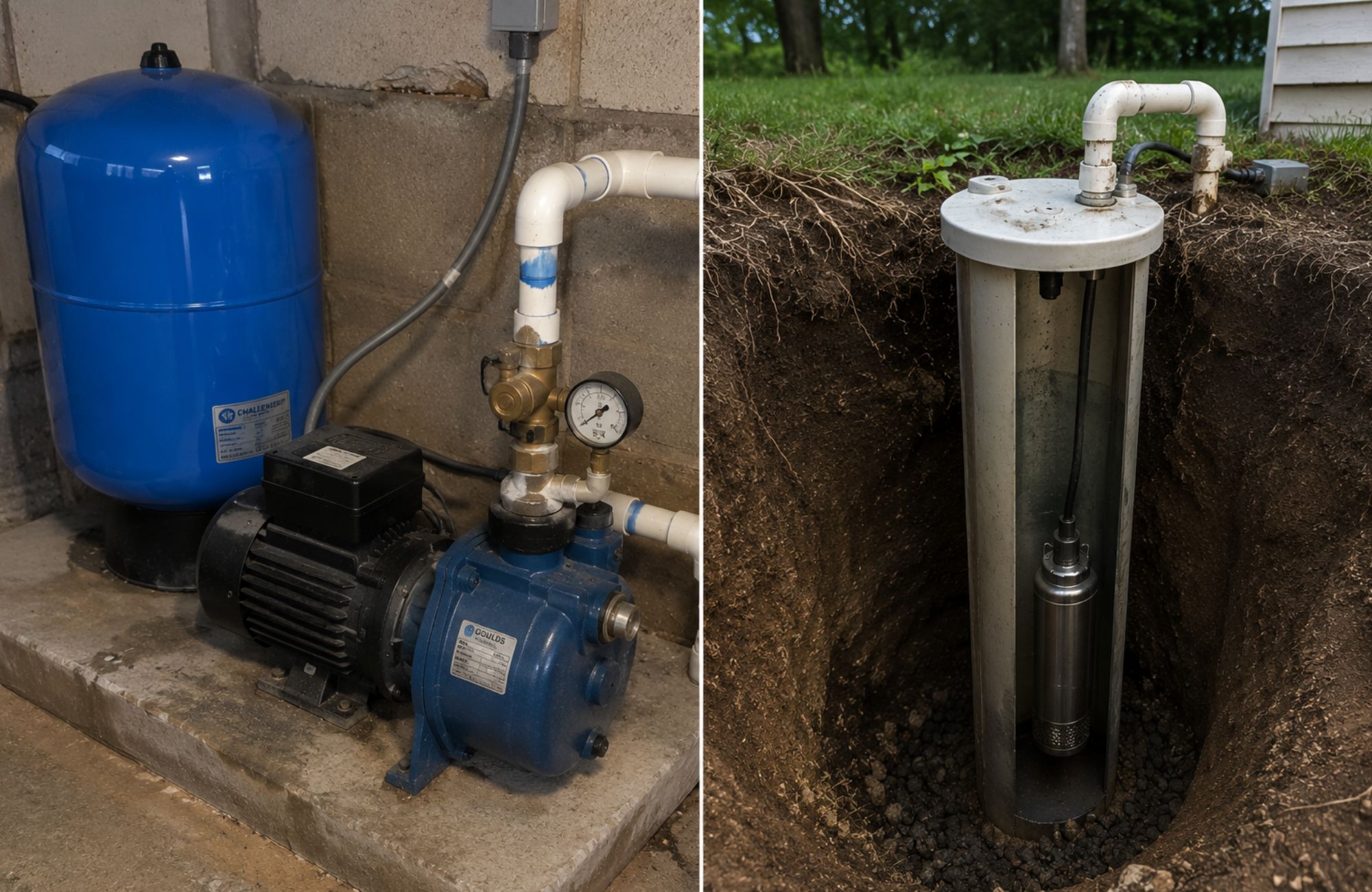
When your home relies on a private well, choosing the right pump is critical for consistent water pressure, quality, and reliability. Homeowners in New Milford, CT, and surrounding towns often wonder whether a jet pump or a submersible pump will meet their needs, especially when dealing with low water pressure, deep wells, or seasonal water fluctuations.
Understanding the differences between these well pumps can save time, money, and frustration. Professional well pump services, including installation, repair, and maintenance, are available for both pump types. If you’re unsure which well pump fits your home, schedule a consultation for a customized recommendation.
Understanding Well Pumps: Jet vs Submersible
Jet pumps sit above ground and draw water by creating suction, while submersible pumps are installed inside the well and push water to the surface. Jet pumps and submersible pumps are the two main types of well pumps. Each is designed to perform the same job, delivering water efficiently to the home, but they use different mechanisms and installation methods.
The choice between them depends on well depth, water demand, your home’s plumbing setup, and pump selection should also consider water quality and environmental conditions. Both pump types have advantages and maintenance needs that homeowners should consider before installation.
What is a Jet Pump?
Jet pumps are surface-mounted pumps that pull water through suction lines and push it into your home. Shallow well jet pumps use a single pipe and are suitable for wells up to 25 feet deep, while deep well jet pumps use a two-pipe system to reach greater depths.
Shallow well jet pumps (also called shallow well jet models) are quieter and use a single pipe for water intake, making them easier to maintain. These pumps are typically installed above ground, often in a well house, which provides an accessible and sheltered space for maintenance and reduces noise disturbances.
Pros and Cons of Jet Pumps
Pros of Jet Pumps:
- Easy access for repairs and maintenance
- Jet pumps are easier to maintain because they are installed above ground, often in a well house, allowing for quick access for inspection and repairs.
- Lower upfront cost for shallow wells
- Simpler installation for surface-mounted systems
Cons of Jet Pumps:
- Less efficient for deep wells
- Jet pumps can lose prime if a check valve fails, requiring manual refilling to avoid motor burnout.
- Prone to losing suction if water levels drop
- Can be noisier than submersible pumps
Many homeowners with shallow wells in Brookfield and Southbury find jet pumps sufficient for typical household water use, though efficiency can drop if water demand is high or well depth increases. Jet pumps work by creating suction (suction lift) and rely on atmospheric pressure, which limits their effectiveness in deeper wells. In deep well jet pumps, a jet assembly is placed at the bottom of the well to create the necessary suction lift, allowing the pump to work at greater depths, but jet pumps lose efficiency as depth increases due to atmospheric pressure limitations. Shallow well jet pumps are quieter than deep well models due to their simpler design.
What is a Submersible Pump?
A submersible well pump is installed below the water line inside the well casing, allowing it to push water from greater depths to the surface. These pumps are fully submerged, which enables them to operate quietly and efficiently.
Submersible well pumps are specifically designed for greater depths and use less energy than jet pumps, especially in deep wells.
Pros and Cons of Submersible Pumps
Pros of Submersible Pumps:
- Effective for deep wells
- Quiet operation due to underwater placement
- Energy-efficient with fewer suction limitations
- Better energy efficiency and long-term reliability, resulting in fewer replacements over the pump’s lifespan.
Cons of Submersible Pumps:
- Requires a more complex installation
- Harder to access for maintenance
- Higher initial cost
- Maintenance and repairs often require specialized equipment to pull the pump from deep wells.
For homeowners in Litchfield County or New Milford with wells exceeding 25 feet, submersible pumps provide reliable water pressure and better long-term energy efficiency.
Key Differences and Energy Efficiency Between Jet and Submersible Pumps
Jet and submersible pumps differ in depth capacity, energy efficiency, noise, and maintenance requirements. Understanding these differences helps you select a pump that meets your home’s water demands and reduces long-term costs.
| Feature | Jet Pump | Submersible Pump |
| Typical Well Depth | Shallow (up to 25 ft) | Deep (25+ ft) |
| Water Movement | Pulls water | Pushes water |
| Energy Efficiency | Moderate, lower efficiency especially for deep wells | High efficiency, better for sustained use |
| Noise | Louder | Quiet |
| Maintenance Access | Easy above ground | More complex, inside well |
| Installation Cost | Lower | Higher |
| Longevity | Moderate | Longer lifespan |
Submersible pumps are generally recommended for deep wells and high water demand, while jet pumps are a cost-effective option for shallow wells with moderate household use. Choosing a submersible pump can help homeowners save money over time due to better energy efficiency and fewer replacements. Maintenance preferences, such as ease of access for repairs or servicing, can also influence whether a jet or submersible pump is the better choice for your system.
Additionally, centrifugal pumps are sometimes used for well or tank applications, offering easy maintenance and no priming issues, making them a practical alternative in certain scenarios. Real-world examples from HV Well Pump include replacing aging jet pumps in Danbury homes with high-efficiency submersible models to improve pressure and reduce energy costs.
Common Issues and Maintenance Tips
Both pump types require routine inspections to prevent water pressure drops, pump failure, and water quality issues. Frequent cycling, often caused by an undersized pressure tank, can significantly shorten pump lifespan. Regular maintenance ensures consistent water flow and extends the life of your system. Additionally, ensuring the pump is properly sized for your system is crucial for long-term reliability and fewer maintenance issues.
Jet Pump Maintenance
- Check suction lines for leaks or blockages
- Inspect the pump motor for overheating
- Ensure proper priming to maintain suction
- Test the pressure switch regularly to maintain home water pressure
Submersible Pump Maintenance
- Monitor pump bowl and motor integrity
- Inspect electrical wiring and connections inside the well
- Check for unusual vibrations or pressure fluctuations
- Schedule annual inspections with certified technicians
Homeowners in New Milford and Brookfield often call HV Well Pump when low water pressure signals a failing pump. Prompt maintenance prevents more extensive repairs and maintains reliable water service.
Choosing the Right Well Pump for Your Home Based on Well Depth
The best pump depends on well depth, household water demand, and existing plumbing infrastructure. Evaluating these factors ensures you get reliable water with minimal energy costs and maintenance challenges.
- Determine well depth and water table fluctuations.
- Assess household water usage and peak demand.
- Evaluate existing plumbing and pressure tank system.
- Consult a licensed professional for pump sizing and installation recommendations.
Cost Considerations: Jet vs Submersible
Cost is a major factor when choosing between a jet pump and a submersible pump, as it influences both the initial investment and long-term value. Jet pumps are generally less expensive upfront, particularly for shallow wells, but operating costs can rise for deeper installations. Submersible pumps have higher initial costs but are more energy-efficient and durable for long-term use.
| Pump Type | Installation Cost | Maintenance Cost | Operating Cost |
| Jet Pump | $800–$1,500 | Moderate | Moderate to High for deep wells |
| Submersible Pump | $1,200–$2,500 | Moderate | Lower for deep wells |
For New Milford homeowners, proper sizing and maintenance can optimize costs and reduce energy consumption.
Emergency Well Pump Service & Repairs
HV Well Pump provides 24/7 emergency service for both jet and submersible pumps, ensuring homes in Brookfield, Wolcott, and surrounding areas maintain reliable water access during pump failures. Our reliable service delivers fast, dependable support to restore well functionality and maintain pump performance, with quick response times that minimize downtime, protect water quality, and restore household comfort.
Conclusion
Choosing between a jet pump vs submersible pump requires understanding well depth, water demand, and energy efficiency. Jet pumps are effective for shallow wells, while submersible pumps excel in deep wells and high-demand households. Regular maintenance and expert installation ensure reliable water flow and longer pump life.
For homeowners in New Milford, Danbury, and Brookfield, Housatonic Valley Well Pump Services offers trusted evaluations, professional installation, and emergency repair services to keep your water system running efficiently. Contact us today to schedule your inspection or install the right well pump for your home.
FAQs
Is a jet pump a submersible pump?
No. Jet pumps are installed above ground and pull water through suction, while submersible pumps are installed inside the well and push water to the surface. The choice depends on well depth and water demand.
What are the disadvantages of using a jet pump?
Jet pumps can lose suction if the water table drops, are less efficient for deep wells, and are generally noisier than submersible pumps. They require regular priming and inspection to maintain performance.
Can a jet pump run continuously?
Jet pumps are not designed for continuous operation. Extended running can overheat the motor and reduce pump lifespan. Submersible pumps are better suited for sustained, high-demand water use.
How do I tell if I have a jet pump or a submersible pump?
Check the installation location: if the pump is above ground near the well, it’s likely a jet pump. If installed inside the well casing, it’s a submersible pump. HV Well Pump can verify your system and provide maintenance guidance.