




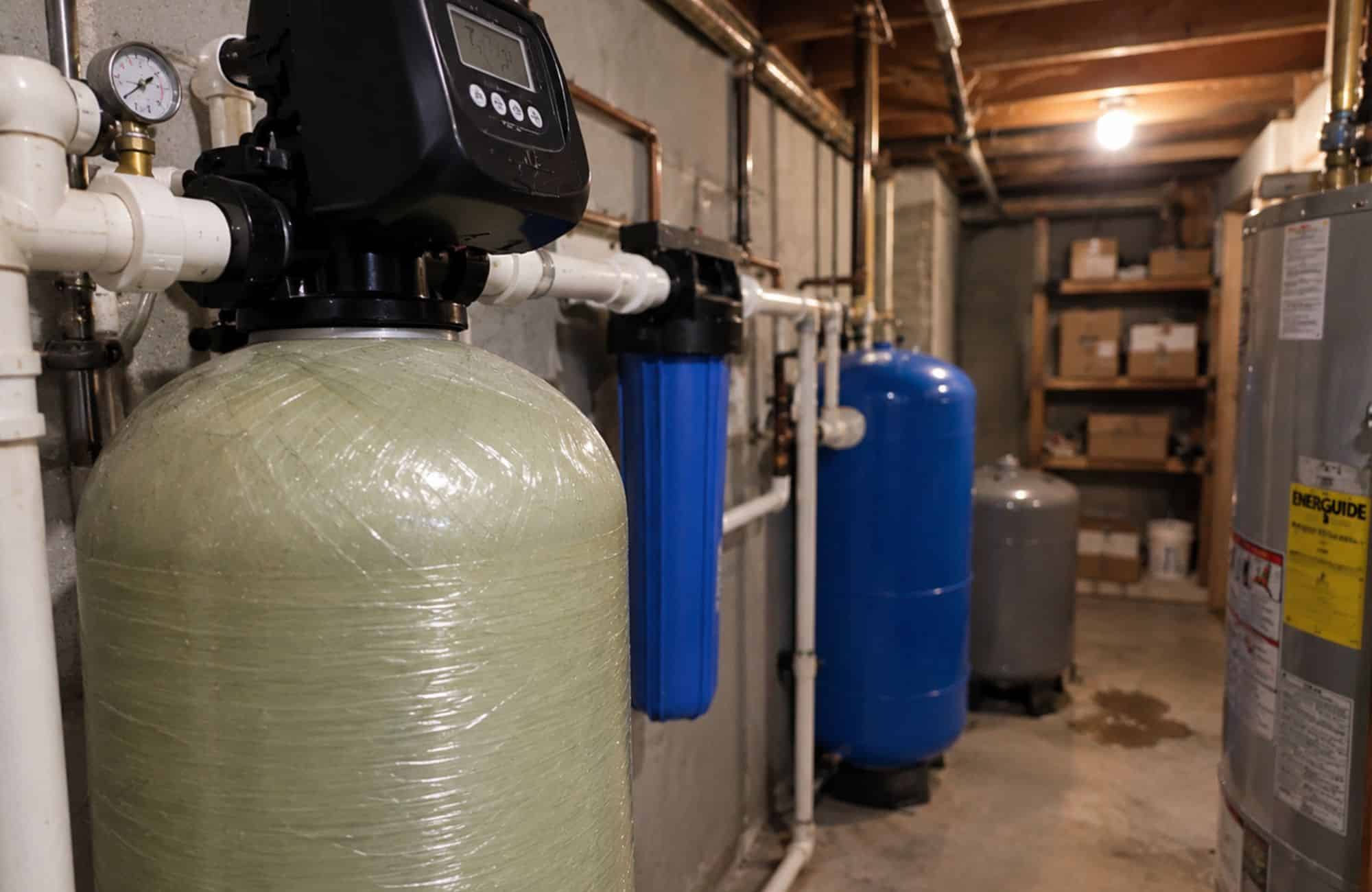
Low-pH well water can contribute to corrosion in household plumbing, especially when other water conditions also make the water aggressive. An acid neutralizer for well water raises pH by using mineral media or an alkaline solution to reduce acidity before the water travels through much of the home’s plumbing.
This is especially relevant for Connecticut homeowners because naturally acidic groundwater occurs in parts of the state. If testing shows low pH, start by understanding the full water chemistry rather than choosing equipment from the pH number alone. Professional well water testing can help identify the conditions a treatment system needs to address.
What Does an Acid Neutralizer Do for Well Water?
An acid neutralizer raises the pH of acidic well water so it is less corrosive to household plumbing. Depending on the system, water may pass through calcite or another mineral medium, or an alkaline solution may be injected into the water. The goal is pH correction, not removal of every possible contaminant.
Low-pH water may contribute to blue-green staining, metallic tastes, corrosion, and pinhole leaks in copper plumbing. Connecticut DPH notes that corrosivity can also be influenced by hardness, alkalinity, chloride, dissolved oxygen, temperature, and plumbing materials, so these symptoms should not be used to diagnose low pH by themselves.
A neutralizer also does not replace routine well-water testing. The EPA recommends testing private wells annually for pH along with total coliform bacteria, nitrates, and total dissolved solids, with additional testing when local conditions or water-quality changes suggest a need.
How Does an Acid Neutralizer for Well Water Work?
A mineral acid neutralizer passes acidic water through a tank containing alkaline media. As the media reacts with the water, some of it dissolves and raises the pH. A chemical-feed system takes a different approach by injecting an alkaline solution at a controlled rate before the treated water continues through the plumbing.
Calcite is a common neutralizing medium made primarily from calcium carbonate. Because some of the material dissolves during treatment, the calcite level gradually drops and must be checked and replenished according to system use, incoming water conditions, and manufacturer instructions.
Some mineral tanks also use an automatic control valve to backwash the media. Backwashing reverses or changes water flow through the tank to loosen the media bed and flush accumulated material to a drain. Not every neutralizer uses the same tank design, so installation and maintenance requirements depend on the equipment selected.
Types of Acid Neutralizer Systems
Most residential treatment options fall into mineral-media neutralizers or chemical-feed systems. Calcite is commonly used for pH correction, while magnesium oxide may be blended with calcite when stronger neutralizing action is needed. Soda ash systems use a feed pump instead of relying only on water passing through a mineral bed.
The right option depends on more than one pH reading. Water chemistry, desired correction, flow rate, existing hardness, well-system capacity, treatment equipment, and the manufacturer’s operating requirements can all affect system selection.
| System | How It Works | Main Benefit | Main Consideration |
| Calcite neutralizer | Water passes through calcium-carbonate media that dissolves gradually | Simple mineral-based pH correction | Can increase calcium hardness and requires media replenishment |
| Calcite and magnesium oxide blend | Combines calcite with a more reactive alkaline medium | Provides stronger neutralizing action than calcite alone | Media ratios and operating conditions need proper selection |
| Soda ash chemical feed | A pump injects an alkaline soda-ash solution into the water | Allows adjustable chemical dosing | Requires solution refills and maintenance of feed equipment |
Connecticut DPH identifies neutralizing filters using calcium carbonate and neutralizing solutions using soda ash as treatment methods for adjusting low-pH private well water. A qualified evaluation can determine which approach fits the actual water chemistry rather than relying on a universal pH cutoff.
How Do You Know Which Neutralizer Your Well Needs?
Choosing a neutralizer starts with reliable water-test results. pH matters, but it does not provide a complete picture of corrosivity or tell you by itself which tank, media blend, or feed system should be installed. Flow requirements and household demand also matter because water needs adequate contact with the treatment process.
For low-pH water, Connecticut DPH recommends considering tests such as hardness, alkalinity, sulfate, lead, copper, cadmium, and zinc. Blue or green staining and plumbing leaks may also justify looking at chloride, sodium, and other factors that can influence corrosion.
Iron, manganese, and sediment can also affect the overall treatment plan when they are present. Instead of adding equipment based on symptoms alone, use test results to determine whether pH correction is the only need or whether a broader water treatment setup should be considered.
Acid Neutralizer Maintenance and Upkeep
Acid neutralizers require ongoing maintenance because the materials or chemicals used to raise pH are gradually consumed. Mineral-tank systems need periodic checks of the media level, while chemical-feed systems need enough prepared solution for the feed pump to operate correctly. Maintenance frequency varies with water chemistry, household use, system size, and equipment design.
For a calcite system, maintenance may include checking the calcite level, adding media when required, inspecting the control valve, and confirming that a backwashing system completes its cycle correctly. Follow the owner’s manual because fill procedures, bypass-valve settings, backwash schedules, and allowable media can differ by manufacturer.
Soda ash systems have different upkeep needs. The solution tank must be monitored and refilled, the feed pump and tubing should remain in working condition, and treated-water pH should be checked so dosing can be evaluated. Periodic water testing also helps confirm whether treatment continues to match changing well-water conditions.
What Affects Acid Neutralizer Cost?
The cost of an acid neutralizer depends on the equipment and the conditions at the property rather than one standard price. A basic mineral tank has different installation and maintenance needs than a backwashing tank or chemical-feed system. Tank capacity, control equipment, plumbing changes, and the amount of treatment required can all affect the project.
Important cost factors include:
- Type and size of neutralizer
- Calcite or blended media requirements
- Household flow and water demand
- Control valve and backwashing requirements
- Drain or electrical needs
- Existing plumbing and available installation space
- Additional sediment, iron, manganese, or hardness treatment
- Ongoing media or chemical replenishment
- Follow-up testing and system maintenance
Long-term cost matters as much as the initial equipment price. A properly selected system should account for routine upkeep, replacement media or chemicals, and any downstream treatment that becomes appropriate after pH correction.
Is an Acid Neutralizer the Same as a Water Softener?
An acid neutralizer and a water softener perform different jobs. A neutralizer raises low pH, while a conventional water softener reduces hardness minerals such as calcium and magnesium through ion exchange. A softener should not be treated as a substitute for proper pH correction.
Calcite neutralization can add calcium to the water, so hardness may increase after treatment. If testing shows that the resulting hardness is undesirable, a softener may be installed as a separate treatment stage. Whether both systems are appropriate depends on test results, household preferences, equipment sizing, and the complete treatment layout.
Protect Your Plumbing With the Right Well Water Treatment
An acid neutralizer can be an effective way to address low-pH well water, but the right system depends on the water rather than a one-size-fits-all product recommendation. Testing, flow requirements, hardness, other minerals, household demand, and ongoing maintenance all help determine whether calcite, a blended medium, or chemical feed is the better approach.
Housatonic Valley Well Pump Services LLC provides water filtration and treatment services for homeowners in Litchfield County and Upper Fairfield County. Contact the team to discuss your water test results and whether an acid neutralizer may be appropriate for your property.
FAQs
What is the best acid neutralizer for well water?
The best acid neutralizer for well water is the system that matches the water test results, household flow, hardness, and other treatment needs. Calcite is commonly used for pH correction, while stronger mineral blends or chemical-feed systems may be appropriate under different conditions. A water-quality evaluation is more reliable than choosing a neutralizer based only on a brand name or one pH number.
How do you neutralize acid in well water?
Acidic well water is commonly neutralized by passing it through alkaline mineral media such as calcite or by injecting an alkaline solution such as soda ash. Both approaches raise pH, but their equipment, maintenance, and operating requirements differ. Testing should guide the choice because pH, alkalinity, hardness, flow, and other water conditions can affect treatment.
Is an acid neutralizer the same as a water softener?
No. An acid neutralizer raises low pH, while a conventional water softener removes hardness minerals through ion exchange. Some homes use both because calcite neutralization can add calcium hardness, but a softener should not be used as a replacement for correcting acidic water.
What does a neutralizer do for well water?
A neutralizer reduces acidity by raising the pH of well water before it moves through much of the home's plumbing. This can help reduce conditions that contribute to corrosion, but it does not remove every contaminant that may be present in groundwater. Routine testing is still needed to evaluate overall well-water quality.
How often does an acid neutralizer need maintenance?
There is no single maintenance interval that applies to every acid neutralizer. Calcite consumption and chemical use depend on source-water chemistry, water demand, system capacity, and equipment design, so media or solution should be checked according to the manufacturer's instructions and actual system performance. Periodic testing of treated water can also help show whether the system continues to provide the intended pH correction.