




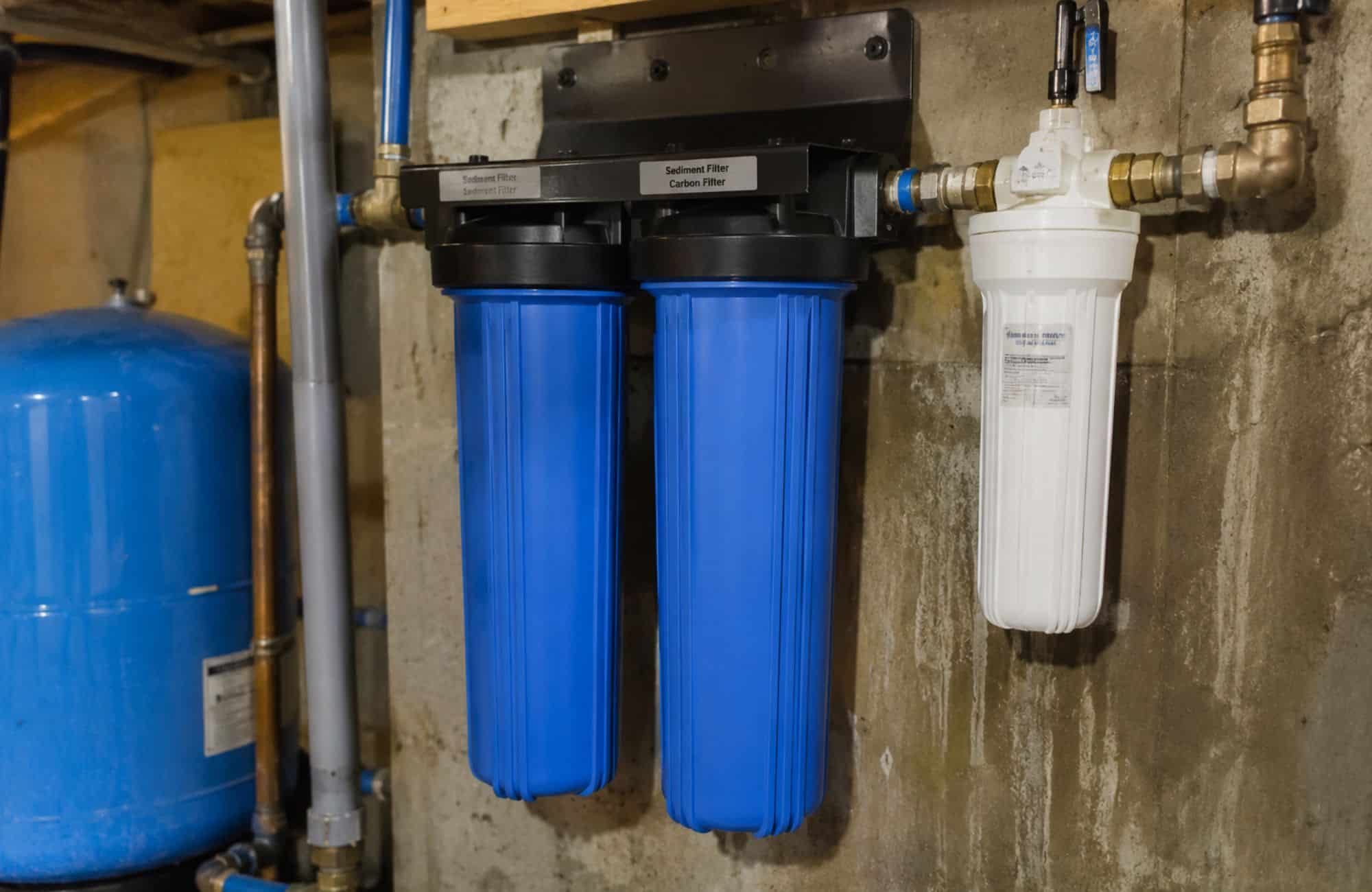
Lead in drinking water is difficult to detect because it has no noticeable taste, smell, or color. For Connecticut homeowners with private wells, lead may enter tap water through older plumbing, metal fittings, or components exposed to corrosive water. Choosing the right lead water filter starts with identifying the contamination source and understanding which filtration systems can reduce it.
Reverse osmosis systems, certified carbon filters, and certain faucet-mounted and pitcher filters are available for lead reduction. However, filtration performance varies by product, certification, and maintenance requirements. Knowing how these systems work can help you choose a suitable filter while addressing the conditions responsible for lead contamination.
Where Does Lead in Connecticut Well Water Come From?
Lead in Connecticut private well water is often associated with household plumbing rather than the groundwater itself. Aging pipes, solder, brass fixtures, and certain well system components can release lead when water reacts with the metal surfaces. Corrosive water conditions and long periods of contact with plumbing materials may increase the amount of lead reaching household faucets.
The Connecticut Department of Public Health identifies plumbing corrosion as a common source of lead in private well systems. Understanding where contamination develops helps homeowners determine whether filtration, plumbing repairs, or water chemistry adjustments may be needed.
Older Pipes, Solder, and Plumbing Fixtures
Homes built before 1986 may contain plumbing materials with higher lead content than modern standards allow. Lead-based solder was previously used to join copper pipes, while older brass faucets and valves may contain lead-bearing materials.
Potential sources include:
- Lead-containing pipes and plumbing connections
- Older solder used on copper pipe joints
- Brass faucets, valves, and fittings
- Certain older well pump components
- Lead service lines in homes connected to public water supplies
A lead service line connects a building to a public water main, so it is not normally part of a private well installation. However, older internal plumbing can create similar contamination concerns regardless of the home’s water source.
How Corrosive Water Releases Lead
Corrosion occurs when water reacts chemically with metal plumbing components. Water with low pH, certain mineral conditions, or other corrosive characteristics may contribute to metal leaching.
Water that sits inside plumbing for several hours has more time to interact with these materials. The amount of lead released depends on the metal components, water chemistry, temperature, and contact time rather than the age of the home alone.
How to Test Well Water for Lead
Laboratory testing is necessary to determine whether lead is present in drinking water. Clear water can still contain dissolved or particulate lead, and changes in taste or odor are not dependable warning signs. Connecticut recommends that private well owners test for lead at least once, with additional testing when household circumstances or water conditions warrant it.
A state-certified drinking water laboratory can provide the appropriate sample containers and collection instructions. Testing different samples may also help determine whether lead is entering the water through household plumbing or an earlier part of the water system.
First-Draw and Flushed Water Testing
First-draw testing measures water that has remained in contact with plumbing materials for several hours. Flushed sampling measures water collected after the faucet has run, providing information that may help identify where contamination occurs.
Connecticut’s recommended approach generally includes:
- Collect a first-draw sample. Follow the laboratory’s instructions after water has remained unused for at least six hours.
- Use cold water. Collect the sample from the designated faucet without flushing first.
- Collect a flushed sample. Follow Connecticut’s guidance, which describes running the water for at least three minutes before the second collection.
- Submit both samples. Use the laboratory’s specified procedures for handling and delivery.
- Review the differences. Compare the results to determine whether further plumbing or well system investigation is appropriate.
Higher lead levels in the first-draw sample may indicate that water is collecting lead while sitting inside household plumbing. However, sample results alone may not identify the exact component responsible.
What Do Lead Test Results Mean?
Connecticut’s private-well guidance uses an action level of 15 parts per billion (ppb), equivalent to 0.015 milligrams per liter. This threshold helps determine when corrective action is needed, but it does not represent a completely safe exposure level.
When lead is detected, the recommended response depends on the concentration and likely source. Connecticut advises immediate action when private well results reach or exceed 15 ppb, including using an alternative drinking water source while corrective measures are taken.
The CDC states that no safe blood lead level in children has been identified. This is why reducing avoidable exposure remains worthwhile even when results are below an action threshold.
What Type of Lead Water Filter Works Best?
The most suitable lead water filter depends on the home’s water test results, drinking water needs, and available installation space. Reverse osmosis systems and certain carbon filters are common choices, while certified faucet-mounted and pitcher filters offer smaller-scale alternatives. Each option differs in treatment capacity, operating requirements, and maintenance.
The filter’s technology alone does not establish its lead reduction performance. Before choosing a system, verify that its certification covers lead and that it can operate under the conditions found in your home.
Reverse Osmosis Systems
Reverse osmosis uses a semipermeable membrane to separate many dissolved substances from drinking water. Systems specifically certified for lead reduction can lower lead concentrations while potentially treating other contaminants covered by their verified performance claims.
Under-sink reverse osmosis systems typically connect to a separate drinking water faucet. Some models include storage tanks, while others use tankless designs or countertop configurations.
Reverse osmosis may be useful when testing identifies several dissolved contaminants requiring treatment. However, operating requirements vary, and homeowners should consider feed-water pressure, membrane replacement, available space, wastewater production, and maintenance costs.
Certified Carbon Filters
Activated carbon filters use specially prepared carbon media to capture certain substances as water passes through. Some carbon block products also use additional treatment mechanisms to reduce lead, depending on their construction and certified design.
Standard carbon filters are not automatically effective against lead. Many basic cartridges are primarily intended to reduce chlorine taste and odor rather than health-related contaminants.
When comparing carbon filtration systems, look for a verified lead reduction claim under NSF/ANSI 53. The product’s performance data sheet should also identify its rated capacity and operating conditions.
Under-Sink Filters
Under-sink filtration systems are installed beneath a kitchen sink and deliver treated water through an existing or dedicated faucet. They can be a practical option for households that regularly use filtered water for drinking and cooking.
These systems may use carbon, reverse osmosis, or multiple treatment stages. Their effectiveness depends on the particular technology and certification, so installation location should not be treated as proof of lead reduction.
Faucet-Mounted and Pitcher Filters
Faucet-mounted filters attach to compatible kitchen faucets and treat water as it flows through the cartridge. They generally require less installation work than permanent under-sink systems, although capacity and flow rate may be limited.
Pitcher filters provide a portable alternative for smaller quantities of drinking water. They require regular refilling and cartridge changes, making them more suitable for households whose daily water needs fit the filter’s capacity.
Both types are available in models with lead reduction certifications. Check the exact product and replacement cartridge, since different filters from the same manufacturer may have different contaminant reduction capabilities.
Comparing Lead Water Filtration Options
Water filtration systems differ in how much water they treat, where they are installed, and which contaminants they can reduce. For example, a pitcher may be convenient for occasional drinking water use, while an under-sink system may better suit a household preparing several meals each day.
The comparison below focuses on practical buying considerations. Actual lead reduction depends on the selected model’s verified certification rather than the general filter category.
| Filter Type | Best Suited For | Main Considerations |
| Reverse osmosis | Households requiring treatment of lead and other covered dissolved contaminants | Water pressure, wastewater, membrane maintenance |
| Under-sink carbon | Regular drinking and cooking water | Installation, rated capacity, cartridge replacement |
| Faucet-mounted filter | Smaller kitchens and simple installation | Faucet compatibility, flow rate, filter capacity |
| Pitcher filter | Portable filtration and smaller water quantities | Refilling, cartridge changes, limited volume |
| Whole-house treatment | Water-quality conditions affecting the entire plumbing system | Treatment capabilities, system sizing, downstream plumbing |
Different contaminants may also require separate treatment methods. For a broader explanation of sediment filtration, activated carbon, reverse osmosis, UV treatment, and water softeners, see this guide to well water treatment options for Connecticut homes.
How to Verify NSF Certification for Lead Reduction
Independent certification helps distinguish filters evaluated for lead reduction from products promoted mainly for taste or general water quality. NSF/ANSI 53 addresses certain health-related contaminant reduction claims, while NSF/ANSI 58 applies to reverse osmosis drinking water treatment systems. The specific product must have a verified lead reduction claim under the applicable standard.
The NSF guide to water treatment standards explains that certification applies to defined performance requirements. A filter displaying an NSF/ANSI standard number is not necessarily certified to reduce every contaminant covered by that standard.
NSF/ANSI 53 vs. NSF/ANSI 58
NSF/ANSI 53 evaluates drinking water treatment products for particular health-related contaminant reduction claims. Certain carbon-based filtration systems are certified under this standard to reduce lead.
NSF/ANSI 58 applies specifically to reverse osmosis drinking water treatment systems. It includes requirements for system construction, performance, and relevant contaminant reduction claims, which must be checked individually.
NSF/ANSI 42 primarily concerns aesthetic characteristics such as chlorine taste and odor, along with certain particulate reduction claims. Certification under NSF/ANSI 42 alone does not establish that a filter reduces lead.
How to Check a Product’s Certification
A product described as laboratory tested may not have the same verification as one certified by an accredited organization. Independent certification allows homeowners to review whether the exact model has been evaluated for a specific contaminant.
Before buying, check the following:
- The manufacturer’s exact product and cartridge model numbers
- Certification under the applicable NSF/ANSI standard
- An explicit lead reduction claim
- The certifying organization’s public product listing
- Filter capacity and operating specifications
- Replacement cartridge compatibility
The EPA’s certified filter selection resource provides guidance for identifying point-of-use and pitcher filters evaluated for lead reduction. Checking these details helps prevent confusion between general filtration claims and verified contaminant treatment.
How to Choose a Lead Water Filter for Your Home
Selecting a water filter involves matching the system’s certified capabilities to the contaminants found in your water. A filter suitable for one household may be impractical for another because of water pressure, daily consumption, installation space, or maintenance needs. Your laboratory results should guide the selection rather than advertising claims or product popularity.
For Connecticut private wells, it is also useful to consider water chemistry and the condition of existing plumbing. A filter may address drinking water contamination while a separate treatment method is needed for acidity, sediment, or another water-quality problem.
Factors to Consider Before Buying
Household demand and operating conditions can affect both convenience and filter performance. Compare systems using the manufacturer’s published specifications rather than assuming that a larger or more expensive filter is automatically better.
Important considerations include:
- Tested contaminants: Identify which substances require treatment.
- Daily water use: Estimate the filtered water needed for drinking and cooking.
- Filter capacity: Compare the rated gallon capacity or service life.
- Available pressure: Confirm the system can operate with the home’s water pressure.
- Installation requirements: Check space, plumbing connections, and electrical needs where applicable.
- Ongoing maintenance: Review cartridge availability, replacement intervals, and operating expenses.
When several water-quality concerns are present, professional system evaluation can help determine whether separate filtration stages are appropriate. Learn more about available water treatment and filtration services for private well systems in Connecticut.
How to Maintain a Lead Water Filter
Regular maintenance is necessary because filtration components have limited treatment capacities. Cartridges eventually require replacement, and reverse osmosis systems may need additional membrane and prefilter servicing. Following the manufacturer’s instructions helps maintain the conditions under which a product’s certified performance was evaluated.
Replacement frequency is not the same for every filter. It may depend on the volume of water treated, the product’s rated service interval, and the operating conditions specified by the manufacturer.
Filter Capacity and Cartridge Replacement
A filter’s rated capacity indicates how much water it is designed to treat under specified testing conditions. Using a cartridge beyond its approved capacity or service interval may reduce performance, even when the water continues to look and taste normal.
Track the manufacturer’s replacement limits and use compatible cartridges. If the product specifies both a time interval and a gallon capacity, follow its instructions for whichever replacement condition applies first.
Reverse osmosis systems may require several separate maintenance tasks, including prefilter changes, membrane replacement, and periodic cleaning. Unusual taste or reduced water flow may indicate a maintenance problem, but neither is a reliable measure of lead concentration.
Point-of-Use vs. Whole-House Treatment for Lead
Point-of-use filters treat water near the location where it is consumed, usually at a kitchen sink. Whole-house systems treat water near its entry point before it travels through much of the home’s plumbing. This difference matters because lead can enter drinking water after it passes through a whole-house treatment system.
A whole-house filter may address other water-quality problems, but it should not automatically be considered a solution for lead introduced by downstream plumbing fixtures. Choosing the treatment location requires understanding where the contamination occurs.
When Point-of-Use Treatment Makes Sense
Point-of-use filtration is particularly useful when lead may enter water from kitchen plumbing or fixtures. A properly certified filter installed at the drinking water outlet can treat water immediately before consumption.
NSF states that it currently does not list whole-house systems certified for lead reduction in its consumer guidance. Claims about whole-home lead treatment should therefore be evaluated carefully, especially when internal plumbing remains a possible contamination source.
When Whole-House Treatment May Help
Whole-house treatment can be appropriate when testing identifies water-quality conditions affecting multiple household outlets. For example, corrosive water may require separate evaluation and treatment to limit damage to plumbing components.
However, corrosion control and lead filtration are different treatment objectives. A system designed to address acidity or other chemical conditions should not be assumed to provide certified lead removal unless that claim has been independently verified.
Why Replacing Lead-Containing Plumbing Is the Long-Term Solution
Certified filtration can reduce lead in drinking water, but it does not eliminate lead-containing pipes, solder, or fixtures. When testing and inspection identify these materials as the contamination source, replacing them addresses the underlying problem more directly. The appropriate repairs depend on which components contain lead and whether water chemistry is contributing to corrosion.
Plumbing replacement may also need to be combined with water chemistry correction when corrosive conditions remain. Corrective work should be based on inspection and testing rather than assuming every older plumbing component contains lead.
What to Do After Plumbing Repairs
After replacing identified lead-containing components, appropriate follow-up testing can help evaluate the results. Water samples should be collected using the laboratory’s recommended procedures, with attention to any changes in plumbing or treatment equipment.
Some homes may still need filtration for other contaminants identified during testing. A complete water treatment plan should account for the well’s water quality, household plumbing, and ongoing system maintenance.
Choose the Right Filter and Address the Source
Choosing the right lead water filter begins with accurate testing and verified certification. Reverse osmosis systems, certified carbon filters, and selected faucet or pitcher filters can reduce lead when correctly installed and maintained. If lead-containing plumbing is responsible for contamination, replacing the affected materials addresses the source rather than relying on filtration alone.
For Connecticut homeowners evaluating well-water concerns, Housatonic Valley Well Pump Services LLC provides water treatment support backed by more than 20 years of hands-on experience. To discuss your water test results, explore suitable treatment options, or request a free quote with upfront pricing, contact us.
FAQs
Do Any Water Filters Remove Lead?
Yes, certain water filters can reduce lead in drinking water. Look for products with verified lead reduction certification under NSF/ANSI 53 or applicable reverse osmosis systems certified under NSF/ANSI 58 with a specific lead claim. Proper installation, maintenance, and cartridge replacement are necessary for the system to operate as intended.
Do Brita Filters Remove Lead?
Some Brita filter models are certified to reduce lead, but not every Brita product offers that capability. Check the exact model and replacement cartridge against the manufacturer's certification information or an accredited certifier's listing. A filter designed mainly to improve chlorine taste and odor should not be assumed to reduce lead.
Is It Okay to Drink Water With Lead in It?
There is no known safe blood lead level in children, so minimizing exposure through drinking water is recommended. If a laboratory test detects lead, the appropriate response depends on the concentration, potential source, and household circumstances. When Connecticut private well results reach or exceed 15 ppb, state guidance recommends immediate action and an alternative drinking water source while the problem is addressed.
Does Boiling Water Remove Lead?
No, boiling water does not remove lead from drinking water. Evaporation can leave lead behind and may increase its concentration in the remaining water. Use an appropriate certified filter or an alternative drinking water source when lead contamination is a concern.
Is Reverse Osmosis Better Than Carbon Filtration for Lead?
Reverse osmosis and properly certified carbon filtration can both reduce lead, but the better choice depends on water test results and household needs. Reverse osmosis may be useful when several dissolved contaminants require treatment, while certified carbon filtration may offer a simpler option for drinking water. Compare model-specific certifications, water usage, maintenance, and installation requirements before selecting a system.
Do Whole-House Water Filters Remove Lead?
Whole-house treatment should not automatically be considered effective for lead reduction, especially when lead enters water through plumbing located after the filter. Certified point-of-use treatment is commonly more appropriate for addressing lead at a drinking water faucet. Plumbing replacement or corrosion correction may also be necessary depending on the identified contamination source.