


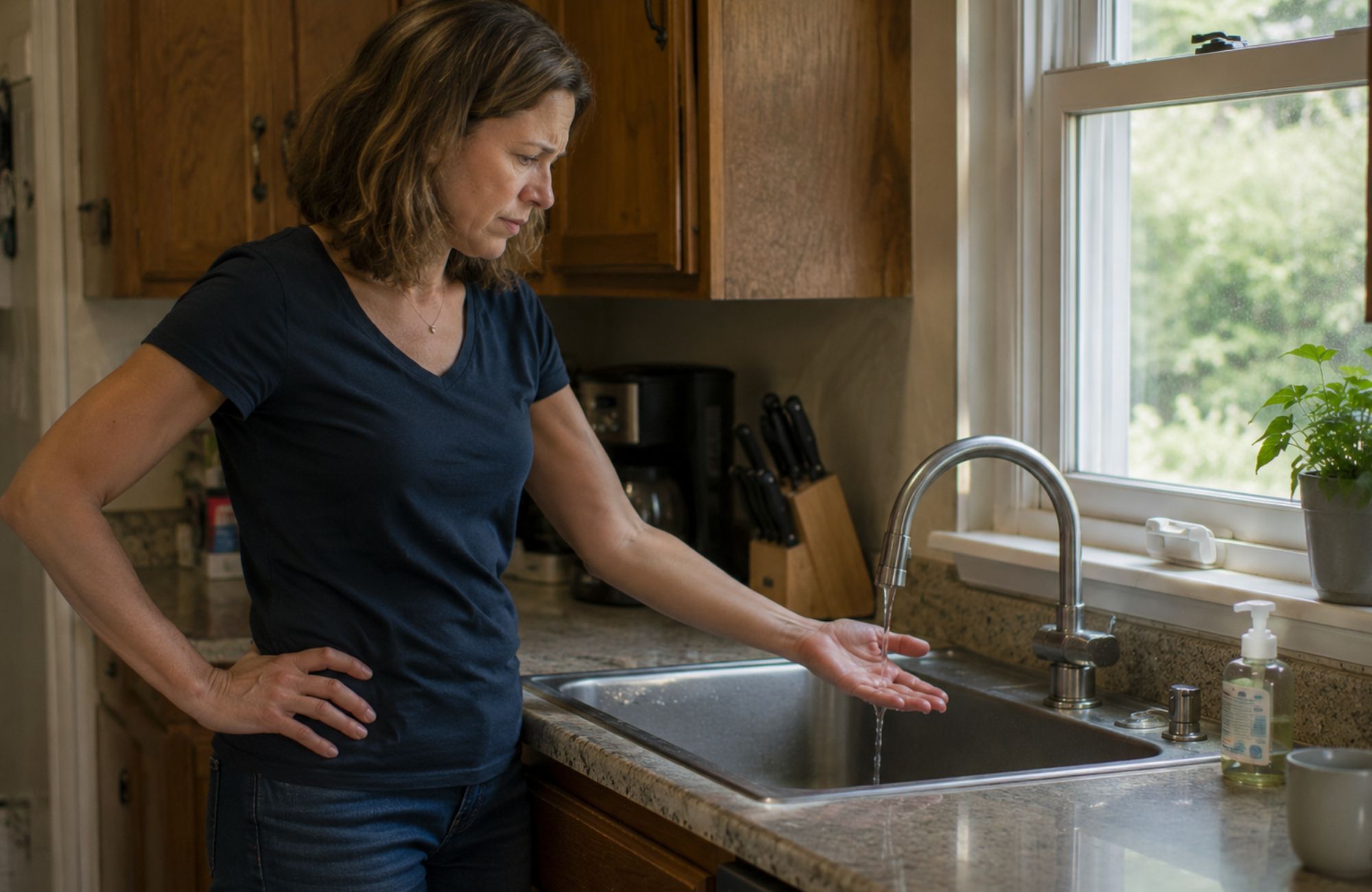
A sudden drop in water pressure usually indicates a problem affecting water flow, supply pressure, or plumbing system performance. The cause may be as simple as a clogged fixture or partially closed valve, or it may involve a larger issue such as a hidden plumbing leak, failing pressure regulator, well pump problem, or pressure tank failure.
Whether you’re taking a shower, washing dishes, or running the washing machine, weak water flow can quickly disrupt daily routines. Identifying the cause early can help prevent more serious plumbing damage and costly repairs.
For homeowners in New Milford, CT, and surrounding areas, sudden pressure problems may originate from plumbing system restrictions, municipal supply issues, or private well system components. If your home relies on a private well, Housatonic Valley Well Pump Services can diagnose the issue and restore dependable water pressure with professional well pump services.
What Causes a Sudden Drop in Water Pressure?
A sudden drop in water pressure happens when something restricts water flow, reduces supply pressure, or prevents the plumbing system from maintaining consistent pressure. The issue may affect a single fixture, several fixtures, or the entire house.
The first step is determining whether the pressure loss affects only one faucet or the whole home. This helps narrow down the possible causes.
Common causes of low water pressure include:
- Hidden plumbing leaks
- Partially closed valves
- Municipal water supply problems
- Failing pressure regulators
- Well pump issues
- Pressure tank failures
- Mineral buildup in pipes
- Sediment buildup in fixtures
- Frozen or damaged water lines
- Water treatment equipment restrictions
If low pressure affects the entire house, the problem often originates near the main water supply, pressure regulator, pressure tank, or well system.
How to Diagnose Low Water Pressure
The fastest way to diagnose low water pressure is to determine whether the issue affects one fixture or the whole house. Localized problems usually involve a specific faucet or shower head, while house-wide pressure loss often points to a larger plumbing or water supply issue. Before scheduling professional service, homeowners can perform several simple checks.
Check Multiple Fixtures
Turn on faucets and fixtures throughout the house.
Ask these questions:
- Is the low pressure affecting more than one fixture?
- Does the shower also have weak pressure?
- Does the issue affect both hot and cold water?
- Is the pressure loss isolated to one bathroom or appliance?
If only one fixture experiences low pressure, the problem is usually localized to that fixture.
Use a Water Pressure Gauge
A water pressure gauge helps determine whether household pressure falls within the normal range.
Most residential homes operate between:
| Water Pressure Level | PSI |
| Low | Under 40 PSI |
| Normal | 40–60 PSI |
| High | 60–80 PSI |
Pressure readings below 40 PSI often indicate a plumbing restriction, pressure regulator issue, supply problem, or well system malfunction.
Inspect the Water Meter
Turn off all faucets, appliances, and water-using fixtures. Then check the water meter. If the meter continues moving while water is turned off, water may be escaping somewhere within the plumbing system. This can indicate hidden leaks behind walls, beneath floors, or underground.
Common Low Water Pressure Symptoms and Possible Causes
| Symptom | Possible Cause |
| Low pressure at one faucet | Clogged aerator or fixture buildup |
| Low pressure throughout the house | Main supply issue, pressure regulator, or well system problem |
| Pressure drops when multiple fixtures run | Failing well pump or undersized pressure tank |
| Fluctuating water pressure | Pressure regulator or pressure tank issue |
| Low hot water pressure only | Water heater sediment buildup |
| Sudden pressure drop with wet spots | Hidden plumbing leak or burst pipe |
| Weak shower pressure | Mineral buildup in shower head |
| Pressure loss affecting neighbors | Municipal water supply issue |
Hidden Leaks and Burst Pipes
A plumbing leak can reduce water pressure by allowing water to escape before it reaches fixtures and appliances. Even smaller leaks can lower pressure if they occur near the main supply line. Some leaks remain hidden for long periods before becoming visible.
Common warning signs include:
- Damp spots on walls or ceilings
- Wet areas in the yard
- Mold growth
- Unexpected increases in the water bill
- Reduced water flow throughout the home
Does Low Water Pressure Mean a Burst Pipe?
Not always. Low water pressure can result from many plumbing or supply issues besides a burst pipe. However, if pressure loss appears suddenly and is accompanied by water stains, pooling water, or damp surfaces, a damaged pipe becomes more likely. Prompt inspection can help prevent structural damage and larger repairs.
Partially Closed Valves Can Restrict Water Flow
One of the simplest causes of low water pressure is a partially closed valve. Valves may become partially closed after plumbing repairs, maintenance, or renovations.
Main Shutoff Valve
The main shutoff valve controls water entering the home. If the valve is not fully open, pressure throughout the entire house may decrease significantly.
Water Meter Valve
Many homes also have a water meter valve located near the municipal supply connection. If this valve becomes partially closed, water flow entering the house may decrease. Checking both valves is an important early troubleshooting step.
Pressure Regulator Problems
A water pressure regulator, also called a pressure reducing valve, helps maintain stable water pressure throughout the plumbing system. When the regulator fails, pressure may fluctuate or suddenly drop.
Homeowners may notice:
- Fluctuating water pressure
- Extremely low pressure
- Inconsistent flow rates
- Pressure changes throughout the day
Signs of a Faulty Pressure Regulator
A failing pressure regulator may cause:
- Low pressure at multiple fixtures
- Weak shower pressure
- Inconsistent water flow
- Pressure differences between hot and cold water
A professional plumber can test the regulator using a pressure gauge and determine whether replacement is necessary.
Mineral Buildup and Sediment Buildup
Mineral deposits can accumulate inside pipes, fixtures, and water treatment equipment over time, especially in homes with hard water or private well systems. Calcium, iron, magnesium, and sediment buildup may gradually restrict water flow and reduce pressure throughout the plumbing system.
Clogged Aerators and Shower Heads
When low pressure affects only one fixture, the issue is often a clogged aerator or shower head. Mineral buildup can block water flow and create a weak trickle. Cleaning faucet aerators and shower heads regularly may restore normal water pressure.
Pipe Restrictions
Older plumbing systems may develop restricted pipes due to years of mineral accumulation and corrosion.
Galvanized steel pipes are particularly vulnerable to:
- Pipe corrosion
- Reduced pipe diameter
- Restricted water flow
- Sediment accumulation
Over time, these restrictions reduce the plumbing system’s ability to deliver consistent water pressure.
Municipal Water Supply Issues
In some cases, the problem originates outside the home. Municipal water supply issues can create sudden pressure loss throughout an entire neighborhood.
Common causes include:
- Water main breaks
- Utility maintenance
- High demand periods
- Municipal supply repairs
- Construction projects affecting water lines
How to Tell If It’s a Municipal Problem
Ask nearby neighbors whether they are experiencing similar issues. If multiple homes have low pressure, the local water company may already be addressing the issue. Many municipalities also post maintenance notices and emergency alerts online.
Well System Problems
Homes that rely on private wells have additional potential causes of low water pressure. In New Milford, Brookfield, Danbury, and nearby Connecticut communities, well system issues can significantly affect household water pressure.
Failing Well Pump
A failing well pump can cause sudden pressure loss, inconsistent water flow, or reduced pressure throughout the home.
In private well systems, aging pump motors, electrical issues, clogged intake screens, or worn internal components may reduce the pump’s ability to maintain consistent pressure. Pressure problems often become more noticeable when multiple fixtures run at the same time.
Pressure Tank Problems
The pressure tank helps maintain steady pressure between pump cycles. When a pressure tank loses its air charge or becomes waterlogged, homeowners may notice:
- Fluctuating pressure
- Frequent pump cycling
- Poor water flow
- Pressure drops throughout the house
Because these symptoms can resemble plumbing leaks or pump failures, professional testing is often necessary to identify the exact cause.
Water Treatment Equipment Restrictions
Water softeners, sediment filters, and water filtration systems can also reduce water pressure when maintenance is overdue. Over time, clogged filters and aging filtration components may restrict water flow entering the home. If your water treatment equipment has not been serviced recently, it may contribute to ongoing pressure problems.
What to Do About Sudden Low Water Pressure
The best solution depends on the underlying cause. Start with basic troubleshooting before assuming a major plumbing repair is necessary.
Follow these steps:
- Check multiple fixtures throughout the home.
- Test both hot and cold water pressure.
- Confirm the main shutoff valve is fully open.
- Inspect the water meter for signs of leaks.
- Ask nearby neighbors about municipal supply issues.
- Clean faucet aerators and shower heads.
- Test pressure using a water pressure gauge.
- Schedule a professional diagnosis if pressure remains low.
Early troubleshooting can help prevent more serious plumbing or well system problems.
Preventative Maintenance Tips
Routine maintenance can help reduce the risk of sudden water pressure problems and emergency repairs.
Helpful maintenance steps include:
- Schedule annual well inspections
- Test well water regularly
- Replace clogged sediment filters
- Inspect pressure tanks periodically
- Monitor household water pressure
- Repair plumbing leaks quickly
- Service water treatment equipment as recommended
For homes with private wells, preventative maintenance is one of the most effective ways to maintain reliable water pressure year-round.
Conclusion
Low water pressure can result from fixture blockages, plumbing leaks, valve restrictions, pressure regulator failures, municipal supply issues, or well system problems. Identifying whether the issue affects one fixture or the entire house is often the fastest way to narrow down the cause. When pressure problems continue after basic troubleshooting, professional inspection can help prevent larger plumbing or well system failures.
If you’re dealing with low water pressure in New Milford, Danbury, Brookfield, Southbury, or nearby Connecticut communities, Housatonic Valley Well Pump Services provides well pump diagnostics, pressure tank inspections, water system evaluations, and water treatment solutions to help restore reliable water pressure. Contact us today to schedule service.
FAQs
Why did my water pressure drop all of a sudden?
A sudden drop in water pressure can result from hidden leaks, municipal water supply problems, partially closed valves, mineral buildup, pressure regulator failures, or well system issues. Determining whether the issue affects one fixture or the entire house is the first step toward identifying the cause.
Does low water pressure mean a burst pipe?
No. While a burst pipe can cause pressure loss, many other plumbing and supply problems can create similar symptoms. If low pressure is accompanied by damp spots, pooling water, or rising water bills, investigate for leaks promptly.
What should I do about sudden low water pressure?
Start by checking multiple fixtures, inspecting valves, testing water pressure, and looking for visible leaks. If the issue continues after basic troubleshooting, professional inspection may be necessary to identify the cause.
Why is my well pump losing pressure but no leak is visible?
A well pump may lose pressure because of pressure tank problems, clogged filters, worn pump components, electrical issues, or pressure switch malfunctions. In private well systems, pressure tank failures often create symptoms similar to plumbing leaks.