


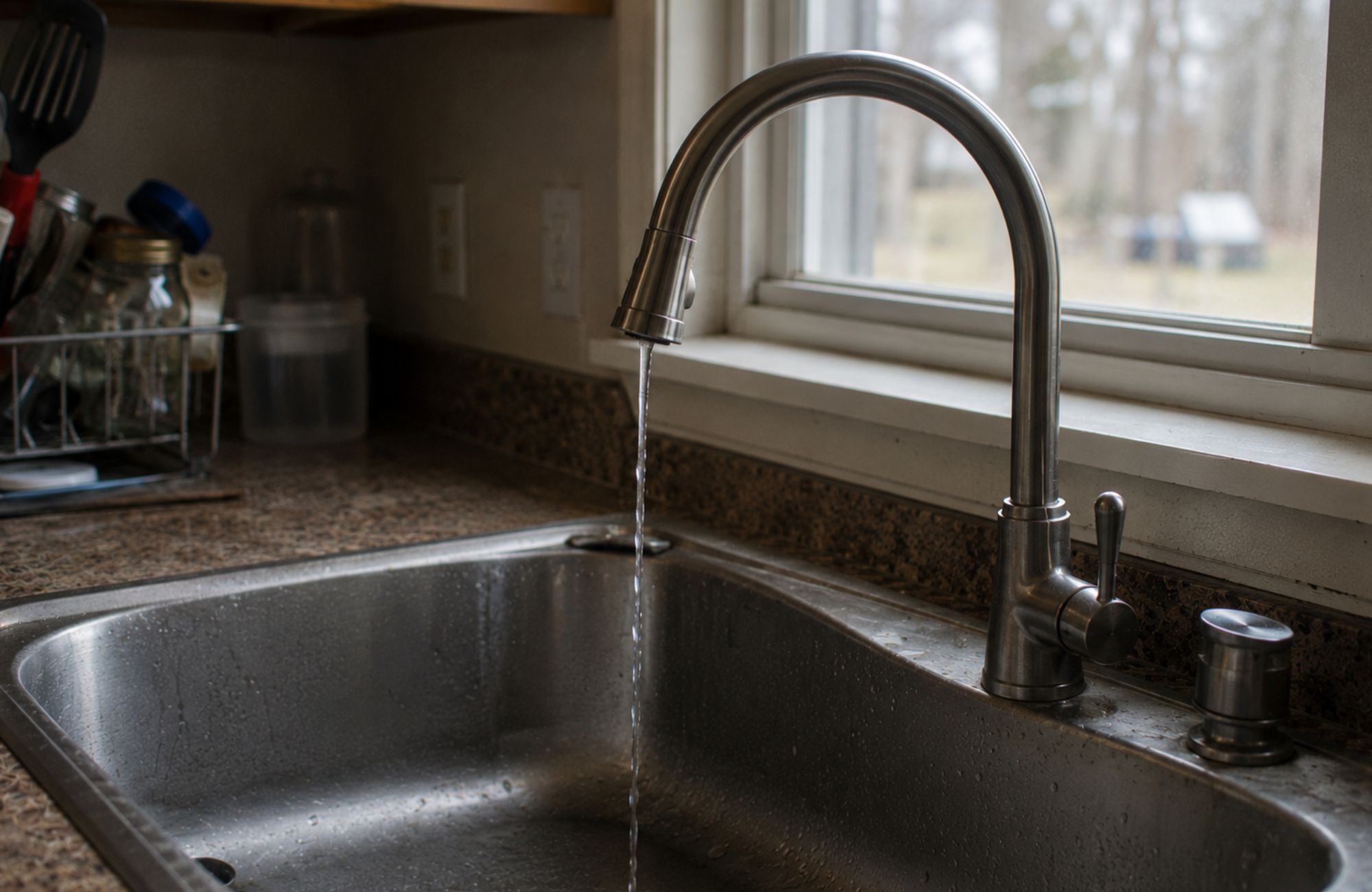
If you’ve noticed low water pressure, sputtering faucets, cloudy water, or air bubbles coming from the tap, your water supply may be showing early warning signs of a problem. Many homeowners in New Milford, Connecticut, rely on private water wells, and recognizing the signs your well is running dry early may help prevent damage to your pump, pressure tank, and plumbing system.
This guide explains the most common warning signs, what causes a well to start running dry, and what homeowners should do next to help protect their water systems and water quality, from well inspection and pump repair to pressure tank service when the issue needs a closer look.
Key Takeaways
- Low water pressure, sputtering faucets, muddy water, and air in water lines are common warning signs that a well is running dry.
- A dry well and pump failure can create similar symptoms, making professional diagnosis important.
- Excessive pumping, irrigation demands, dry seasons, and groundwater changes can all affect your water supply.
- Acting early may help keep your well pump system in good condition and reduce the risk of expensive repairs.
What Does It Mean When a Well Runs Dry?
A well is running dry when the water level inside the well falls below the pump intake, and the system can no longer draw water consistently. In some cases, the problem is temporary and improves after rain or reduced water usage. In other situations, declining groundwater levels may create ongoing water supply issues.
Many homeowners assume a dry well means they immediately need a new well. However, some water wells recover naturally once the aquifer has time to refill. Others may require adjustments to water usage, pump settings, or system components.
In Connecticut, groundwater levels often fluctuate throughout the year. Dry seasons, peak demand during summer, and increased irrigation demands can all place additional stress on residential water systems.
Can a Dry Well Refill Itself?
Yes. Some wells refill naturally as groundwater returns to the aquifer through rainfall and seasonal recharge.
Recovery time depends on:
- recent rain
- local geology
- well depth
- household water usage
- nearby drilling activity
- aquifer recovery rates
A well that recovers after several hours or days may not require major repairs. However, repeated water shortages or recurring warning signs should still be professionally evaluated.
8 Signs Your Well Is Running Dry
Several warning signs may indicate your well is running dry. While some symptoms may also point to a pump failure or plumbing system issue, they should not be ignored.
1. Water Pressure Suddenly Drops
A sudden drop in water pressure is often one of the first signs your well is running dry. You may notice weaker flow from faucets, showers, or outdoor fixtures. If multiple fixtures experience low water pressure at the same time, the issue may involve the well pump, pressure tank, or declining water level rather than a single plumbing fixture.
Fluctuating pressure throughout the home can also signal a weakening water supply during periods of heavy use.
2. Faucets Sputter or Spit Air
Sputtering faucets and bursts of air bubbles often happen when air enters the water lines. This may occur when the water level drops below the pump intake and the pump begins pulling both air and water. Many homeowners first notice sputtering faucets at the kitchen tap or bathroom sink before larger water supply problems appear.
3. Water Looks Cloudy, Muddy, or Gritty
When a well is going dry, the pump may begin drawing sediment, sand, mud, or debris from the bottom of the well.
This can create:
- cloudy water
- muddy water
- gritty water
- sediment buildup in fixtures or filters
Changes in water quality may also affect water taste or smell. Some homeowners notice unusual tastes when deeper minerals or debris become disturbed near the bottom of the well.
4. The Pump Runs Longer Than Normal
A pump running longer than usual can indicate that the system is struggling to maintain pressure. When water levels fall, the pump may work harder to move water through the tank and plumbing system. Over time, continuous pump running can increase energy usage and place additional strain on the motor and other components.
A pump running continuously or cycling too frequently should be professionally inspected to help prevent premature pump failure.
5. Water Stops During Heavy Use
Some water wells function normally during light household use but struggle during peak demand periods. Running a dishwasher, washing machine, shower, and irrigation system at the same time may temporarily exceed the well’s recovery rate. This is especially common during dry seasons when groundwater recharge slows and households use more water outdoors.
6. Recovery Time Gets Slower
Healthy water systems usually recover pressure relatively quickly after water use. When a well is running dry, the pressure tank may take longer to refill and normal pressure may return more slowly than usual. Monitoring changes in household water supply can sometimes help identify declining water levels before complete water loss occurs.
7. Utility Bills Increase
A well pump that runs longer or cycles more often may use additional electricity. Although rising utility bills alone do not confirm a dry well, they often appear alongside other warning signs involving water pressure, sediment, or reduced water supply.
8. Nearby Homes Experience Similar Problems
If nearby homes experience similar water supply problems, local groundwater conditions may be affecting the shared aquifer.Shared aquifer stress can happen when multiple water wells draw from the same underground water source during prolonged dry periods or increased seasonal demand.
A Connecticut Example
A homeowner in New Milford contacted Housatonic Valley Well Pump Services after noticing sputtering faucets, muddy water, and low water pressure during the summer.
The family had increased irrigation demands while maintaining a large garden during an extended dry period. Inspection showed that the water level inside the well had dropped significantly during peak demand conditions.
After reducing water usage and adjusting system operation, the well recovered without requiring a new well installation.
Dry Well vs. Pump Failure: How To Tell the Difference
A dry well and pump failure often create similar symptoms, but a few warning signs may help identify the difference.
| Symptom | Dry Well | Pump Failure |
| Low water pressure | Common | Common |
| Air bubbles in water | Common | Sometimes |
| Muddy or gritty water | Common | Less common |
| No running water | Possible | Common |
| Sediment in water | Common | Less common |
| Electrical issues | Less common | Common |
| Pump running continuously | Common | Common |
Sediment, unusual tastes, cloudy water, or air in the system may suggest declining groundwater levels. Electrical problems, repeated breaker trips, or sudden motor shutdowns may point more toward pump failure. Because symptoms can overlap, professional diagnosis is usually the safest option.
What Causes a Well To Run Dry?
Several conditions can reduce water availability in residential water wells.
Extended Dry Periods
Long periods without rain can reduce groundwater recharge and lower the static water level inside the well. Some researchers and water experts also note that climate change may contribute to longer periods of drought and changing seasonal rainfall patterns in certain regions.
Excessive Pumping and High Water Usage
Heavy household water usage, irrigation demands, swimming pools, and outdoor watering can increase stress on the system. Using more water than the aquifer can replenish may eventually lower available water levels.
Seasonal Groundwater Fluctuations
Groundwater levels naturally rise and fall throughout the year. Some wells experience temporary shortages during hot summer months before recovering later in the season.
Older or Shallow Wells
Older wells and shallow wells are often more vulnerable during dry conditions because they may not reach deeper groundwater reserves.
Nearby Drilling or Development
Construction projects, nearby drilling, and increased groundwater withdrawals can sometimes affect local aquifers and water availability.
What To Do If Your Well Is Running Dry
If you suspect your well is running dry, the first thing homeowners should do is reduce water usage immediately. This may help protect the pump, plumbing system, and pressure tank from unnecessary strain.
Recommended steps include:
- pause irrigation systems
- avoid heavy use of washing machines or dishwashers
- monitor changes in water quality
- watch for muddy water or air bubbles
- schedule a professional inspection
Using a dry well for extended periods can sometimes damage the pump and other water systems components.
Can a Dry Well Damage Your Pump?
Yes. A well pump, including a submersible pump, depends on water to help cool internal components during operation. If the water level falls below the pump intake, the pump may begin drawing air, sediment, or debris instead of water. This can increase wear on the motor and other components.
Continuous pump running without adequate water may increase the risk of overheating, pump failure, or premature equipment wear.
How Professionals Diagnose a Dry Well
Professional inspections help determine whether the issue involves groundwater levels, the well pump, the pressure tank, or another plumbing system component.
A typical inspection may include:
- measuring the static water level
- evaluating pump performance
- inspecting the pressure tank
- testing recovery rates
- assessing water quality
- checking for sediment or unusual tastes
Some professionals may also use specialized tools such as electric water level probes to measure water depth more accurately. Regular inspections can help identify potential problems early and keep water systems operating more efficiently.
Water Storage and Backup Options
In some situations, homeowners may consider additional backup water solutions if water shortages become more frequent.
Possible options include:
- installing water storage tanks or cisterns
- improving water conservation practices
- using drip irrigation systems
- evaluating rainwater harvesting systems
- discussing deeper drilling or a new well with a professional
While drilling a new well can sometimes improve water access, it does not guarantee long-term water availability. Connecting to a municipal water source may also be possible in some locations, although costs and feasibility vary.
When Should You Call a Well Pump Professional?
Homeowners should consider professional service if they notice:
- no running water
- sudden drop in pressure
- muddy water
- sputtering faucets
- pump running continuously
- repeated breaker trips
- changes in water taste or smell
- sediment appearing in fixtures
Early diagnosis may help reduce repair costs and prevent larger system failures.
Conclusion
The signs your well is running dry often appear gradually. Low water pressure, sputtering faucets, muddy water, air bubbles, and fluctuating water supply can all indicate developing groundwater or well system problems.
For homeowners in New Milford and nearby Connecticut communities, acting quickly can help protect your well pump, pressure tank, plumbing system, and water quality. Housatonic Valley Well Pump Services provides well inspections, well pump diagnostics, pressure tank services, and emergency support. Contact us before a small issue becomes a bigger water system problem.
FAQs
How do you know when a well is running dry?
Common signs your well is running dry include low water pressure, sputtering faucets, air bubbles, muddy water, sediment, and intermittent water loss. Some homeowners also notice fluctuating pressure or slower recovery times after heavy use.
What are the symptoms of a dry well?
Symptoms may include cloudy water, gritty water, unusual tastes, sediment, air in water lines, and periods with no running water. In some cases, the pump may begin running longer than normal.
How do you fix a well that runs dry?
The appropriate solution depends on the cause. Some wells recover naturally after rain or reduced water usage, while others may require system adjustments, deeper drilling, water storage tanks, or a new well.
What happens when your well runs dry?
When a well runs dry, the pump may begin drawing air and sediment instead of water. This can affect water quality, reduce pressure, and potentially increase wear on the pump system and plumbing system components.