


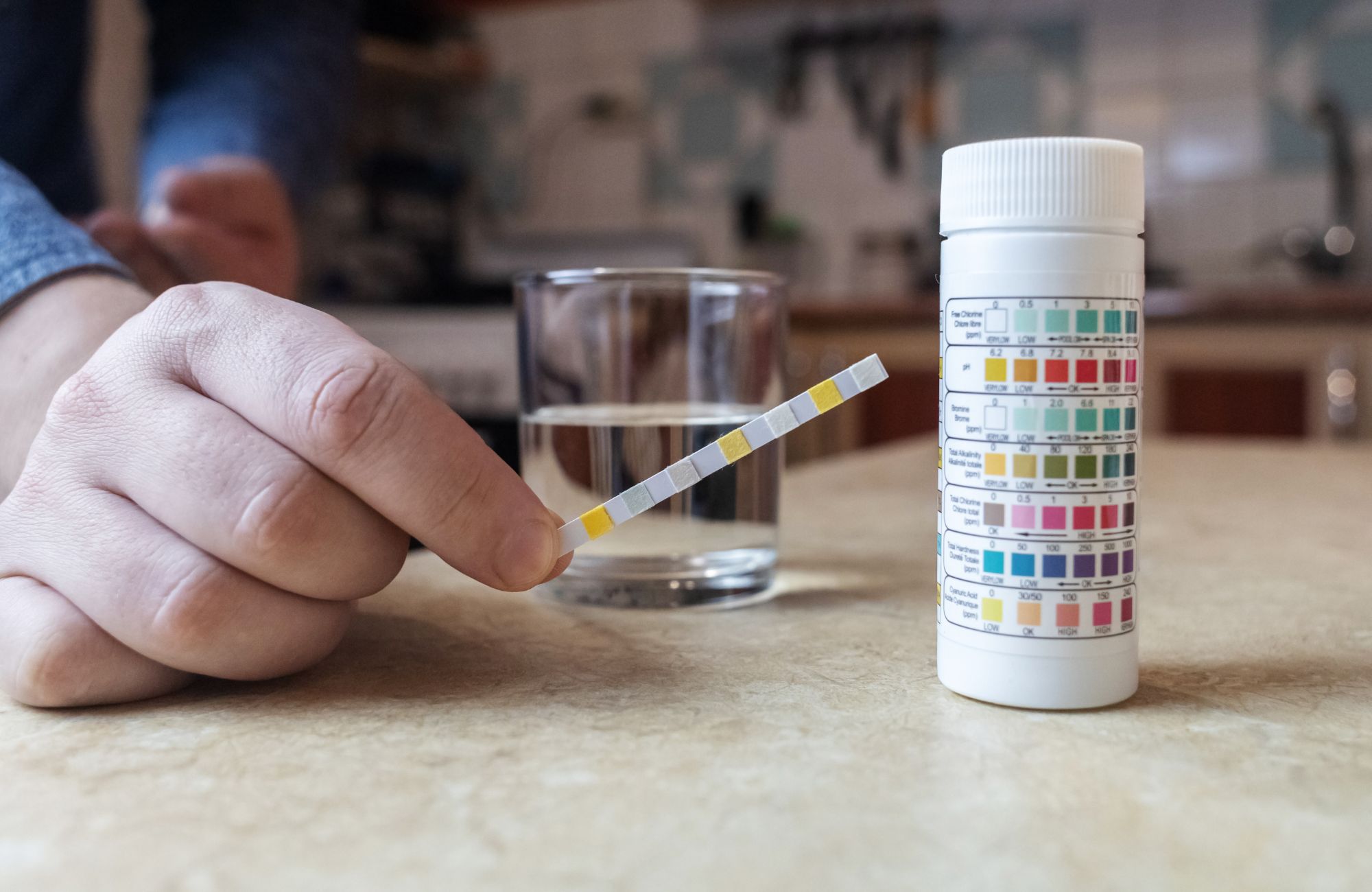
If you rely on a private well in New Milford, CT, you may be asking: do at home water test kits work? With many water test kits available at hardware stores offering quick results and low-cost convenience, it is easy to assume a simple strip test can determine if your drinking water is safe. But when your household depends entirely on well water, the accuracy of those results matters.
Home water test kits can help screen for certain water quality indicators, but they do not replace certified lab testing. Well water in Litchfield County and surrounding towns like Danbury, Brookfield, and Southbury can contain multiple contaminants at once. While DIY kits provide convenient instant results, they often do not test multiple contaminants at laboratory precision or provide a complete picture of your water supply.
If you want accurate results backed by professional evaluation, Housatonic Valley Well Pump Services provides certified water testing and full well inspections throughout New Milford and nearby Connecticut communities.
Do At-Home Water Test Kits Actually Work?
At-home water test kits can work for basic screening, but they are limited in scope and accuracy. Most kits test for pH, total dissolved solids, chlorine levels, and sometimes nitrates or hardness. They offer quick results, which makes them attractive for new homeowners or anyone concerned about tap water quality.
However, most kits rely on a single strip that changes color when exposed to specific chemicals. The instructions may appear simple, but user error is common. Lighting, timing, and improper sample collection can affect accuracy. Even when instructions are followed carefully, most kits test only a narrow range of potential contaminants.
Scientific evaluations of testing kits show that field-based DIY kits can vary in accuracy depending on the contaminant being tested. That means a home test may not detect low but harmful contaminant levels. For well water systems in rural areas like New Milford, relying solely on DIY kits increases risk.
What Can Home Water Test Kits Detect?
Home water test kits are designed to detect common and noticeable water issues. They are useful when you suspect visible problems such as scaling, staining, or changes in taste. In many cases, they help determine whether hard water or chlorine levels are affecting plumbing or appliances.
Most kits test for:
- Total dissolved solids (TDS)
- pH balance
- Hardness minerals
- Chlorine levels
- Nitrates
- Basic indicators of coliform bacteria
While these indicators are important, they do not always reveal harmful contaminants like arsenic or accurately detect lead from aging plumbing or lead pipes. Some kits claim to detect lead, but precision varies widely. Without laboratory confirmation, contaminant levels may not be measured accurately enough to determine safety under EPA standards.
What At-Home Water Test Kits Often Miss
At-home test kits often miss contaminants that require more advanced laboratory testing. Well water is not treated by municipal facilities, which means homeowners must monitor both chemical and biological safety. A simple strip test may detect one issue, but fail to test multiple contaminants present at the same time.
Contaminants That DIY Kits May Not Detect
DIY kits may not reliably detect:
- E. coli or coliform bacteria at low levels
- Arsenic in groundwater
- Multiple harmful chemicals simultaneously
- Contamination from plumbing corrosion
- System-related issues affecting water quality
For example, after heavy rain, surface water intrusion can introduce bacteria into a well system. A single strip may not detect the presence of harmful bacteria accurately. Similarly, contamination caused by deteriorating plumbing may require laboratory analysis to determine exact contaminant levels.
Professional lab testing through a certified lab or local laboratory provides a detailed report that measures contaminant levels precisely. This allows homeowners to determine whether treatment systems such as activated carbon filters or other solutions are necessary.
At-Home Kits vs Professional Laboratory Testing
The difference between at-home test kits and professional laboratory testing comes down to accuracy, depth, and reliability. While DIY kits provide convenience and quick results, lab testing provides verified data and a wider range of contaminant analysis.
Here is a clear comparison:
| Feature | At-Home Water Test Kits | Professional Lab Testing |
|---|---|---|
| Cost | Low cost | Higher but worth paying |
| Accuracy | Moderate | High, certified |
| Detect multiple contaminants | Limited | Wider range |
| Detect bacteria reliably | Limited | Yes |
| Real estate compliant | No | Yes |
| Provides a detailed report | Basic | Comprehensive |
Professional lab testing requires properly collected water samples and controlled analysis. Environmental laboratories follow strict procedures to ensure accurate results. In addition, professional evaluation includes inspection of the well pump, pressure tank, and overall system, which DIY kits cannot provide.
Why Well Water Requires More Than a DIY Test
Private well owners are responsible for monitoring their own water supply. In rural areas like New Milford and parts of Upper Fairfield County, groundwater conditions can shift seasonally, introducing new contaminants. Regular testing is essential to protect long-term safety.
Multiple Contaminants in Well Water
Well water can contain iron, sulfur, bacteria, and other harmful contaminants at the same time. A home water test that detects hardness does not rule out bacterial contamination. Without testing for multiple contaminants using certified laboratory testing, homeowners may miss hidden risks.
Mechanical Issues Affect Water Quality
Water quality problems may also stem from mechanical issues such as pump failure or pressure tank malfunction. Sediment entering pipes during repairs can temporarily alter the water coming from the tap. A strip test cannot determine whether contamination is chemical, biological, or mechanical.
At Housatonic Valley Well Pump Services, we combine certified water testing with complete system inspections. This ensures both contaminant levels and equipment performance are evaluated together.
When Should You Call a Professional in New Milford CT?
Certain situations require more than a convenient DIY test. If your water changes in taste, smell, or clarity, professional evaluation is recommended to determine the source of the issue.
You should contact a professional if:
- You notice sulfur odors or metallic taste
- Iron staining appears in sinks or tubs
- Water pressure drops suddenly
- Water appears cloudy or discolored
- It has been more than one year since your last test
Homeowners in New Milford, Danbury, Brookfield, and surrounding towns should also schedule professional testing during real estate transactions. Certified testing ensures compliance with inspection requirements and protects buyers and sellers from future liability.
How Often Should Well Water Be Tested?
The EPA recommends annual testing of private wells for bacteria, nitrates, and total dissolved solids. Additional testing is advised after flooding, plumbing repairs, or noticeable changes in water quality. Regular testing reduces the risk of long-term exposure to harmful contaminants.
Seasonal groundwater shifts in Connecticut can introduce new chemicals into well systems. Testing once and assuming permanent safety is not enough. Annual lab testing ensures contaminant levels remain within acceptable EPA standards and provides updated documentation.
Conclusion
At-home water test kits can help with basic screening and provide convenient, quick results, but they do not replace certified lab testing for well water safety. While DIY kits may detect certain contaminants like hardness or chlorine, they often miss multiple contaminants or fail to measure precise levels that determine health risk. For homeowners relying on private well water, accurate laboratory testing remains the most reliable way to ensure safe and dependable drinking water.
For accurate results, reliable documentation, and full system evaluation, professional testing is worth paying for. If you rely on well water in New Milford, Danbury, Brookfield, or nearby Connecticut towns, Housatonic Valley Well Pump Services is ready to help. Contact us today to schedule certified water testing and protect your drinking water supply.
FAQs
How accurate are at-home water test kits?
At-home water test kits can provide general screening information, but accuracy depends heavily on proper instructions and avoiding user error. Test strips are sensitive to timing and lighting, which can affect results. Certified laboratory testing provides more accurate and reliable data.
Does a water tester actually work?
A water tester can work for measuring pH, chlorine, or hardness levels. However, most kits do not measure contaminant levels with lab precision or test a wider range of potential contaminants. They are useful for quick screening but not for definitive safety evaluation.
How accurate are home testing kits?
Home testing kits vary in accuracy depending on the contaminant being tested. Some can detect basic indicators, but they may miss low concentrations of harmful chemicals or bacteria. Professional lab testing provides verified results and a detailed report.
What is the best way to test your drinking water?
The best way to test your drinking water is through certified laboratory testing combined with a professional well inspection. This approach ensures accurate results and identifies potential mechanical or plumbing issues. Homeowners in New Milford can schedule professional testing with Housatonic Valley Well Pump Services for dependable answers.