




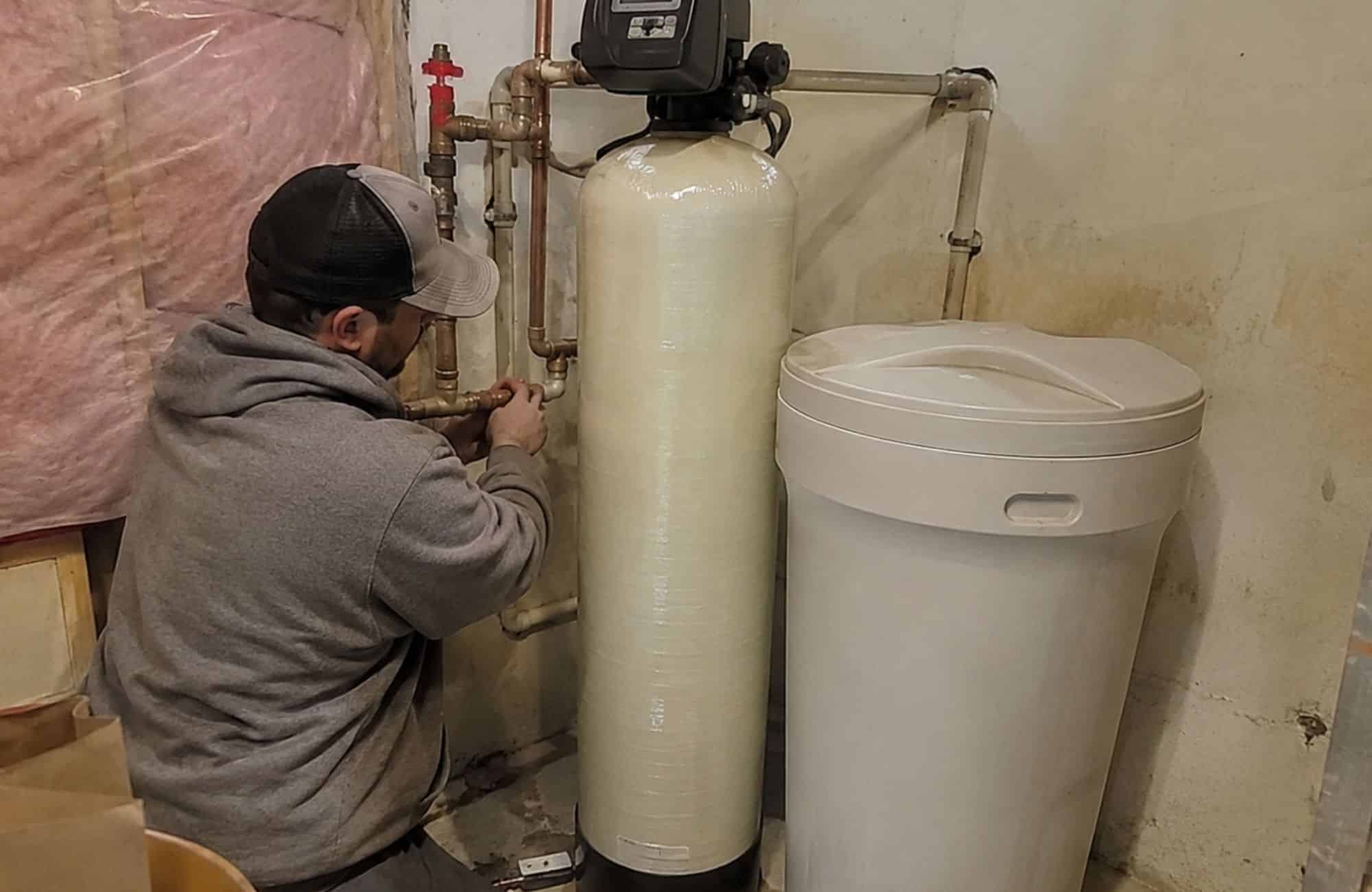
Choosing between local water softener installers, big-box installation services, and DIY can feel confusing when you’re dealing with hard water. You want fewer mineral deposits on faucets, less scale buildup in your pipes and water heater, and a system that fits your household’s needs. However, buying a water softener is only part of the decision. The way it’s evaluated, installed, and maintained also matters.
If you’re searching for water softener installers near me in New Milford, CT, look for a properly licensed contractor who evaluates your water, recommends an appropriately sized system, explains installation costs, and offers clear maintenance and warranty terms. Experience with private well water is especially valuable when hardness occurs alongside iron, sediment, or other water quality concerns.
What Does Professional Water Softener Installation Include?
Professional water softener installation typically involves evaluating your water quality, choosing the right system capacity, connecting the equipment to your plumbing, setting up drainage, and checking its operation. The exact work depends on your home’s water supply, existing plumbing, selected equipment, and the services included in your installation agreement.
Water Testing and Proper System Sizing
A qualified water softener installer should assess your water hardness before recommending equipment. Hardness is commonly measured in grains per gallon (gpg) and reflects the concentration of dissolved calcium and magnesium. Proper system sizing also depends on household water consumption and peak flow demand.
For private well water, iron, sediment, and other water quality concerns may affect equipment selection. The Connecticut Department of Public Health recommends using an independent, state-certified laboratory to evaluate contaminants. An installer’s hardness assessment should not replace appropriate drinking water quality testing.
When comparing installers, ask how they determine system capacity, interpret water test results, and identify whether additional treatment is necessary. A qualified installer should explain why the recommended equipment meets your household’s needs. Understanding the available hard water solutions can also help you evaluate recommendations before committing to an installation.
Plumbing Connections and Drainage Setup
A professional installation usually includes connecting the water softener to the appropriate water supply line, checking existing pipes and valves, and providing the required bypass arrangement. This allows the system to be isolated for servicing without unnecessarily interrupting the entire home’s water supply.
Drainage also deserves attention because salt-based water softeners typically discharge wastewater during regeneration. In Connecticut, water softener regeneration wastewater must not be discharged into a household septic system. Ask your installer where the wastewater will go and how the proposed discharge arrangement complies with state and local requirements. The drain connection must also follow the manufacturer’s instructions, including any applicable air gap or backflow protection requirements.
Programming, Testing, and System Handover
After installation, the technician should program the equipment using the appropriate hardness and operating settings. Depending on the model, this may include setting the regeneration schedule or entering information used by a demand-controlled system.
Final checks should cover leaks, water flow, operation of the bypass valve, and system performance. The installer should also explain salt refills, maintenance requirements, warning indicators, and what to do if the unit needs attention.
Homeowners considering professionally installed equipment can explore available water softener systems to understand the types of services involved.
Professional vs. Big-Box vs. DIY Water Softener Installation
Professional installers, big-box retailers, and DIY installation each offer different levels of involvement and responsibility. A local specialist may provide water testing and ongoing service, while a retailer may arrange installation through a contractor. DIY leaves equipment selection, installation arrangements, and troubleshooting primarily with the homeowner. Actual services vary by provider and agreement.
The best option depends on your water quality, plumbing layout, technical experience, and expectations for future maintenance. Before deciding, compare the work included in each option rather than assuming every installation package provides the same services.
| Consideration | Local Professional | Big-Box Retailer | DIY |
| Water testing | May be included or offered separately | Varies by package | Homeowner arranges |
| System sizing | Based on evaluation and water demand | Depends on available consultation | Homeowner determines |
| Plumbing work | Performed within the contractor’s licensed scope | Often arranged through an installation provider | Homeowner handles or hires help |
| Drainage setup | Part of the agreed installation scope | Confirm package coverage | Homeowner responsible |
| Programming | Typically included | Confirm with provider | Homeowner completes |
| Warranty support | Depends on equipment and workmanship terms | Retailer and installer terms may differ | Primarily manufacturer coverage |
| Maintenance | May be available locally | Depends on retailer and service partner | Homeowner manages |
When Does Professional Installation Make More Sense?
Professional installation may be particularly useful when your home has a private well, limited space around the main water line, complicated plumbing, or multiple water-quality concerns. An experienced installer can evaluate these factors before work begins and explain any additional treatment or modifications needed.
DIY may appear more affordable, but mistakes involving plumbing connections, drainage, or equipment settings can create problems that require professional correction. If plumbing work requires a license or permit, homeowners should confirm applicable rules before proceeding.
How to Choose Qualified Water Softener Installers Near Me
Choosing qualified water softener installers near you starts with checking licenses, relevant experience, and the services they provide. A reliable contractor should explain how your water will be evaluated, what the installation includes, and who handles problems afterward. For Connecticut well-water homes, experience with private water systems is especially relevant.
Verify Licensing and Qualifications
The Connecticut Department of Consumer Protection issues P-1 and P-2 licenses for general plumbing work and J-1 and J-2 licenses for work limited to domestic water pumps and water conditioning. P-1 and J-1 are contractor licenses, while P-2 and J-2 are journeyperson licenses that require employment by an appropriately licensed contractor. Ask whether the proposed installation falls within the contractor’s permitted scope of work.
Before hiring, ask who will perform the installation and verify the appropriate credential through the Connecticut Department of Consumer Protection license lookup. You should also ask whether the proposed work requires permits or inspections under local rules.
Look for Experience With Private Well Water
Municipal water and private well water can present different treatment needs. Well-water hardness may occur alongside iron, sediment, or other water-quality concerns, so an installer should review appropriate test results before recommending a solution.
Ask whether the technician has experience with your type of water supply and can explain how the results affect system sizing and maintenance. For homes with iron-related problems, understanding the best water softener options for well water with iron can help you prepare questions without assuming a softener alone will resolve every issue.
Check Reviews, Communication, and Local Availability
Customer reviews can offer useful insight into scheduling, communication, and how companies respond when problems occur. Look for specific comments about installation quality and follow-up service rather than relying only on overall ratings.
A dependable installer should be willing to explain recommendations in plain language, describe the work clearly, and answer questions without pressuring you to purchase immediately. Confirm whether the company serves your Connecticut location and how it handles future repair requests.
What Should You Ask Before Hiring a Water Softener Installer?
Before accepting an installation quote, ask about testing, licensing, equipment sizing, plumbing modifications, warranty coverage, and maintenance. These questions help reveal differences between service packages that may look similar at first. They also make it easier to understand what you’re paying for and which responsibilities remain with you after installation.
Water Softener Installation Quote Checklist
A written quote is more useful when it clearly describes the proposed work and identifies items that may carry additional charges. Use the following checklist when comparing local installers, retailer installation packages, and independent contractors.
- Are you licensed for this work? Ask for the relevant Connecticut license information and who will perform the job.
- Will you test my water first? Confirm which water-quality measurements are included and whether additional laboratory testing is recommended.
- How will you size the system? Ask how hardness, household demand, and flow requirements affect the recommendation.
- What plumbing work is included? Confirm connections, bypass valves, drain lines, and any required modifications.
- Are permits or inspections needed? Ask who determines the requirements and handles the arrangements.
- Does the quote include programming and final testing? Confirm that the equipment will be checked before the job is considered complete.
- What warranties apply? Request separate details about equipment coverage and installation workmanship.
- Who handles repairs and maintenance? Ask about service availability, future costs, and support for the installed brand.
- Are there possible additional charges? Discuss unexpected plumbing issues, materials, permits, and any work excluded from the estimate.
Compare the Full Installation Scope, Not Just the Price
An itemized quote helps you identify whether two companies are offering equivalent services. One estimate may include water testing and system setup, while another covers only connecting equipment you’ve already purchased.
The overall price depends on the unit, labor, existing plumbing, and additional work required. For a more detailed discussion of these factors, see the water softener system cost guide.
Why Do Warranties and Maintenance Support Matter?
Water softener installation is not necessarily the end of your relationship with the installer. Most systems require periodic maintenance, and components may eventually need adjustment or repair. Understanding warranty coverage, service availability, and routine upkeep before purchasing can help homeowners avoid uncertainty when their equipment needs attention.
Understand Equipment and Workmanship Warranties
A manufacturer warranty and an installer workmanship warranty may cover different problems. Equipment coverage generally relates to specified parts or defects, while workmanship coverage addresses qualifying problems with the installation itself.
Ask for written warranty terms, including exclusions, labor charges, claim procedures, and who provides service. If installation is arranged through a retailer, clarify whether the retailer, contractor, or manufacturer handles each type of issue.
Plan for Maintenance and Future Repairs
Maintenance requirements depend on the system design, household usage, water quality, and manufacturer instructions. Salt-based softeners commonly need salt-level checks, while other tasks may include inspecting components, confirming settings, and testing treated water when appropriate.
Before choosing an installer, ask whether ongoing maintenance is available and whether the company services equipment purchased elsewhere. You should also understand how quickly service can be arranged if the system develops a leak, stops softening effectively, or displays a warning.
Choose a Water Softener Installer Who Understands Your Home
Finding the right installer means looking beyond the equipment price or a convenient installation package. A qualified professional should consider your water quality, household demand, plumbing conditions, and long-term maintenance needs before recommending a solution. Comparing licenses, written estimates, warranty terms, and service availability helps you choose with greater confidence.
If you’re considering water softener installation in New Milford, CT, Housatonic Valley Well Pump Services LLC can help you evaluate your water quality and determine which treatment options suit your household. With more than 20 years of hands-on experience, the owner-operated company understands the needs of local well-water homeowners. Contact us to discuss your water treatment needs and request a free quote.
FAQs
How much does it cost for someone to install a water softener?
The cost depends on the equipment, installation labor, existing plumbing, and any additional materials or permits needed. Replacing an existing system may involve different work than installing a new treatment setup. Request an itemized estimate so you can compare the equipment price, labor, and any additional services separately.
Do I need a plumber to install a water softener?
In Connecticut, water softener installation may fall within the scope of properly licensed plumbing contractors or water-conditioning contractors, depending on the work involved. The state identifies P-1/P-2 and J-1/J-2 license classifications as relevant to water treatment installation, with different rules for contractors and journeypersons. Verify the installer's credentials and confirm whether the job requires permits or inspections before work begins.
How much is a water softener for a 2,000-square-foot house?
A home's square footage alone cannot determine the correct water softener size or installed price. Water hardness, the number of occupants, water usage, and peak flow demand are more useful factors when sizing equipment. A qualified installer can assess these conditions and provide a quote based on the home's actual treatment requirements.
How much does Lowe's charge to install a water softener system?
Lowe's installation pricing can vary by location, installation partner, equipment choice, and the plumbing work required. The retailer's current quote should clarify whether the package includes removing old equipment, new connections, drainage, programming, and any additional labor. Compare that written scope with quotes from local installers before choosing a provider.
Should a water softener installer test my well water first?
Yes, water testing is a sensible step before selecting a softener for a private well. Hardness measurements help determine capacity, while additional test results may reveal iron or other concerns that need separate evaluation. A softener primarily treats hardness and should not be assumed to remove every contaminant or make unsafe water safe to drink.
How often should a professionally installed water softener be serviced?
The appropriate service schedule depends on the system, manufacturer recommendations, usage, and water conditions. Homeowners should regularly check salt levels where applicable and arrange additional maintenance or testing when performance changes or the manufacturer's instructions call for it. Ask your installer what routine care is required and whether professional maintenance or repair services are available.