




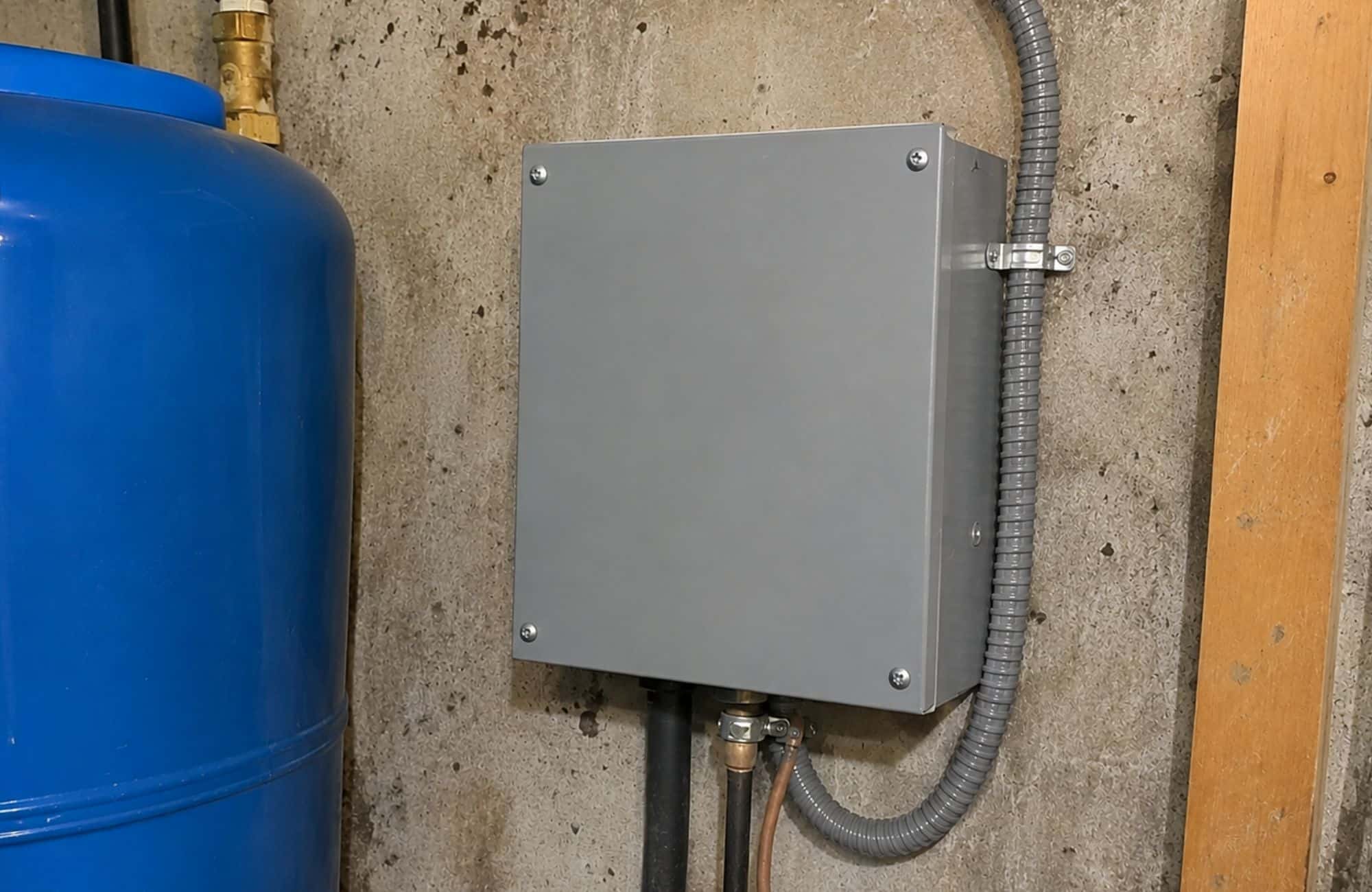
When your well pump stops working, the problem may not be the pump itself. A faulty well pump control box or capacitor can prevent the motor from starting, cause unusual humming or clicking sounds, or interrupt your home’s water supply. Understanding these components can help you recognize warning signs before assuming the entire pump needs replacement.
For Connecticut homeowners with private wells, knowing when a control box needs attention can make repair decisions easier. This guide explains how control boxes and capacitors work, common failure symptoms, replacement considerations, and factors that affect repair costs.
What Is a Well Pump Control Box?
A well pump control box is an electrical enclosure that houses starting components for certain submersible well pump motors. It typically contains a start capacitor and relay, while some models include a run capacitor or overload protection. These components help the motor start and operate according to its electrical design.
How a Control Box Works With Your Well Pump
When water pressure drops below the pressure switch’s preset starting point, the switch calls for the pump to start. In a conventional three-wire submersible system, the control box provides the electrical starting circuit that helps the motor begin running.
Once the motor reaches the appropriate operating speed, the starting relay removes the start capacitor from the starting circuit. The motor then continues running until the pressure switch reaches its shutoff setting or another system control interrupts operation.
The control box works alongside other components rather than controlling the entire water system independently. The pressure switch controls normal pump cycling, while the pressure tank stores pressurized water and reduces how frequently the pump must start.
Where Is the Well Pump Control Box Located?
A conventional external control box is installed above ground, often near the pressure tank or other well system electrical equipment. It may be mounted on a basement wall, in a utility room, or within a suitable outdoor enclosure.
Some control boxes are designed for outdoor mounting, while others have different environmental restrictions. Installation must follow the manufacturer’s instructions and the enclosure’s protection rating, particularly where moisture, dust, or temperature extremes are concerns.
Which Well Pumps Need a Control Box?
Not every well pump needs a separate motor control box. Conventional single-phase three-wire submersible motors require external starting components, while conventional two-wire submersible motors have their starting components built into the motor assembly. Other pump systems may use different electronic controls or variable-speed drives.
Two-Wire vs. Three-Wire Well Pump Systems
The main difference is where the motor’s starting components are located. This affects maintenance access, replacement options, and the type of electrical equipment installed above ground.
| Feature | Two-Wire Submersible Pump | Three-Wire Submersible Pump |
| External motor starting box | Normally not required | Required for conventional single-phase motors |
| Starting components | Built into motor assembly | Located in external control box |
| Above-ground component access | Limited for motor starting parts | External starting parts can be serviced |
| Electrical connections to motor | Two power conductors plus ground | Three motor conductors plus ground |
| Replacement considerations | Motor design and other controls | Motor and control box compatibility |
The wire count refers to motor conductors, not the equipment grounding conductor. As shown in Franklin Electric’s motor control box specifications, conventional three-wire, single-phase motors use compatible external starting equipment.
How to Identify Your Pump’s Control System
The pump’s installation records, motor model information, or existing equipment labels may identify whether the system uses a two-wire or three-wire motor. Some enclosures also have manufacturer labels showing their model number, voltage, and horsepower rating.
A qualified well pump technician can confirm the configuration when records are missing. This is especially useful when a property has older equipment, an undocumented motor replacement, or a mixture of components installed at different times.
What Do Well Pump Capacitors and Relays Do?
Well pump capacitors and relays help certain single-phase motors start and operate. A start capacitor creates the electrical conditions needed for higher starting torque, while a starting relay controls when that capacitor leaves the circuit. Some systems also use a run capacitor during normal motor operation.
Start Capacitor
The start capacitor helps create a phase difference between the motor windings, producing the torque needed to begin turning the motor. It operates during the starting period rather than continuously in a conventional capacitor-start circuit.
When a start capacitor fails, the motor may struggle to start, hum without running, or activate an overload device. However, these symptoms can also result from incorrect voltage, damaged wiring, a faulty relay, or a mechanical motor problem.
Run Capacitor
A run capacitor remains connected during normal operation in motor designs that require one. It helps maintain the intended electrical relationship between windings while the motor is running.
Not every control box contains a run capacitor. Franklin Electric distinguishes its Quick Disconnect control boxes from Capacitor Run Control models, which include an additional run capacitor for motor operation.
Starting Relay and Overload Protection
The starting relay connects and disconnects the start capacitor at the appropriate stage of motor operation. A damaged relay may interfere with starting even when the capacitor itself is functional.
Many control boxes also include overload protection that interrupts operation under certain excessive-current or overheating conditions. These devices do not automatically provide surge protection or dry-run protection, and an overload trip does not identify the underlying problem by itself.
Common Well Pump Control Box Failure Symptoms
A failing well pump control box may cause a pump that will not start, repeated clicking, humming, intermittent water delivery, or visible damage to the enclosure. These warning signs suggest that the electrical starting circuit deserves attention, but they do not confirm which component has failed.
Pump Won’t Start or Water Stops Flowing
If the motor cannot start, water pressure may eventually drop until little or no water reaches the faucets. A failed capacitor, damaged relay, or faulty electrical connection could be responsible.
However, a pump that will not start may also have a power supply problem, pressure switch fault, damaged motor, or another issue unrelated to the control box. Professional diagnosis helps determine whether the problem is above ground or involves the pump itself.
Clicking or Humming Noises
A clicking sound may come from a relay or another switching component attempting to operate. Occasional switching noises can occur during normal operation, but repeated clicking with no successful pump start deserves investigation.
Humming without normal water delivery can suggest that the motor is receiving power but cannot start correctly. Continued unsuccessful starting attempts may cause overheating or additional electrical damage, so the system should not be repeatedly restarted.
Intermittent Water Supply
Intermittent water delivery may occur when the pump starts inconsistently or stops before completing a normal pumping cycle. A failing electrical connection, relay, or control component is one possible explanation.
Similar symptoms can also come from pressure switch problems, motor overload conditions, and other well system faults. The pattern of operation matters, but symptoms alone cannot establish the cause.
Visible Damage or Burning Smells
Discoloration, melting, smoke, or a burning smell around a control box suggests a potentially serious electrical problem. Moisture around the enclosure or signs of physical damage also warrant attention.
The following table summarizes warning signs and what they may indicate. It is intended to help homeowners describe a problem, not to replace electrical testing.
| Warning Sign | Possible Explanation | Recommended Response |
| Pump will not start | Capacitor, relay, power, or motor problem | Arrange professional diagnosis |
| Repeated clicking | Relay or switching problem | Avoid repeated starting attempts |
| Humming without starting | Starting circuit or motor fault | Stop operation and request service |
| Intermittent water supply | Electrical interruption or another system fault | Have the system evaluated |
| Burning smell or smoke | Overheating or electrical damage | Keep clear and seek urgent help |
| Visible enclosure damage | Moisture, overheating, or physical damage | Do not open or handle the enclosure |
What Causes a Well Pump Control Box or Capacitor to Fail?
Control box components can fail because of age, repeated electrical stress, moisture exposure, overheating, or problems elsewhere in the pump system. Capacitors and relays are subject to wear, but premature failure may also occur when a motor starts too frequently or operates outside its specified electrical conditions.
Electrical and Environmental Problems
Loose or damaged electrical connections can create heat and interfere with reliable operation. Voltage problems, unsuitable components, and moisture entering an enclosure can also contribute to damaged terminals, relays, or capacitors.
Repeated pump cycling may place additional demands on starting components. If the pressure tank or pressure switch causes the pump to start unusually often, those conditions may need attention alongside any damaged control box parts.
Incorrect or Mismatched Components
A replacement control box must be compatible with the motor’s electrical specifications. Selecting equipment based only on its physical appearance or a similar horsepower label can lead to installation problems.
Motor manufacturer, model, horsepower, voltage, phase, and control box design all matter. The Franklin Electric Application, Installation and Maintenance resources provide manufacturer technical guidance that professionals can use when checking motor and control equipment requirements.
Well Pump Control Box Repair vs. Replacement
A faulty well pump control box does not always require complete replacement. Depending on the equipment design and condition, a professional may be able to replace a failed capacitor, relay, or other serviceable component. A complete replacement may be more appropriate when damage is widespread or compatible repair parts are unavailable.
When a Component Repair May Be Appropriate
Replacing an individual component may be reasonable when testing identifies a specific failure and the enclosure, connections, and remaining components are in suitable condition. The replacement part must meet the original equipment’s electrical requirements.
Some manufacturers identify serviceable parts separately in their documentation. For example, Flint & Walling’s control box repair parts reference lists capacitors, relays, overload devices, and other components for specific models, illustrating why repair options depend on the equipment.
When the Entire Control Box May Need Replacement
Complete well pump control box replacement may be recommended when the enclosure is severely damaged, internal wiring has overheated, or several components show signs of failure. Replacement may also make sense when parts are discontinued or repair is not practical.
The existing motor must be considered before selecting a new box. Installing a control box that is not approved for the motor can create new problems rather than resolve the original failure.
What Happens During Professional Replacement?
A qualified technician evaluates the system and identifies the affected equipment before recommending replacement. This may involve checking the pressure switch, electrical supply, motor characteristics, and condition of the existing control components using appropriate professional procedures.
If replacement is necessary, the technician selects compatible equipment, installs it according to applicable requirements, and checks the pump’s operation. Additional investigation may be needed if the motor still fails to start or another system fault is discovered.
What Affects Well Pump Control Box Repair Costs?
Well pump control box repair costs depend on the failed component, replacement part requirements, labor involved, and whether other problems are found. A simple component-level repair may involve different work from replacing an entire control box or addressing damaged wiring. An accurate quote requires knowing the equipment and diagnosing the failure.
Factors That Influence the Final Cost
Control boxes vary in size, electrical rating, component design, and availability. Some systems use relatively simple starting arrangements, while others contain additional electrical components that affect the parts and labor involved.
The following factors commonly influence repair and replacement costs. Understanding them can help homeowners compare recommendations and ask useful questions before authorizing work.
- Type of failure: A capacitor issue may require different repairs from damaged terminals, a failed relay, or multiple component faults.
- Motor specifications: Horsepower, voltage, phase, and manufacturer requirements affect replacement options.
- Parts availability: Older or discontinued models may require an approved alternative assembly.
- Labor and accessibility: Equipment location, wiring condition, and installation requirements influence the work involved.
- Additional system problems: Pressure switch faults, motor damage, or other electrical issues may require separate repairs.
- Emergency service: After-hours diagnosis or urgent repair needs may affect the final service cost.
Why Diagnosis Matters Before Buying a Replacement
Purchasing a control box before confirming the problem can lead to unnecessary spending. A new box will not correct a damaged pump motor, an inadequate power supply, or a pressure switch problem unrelated to the starting components.
A professional evaluation can distinguish between a serviceable electrical component and a larger system issue. It also helps homeowners understand which repairs are necessary and which parts, if any, should be replaced.
When Should You Call a Professional for Control Box Problems?
Professional help is appropriate when a well pump will not start, repeatedly clicks or hums, loses water unexpectedly, or shows signs of electrical damage. Control boxes contain hazardous electrical components, and capacitors can retain a charge after power is disconnected. Diagnosis and repair require proper training and equipment.
Safe Steps for Homeowners
Homeowners can observe symptoms without removing covers or touching electrical connections. Note when the water problem began, whether the pump makes unusual sounds, and whether the issue occurs continuously or intermittently.
Avoid opening the enclosure, testing terminals, handling capacitors, or attempting repeated restarts. If there is smoke, sparking, or a burning smell, keep clear and seek urgent assistance. Sudden water loss may call for emergency well pump repair, while other suspected electrical faults can be evaluated through professional well pump repair.
Get the Right Diagnosis Before Replacing Parts
A well pump control box plays an important role in starting certain submersible pump motors. Understanding capacitor symptoms, relay problems, and replacement requirements can help you recognize when something may be wrong without risking unsafe electrical repairs. Because similar symptoms can have different causes, professional diagnosis is the best starting point before purchasing replacement equipment.
If your pump is having trouble starting or your household water supply has become unreliable, Housatonic Valley Well Pump Services LLCoffers professional well pump diagnostics in Connecticut, backed by more than 20 years of hands-on experience and 24/7 emergency availability. You can schedule a professional well pump evaluation and request a free quote to understand the problem and available repair options.
FAQs
How do I know if my well pump control box is bad?
A faulty well pump control box may cause the pump to stop starting, make repeated clicking sounds, hum without running, or deliver water inconsistently. Visible enclosure damage or a burning smell can also suggest an electrical problem. Because these symptoms overlap with motor, pressure switch, and power supply faults, professional testing is needed to identify the actual cause.
Do I need a control box for my well pump?
Conventional three-wire, single-phase submersible pumps require an external motor control box containing the starting components. Conventional two-wire submersible pumps have their starting components built into the motor assembly and normally do not need a separate starting box. Other well pump configurations may use different controls, so the motor model and system design should be checked.
How much does a well pump control box cost?
The cost depends on the control box model, motor horsepower, electrical specifications, and whether the work involves one component or the complete assembly. Labor, equipment accessibility, and any related electrical repairs can also affect the final price. A technician can provide a more useful quote after identifying the existing equipment and confirming the failure.
What does a well pump control box do?
A well pump control box houses electrical components that help certain submersible pump motors start and operate. Typically, a start capacitor and relay work together to create starting torque and remove the starting capacitor from the circuit when appropriate. Some boxes also contain run capacitors and overload protection, depending on the motor and control box design.
Can a bad well pump capacitor stop water from reaching my house?
Yes, a failed start capacitor can prevent a compatible submersible pump motor from starting, which may eventually leave the home without running water. The pump may hum, attempt to start, or trip an overload device, but those symptoms do not prove capacitor failure. A qualified professional should check the electrical starting system and other possible causes before recommending repairs.