




Choosing the right arsenic water filter starts with understanding your well water and how different filtration systems work. Some filters are designed for drinking water at a single faucet, while others treat water throughout the home. For Connecticut homeowners with private wells, selecting a suitable system means looking beyond product claims and comparing actual treatment capabilities.
Reverse osmosis, adsorptive media, and anion exchange are common methods for reducing arsenic in drinking water. Each has different requirements, advantages, and limitations. This guide explains how to compare these options, what affects their performance, and what to consider before investing in a filtration system.
What Is the Best Arsenic Water Filter for Well Water?
The best arsenic water filter depends on the concentration and form of arsenic in your well water. Reverse osmosis is often suitable for drinking and cooking water, while adsorptive media and anion exchange can serve other treatment needs. The right choice also depends on water chemistry, household demand, and equipment requirements.
Comparing Arsenic Filtration Methods
Arsenic treatment systems use different processes to separate contaminants from water. Comparing how they work can help you identify which technologies deserve further evaluation based on your water conditions.
| Filtration method | How it works | Common application | Main limitation |
| Reverse osmosis | Uses a specialized membrane to separate dissolved contaminants | Under-sink drinking water systems | Less effective for arsenic III without suitable pretreatment |
| Adsorptive media | Uses iron oxide, activated alumina, or similar media to bind arsenic | Point-of-use or whole-house filtration | Sensitive to water chemistry and media exhaustion |
| Anion exchange | Uses resin to exchange negatively charged ions | Selected whole-house systems | Does not effectively remove untreated arsenic III |
Whole-house filtration describes where treatment occurs rather than a separate arsenic removal process. A whole-house installation may use adsorptive media or anion exchange, depending on the water analysis.
Reverse Osmosis Systems
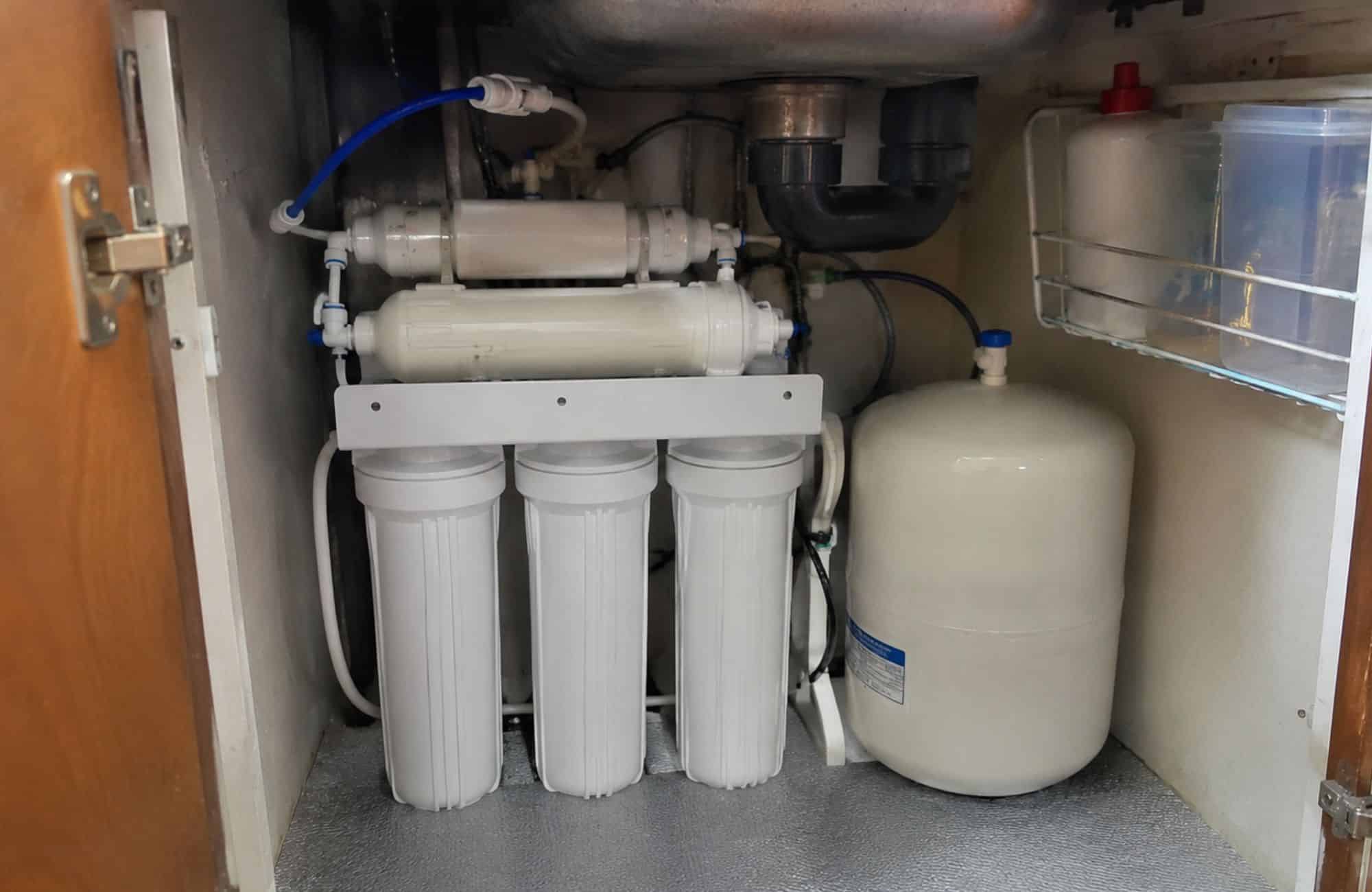
Reverse osmosis (RO) pushes water through a semipermeable membrane that separates many dissolved contaminants from the treated water. Most residential RO systems fit beneath a kitchen sink and supply a dedicated drinking-water faucet.
These systems typically use sediment and carbon prefilters to protect the membrane from particles and certain substances that could damage it. RO also produces wastewater during operation and requires periodic filter and membrane replacement.
Adsorptive Media Filters
Adsorptive filters contain materials that attract and hold arsenic as water flows through the treatment vessel. Iron oxide media and activated alumina are commonly used for this purpose, particularly when arsenic V is present.
Water pH, phosphate, silica, and other dissolved substances can affect how quickly the media becomes exhausted. Unlike a simple sediment filter, an arsenic adsorption system must be selected according to its treatment capacity and the chemistry of the incoming water.
Anion Exchange Systems
Anion exchange uses specially designed resin beads to capture negatively charged ions, including arsenic V. It can be used in certain larger treatment applications where water conditions support this method.
However, sulfate and other competing ions may reduce treatment efficiency or affect how long the resin performs effectively. Some systems also require regeneration and appropriate wastewater disposal, adding maintenance considerations.
How Arsenic III and Arsenic V Affect Filtration
Arsenic in groundwater commonly appears as arsenic III (arsenite) or arsenic V (arsenate). These forms behave differently during filtration because arsenic III is generally uncharged at typical groundwater pH levels, while arsenic V carries a negative charge. As a result, arsenic V is easier for many treatment systems to capture.
Why Arsenic III May Require Pretreatment
According to the Connecticut Department of Public Health, reverse osmosis can remove approximately 95% to 98% of arsenic V but only about 60% to 65% of arsenic III under the conditions discussed in its guidance. Actual results depend on equipment specifications and water characteristics.
When arsenic III is present, an oxidation process may be needed to convert it into arsenic V before filtration. This process can involve carefully controlled chemical treatment, but oxidation alone does not remove arsenic from water.
Under-Sink vs. Whole-House Arsenic Water Filters
Under-sink and whole-house arsenic filtration systems serve different purposes. Point-of-use equipment treats water at a specific location, usually the kitchen sink, while point-of-entry equipment treats water entering the household plumbing system. Choosing between them depends on which outlets require treatment and the amount of water your household uses.
When an Under-Sink System Makes Sense
An under-sink arsenic filter can be practical when your primary concern is water used for drinking, preparing food, and cooking. Because arsenic exposure through well water occurs mainly through ingestion, treating water at these outlets is often sufficient.
When arsenic concentrations are unusually high, additional precautions may be necessary. Connecticut DPH advises homeowners with arsenic levels above 500 ppb (0.5 mg/L) to contact the department for treatment guidance. Elevated concentrations may also require separate consideration of bathing and showering exposure. A qualified treatment professional can help evaluate the water test results and determine whether point-of-use or whole-house treatment is appropriate.
Refrigerator dispensers, ice makers, and other sources of drinking water should also be considered. Homeowners need to know which outlets receive treated water so they do not accidentally use untreated water for consumption.
When Whole-House Treatment Is Appropriate
Whole-house treatment may be considered when several outlets need filtered water or when specific household conditions call for a centralized system. These installations generally require greater treatment capacity and must accommodate normal household flow rates.
Equipment size, plumbing configuration, pressure, and available installation space can influence the design. A whole-house system is not automatically more effective than point-of-use filtration, particularly when the selected technology is poorly matched to the water chemistry.
For homeowners considering a larger installation, professional arsenic contaminant removal services can help determine which treatment configuration fits the property.
How to Choose the Right Arsenic Water Filtration System
Choosing an arsenic water filtration system requires reviewing more than the filter’s advertised removal percentage. Laboratory results, verified treatment claims, equipment capacity, and long-term maintenance needs all influence whether a system is suitable. The following steps provide a practical framework for evaluating your options before purchasing equipment.
1. Test Your Well Water Before Buying
Start with a water sample analyzed for arsenic by a laboratory certified by the Connecticut Department of Public Health to perform drinking-water testing for this contaminant. Arsenic has no noticeable taste, smell, or color, so the appearance of your tap water cannot tell you whether contamination is present.
The Environmental Protection Agency sets the federal maximum contaminant level for arsenic in public drinking water at 10 parts per billion (ppb), or 0.010 mg/L. Connecticut uses this same concentration as its private-well action level. If your water exceeds that level, use an alternative source for drinking and cooking until suitable treatment is installed and verified.
Professional well water testing can help identify the contaminants and water conditions that should guide your equipment selection.
2. Review Water Chemistry and Treatment Requirements
An arsenic test tells you how much contamination is present, but other water characteristics can influence treatment performance. Water pH, iron, manganese, phosphate, sulfate, and dissolved minerals may affect filtration media or require additional treatment stages.
For example, phosphate can compete with arsenic for binding sites in certain adsorption filters, while sulfate can interfere with arsenic removal in anion exchange systems. A laboratory analysis can help a treatment professional identify these conditions before recommending equipment.
3. Verify Arsenic Reduction Certifications
Look for independently verified arsenic reduction claims rather than assuming every water filter can remove the contaminant. NSF/ANSI 53 covers certain health-related contaminant reduction claims, while NSF/ANSI 58 addresses reverse osmosis drinking-water systems.
Certification under either standard does not automatically establish that a filter reduces arsenic. The NSF contaminant reduction guide identifies arsenic-related certifications and their conditions, including claims for pentavalent arsenic at specified incoming concentrations.
Before purchasing, review the exact product model’s certification listing and performance data sheet to confirm its arsenic reduction claim, tested incoming concentration, operating requirements, and replacement schedule. General statements such as “removes heavy metals” are not enough to verify arsenic treatment performance.
4. Match Treatment Capacity to Household Demand
A filtration system must handle the amount of water you expect to use without exceeding its rated capacity. For an under-sink installation, consider how quickly the system produces drinking water and how much treated water it can store. Whole-house systems must support the flow needed when multiple fixtures are in use without causing excessive pressure loss.
Also review the installation requirements, available space, water pressure, and compatibility with existing plumbing. Equipment that is incorrectly sized may struggle to meet household demand even when its treatment technology is appropriate.
What Maintenance Do Arsenic Water Filters Need?
Arsenic filtration systems require maintenance because membranes, cartridges, resin, and specialized media have limited operating lives. The maintenance schedule depends on contaminant levels, water use, water chemistry, and equipment design. Understanding these requirements before purchase can help you compare long-term operating costs and avoid unexpected service needs.
Maintenance Requirements by System
Different treatment methods need different types of upkeep. The manufacturer’s instructions and actual treatment performance should guide servicing rather than a generic replacement schedule.
- Reverse osmosis: Replace prefilters and membranes as recommended, inspect fittings, and monitor system performance.
- Adsorptive media: Replace exhausted media based on manufacturer guidance and treated-water test results.
- Anion exchange: Maintain the resin and regeneration components while following appropriate wastewater disposal requirements.
- Whole-house systems: Inspect pressure, flow, pretreatment equipment, and overall operation according to the installed technology.
Consider Long-Term Operating Costs
The purchase price of a filter does not represent its total cost. Replacement cartridges, specialized media, laboratory testing, water consumption, and professional servicing can affect annual expenses.
Reverse osmosis systems produce wastewater, while some anion exchange equipment uses water during regeneration. Adsorptive filters may avoid some of these requirements but still need media replacement.
How to Check if Your Arsenic Filter Is Working
The most reliable way to evaluate arsenic treatment performance is through laboratory testing of the filtered water. A system may continue producing water even when its media is exhausted or its effectiveness has decreased. Measuring the arsenic concentration after treatment helps determine whether the equipment is meeting its intended purpose.
Test Treated Water After Installation
A treatment professional may recommend collecting samples from both the untreated supply and the filtered outlet. Comparing the results helps evaluate how much arsenic the system is reducing under actual operating conditions.
Connecticut DPH recommends establishing a routine testing schedule during the first year after installation to assess performance and maintenance needs. Once treatment is established, treated water should be tested for arsenic at least annually. Untreated well water with previously detected arsenic should also be retested approximately every five years because concentrations can change over time.
Additional testing may be necessary after significant maintenance, changes in water quality, or unexpected results. If treated water exceeds the applicable action level, use an alternative drinking-water source while the cause is investigated.
Choosing the Right Arsenic Water Filter for Your Home
Choosing an arsenic water filter involves balancing treatment effectiveness, household water demand, maintenance needs, and long-term costs. Reverse osmosis, adsorptive media, and anion exchange each offer advantages under suitable conditions. A system selected using laboratory results and verified through follow-up testing provides a more dependable approach than relying on general product claims.
For help evaluating your well-water treatment options, Housatonic Valley Well Pump Services LLC offers owner-operated well-water services backed by more than 20 years of hands-on experience. The company provides free quotes and upfront pricing to Connecticut homeowners. Contact us to discuss your water test results and explore suitable arsenic filtration solutions.
FAQs
Do Any Water Filters Remove Arsenic?
Yes, certain water filters can reduce arsenic in drinking water, including reverse osmosis systems, specialized adsorptive media filters, and anion exchange systems. However, ordinary sediment filters and standard activated carbon filters should not be assumed to remove arsenic. Choose equipment with verified arsenic reduction claims that match your water conditions.
How Do I Remove Arsenic From My Drinking Water?
Begin by testing your drinking water through a qualified laboratory to determine the arsenic concentration. Based on the results, reverse osmosis or another specialized filtration technology may be suitable. If arsenic III is present, pretreatment may be necessary to improve the effectiveness of the selected removal method.
Does a Brita Filter Remove Arsenic From Water?
Do not assume a standard Brita pitcher filter removes arsenic simply because it reduces other contaminants or improves taste. Some pitcher-style filters may have arsenic-specific certifications, but the exact product model and certified performance claim must be verified. If your water contains elevated arsenic, select a treatment system specifically evaluated for that contaminant.
Is Reverse Osmosis Better Than a Whole-House Arsenic Filter?
Reverse osmosis is often practical for treating drinking and cooking water at a kitchen sink. Whole-house treatment may be appropriate when multiple outlets need treated water, but it typically requires greater capacity and more complex installation. Neither option is automatically better because performance depends on the technology, arsenic type, and water chemistry.
How Often Should I Test Water After Installing an Arsenic Filter?
Connecticut DPH recommends routine testing during the first year after installation to establish treatment performance and maintenance needs. Afterward, treated water should be tested for arsenic at least once a year, with additional testing when necessary. Follow the treatment manufacturer's recommendations and consult a qualified professional if laboratory results indicate declining performance