


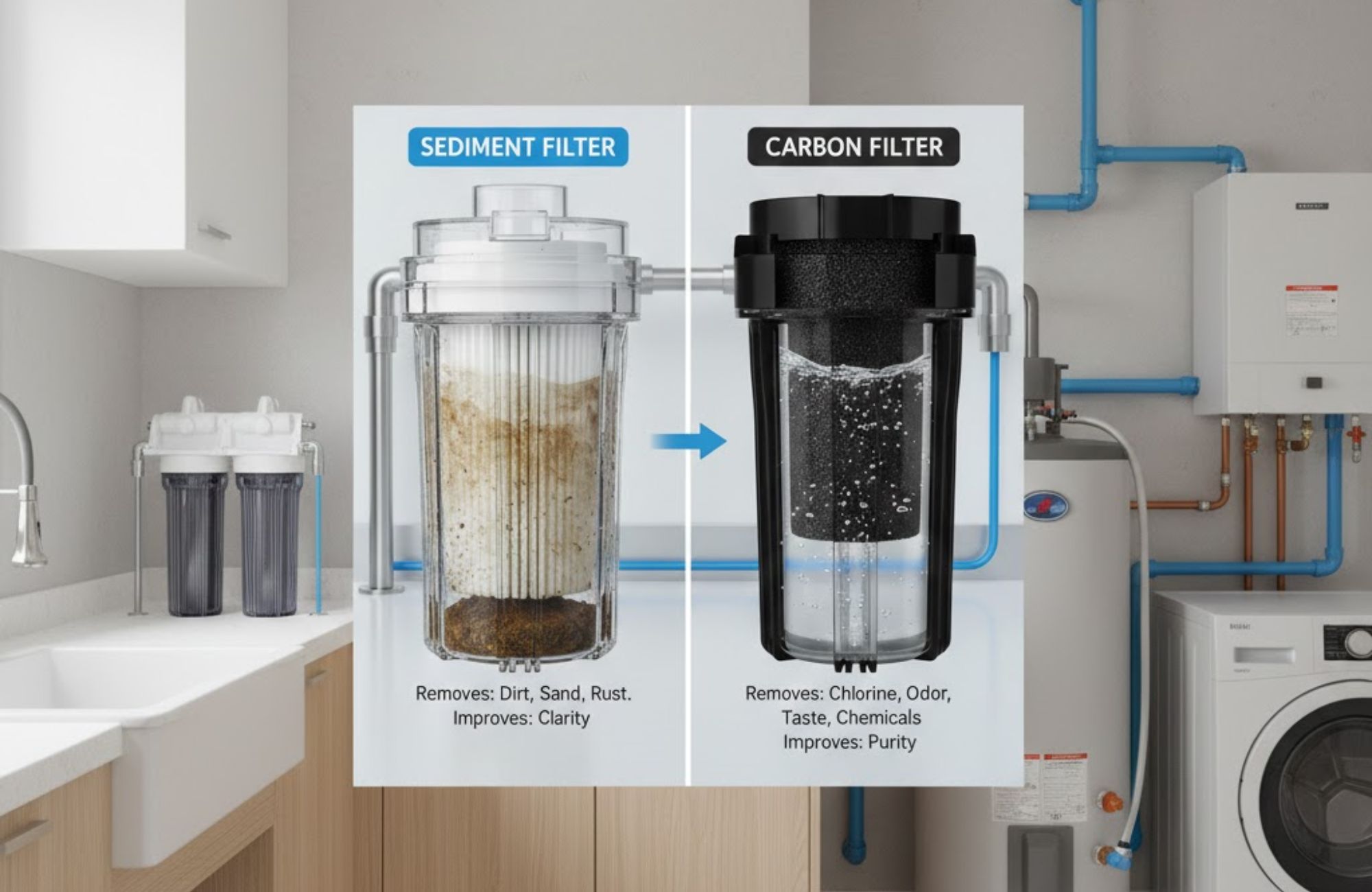
If you rely on a private well or want better water quality at home, you have likely come across the debate of sediment filter vs carbon filter. Homeowners across Litchfield County, CT, including New Milford, Danbury, and Brookfield, often ask which filter they need and whether one is enough. The answer depends on what is actually in your water and what problems you are trying to solve.
Sediment filters and carbon filters serve different functions. One focuses on physical particles, while the other targets chemicals and odors. Choosing the wrong filter, or installing them in the wrong order, can lead to poor water pressure, clogged systems, and water that still does not taste or smell right.
If you want clear answers based on real-world well water conditions, this guide breaks it down in simple terms and explains how professional water filtration systems are designed for Connecticut homes.
What Is a Sediment Filter and What Does It Remove?
A sediment filter removes physical particles suspended in water before they move through your plumbing system. These particles often go unnoticed at first but can build up over time, leading to clogged pipes, stained fixtures, and reduced water pressure. In well water systems, sediment filtration usually serves as the first stage of treatment.
Sediment filtration protects downstream equipment such as carbon filters, water softeners, pressure tanks, and well pumps by preventing unnecessary wear and blockages.
Common Contaminants Removed by Sediment Filters
Sediment filters are designed to capture solid materials such as:
- Sand and grit pulled in from the well
- Dirt and soil particles
- Rust from aging pipes or well components
- Clay and silt that cause cloudy water
- Other large particles that increase water turbidity
Sediment filters are especially important when groundwater conditions change. After heavy rain or snowmelt, wells often carry higher sediment levels. Without proper filtration, these particles can clog filters, reduce flow rate, and strain the entire water system.
For homeowners in New Milford and nearby towns, sediment buildup is one of the most common causes of low water pressure and premature filter failure. Providers often recommend sediment filtration as a starting point for improving overall water quality.
What Is a Carbon Filter and What Does It Remove?
A carbon filter removes contaminants through a process called adsorption rather than physical filtration. Activated carbon has a highly porous surface that attracts and holds certain chemicals as water flows through the filter.
Carbon filtration focuses on improving water taste, odor, and overall quality. It is commonly used in both well water and municipal systems, where chemical contaminants are a concern rather than visible particles.
Common Contaminants Removed by Carbon Filters
Carbon filters are effective at reducing or removing:
- Chlorine and chloramine
- Volatile organic compounds (VOCs)
- Organic compounds that affect taste
- Unpleasant odors
- Hydrogen sulfide linked to rotten egg smells
- Some heavy metals, depending on the filter design
Most carbon filters use activated carbon made from coconut shells or other organic materials. Carbon block filters offer a denser structure, allowing more contact time between water and carbon, which improves contaminant removal.
Carbon filters do not handle sediment well. When sediment levels are high, these filters clog quickly and lose efficiency. For this reason, carbon filtration is usually paired with a sediment pre-filter to protect the system and maintain proper water flow.
Sediment Filter vs Carbon Filter: Key Differences
Sediment and carbon filters perform different functions, and understanding these differences helps homeowners choose the right filtration system. While both are water filters, they address separate water quality issues.
Sediment filters focus on removing larger particles that affect clarity and flow. Carbon filters focus on removing dissolved chemicals that affect taste, odor, and safety. When used together in a two stage system, they provide cleaner water without overloading a single filter type.
A clear comparison helps show how they work separately and why they are often installed together:
| Feature | Sediment Filter | Carbon Filter |
|---|---|---|
| Main function | Remove suspended solids | Remove chemicals and odors |
| Targets | Sand, dirt, rust, silt | Chlorine, VOCs, organic compounds |
| Effect on pressure | Can reduce pressure if clogged | Sensitive to sediment buildup |
| Typical placement | First filter in system | After sediment filter |
| Best use | Protect systems and plumbing | Improve water quality and taste |
This separation of roles is critical for whole house water filtration systems. Using the wrong filter type alone often leads to frustration rather than results.
Which Filter Do You Need Based on Your Water Problem?
Many homeowners ask which filter is better, but the more useful question is which filter matches the specific problem you are experiencing. Water quality issues usually show clear symptoms, and those symptoms point to the right solution.
If your water looks cloudy, contains visible particles, or leaves grit in sinks and toilets, sediment removal should come first. If the water looks clear but smells bad or tastes unpleasant, carbon filtration is often the solution. The table below shows how common water problems connect to the right filter choice:
| Water Issue | Likely Cause | Recommended Filter | Notes |
|---|---|---|---|
| Gritty or sandy water | Sediment intrusion | Sediment filter | Often worse after storms |
| Brown or cloudy water | High turbidity | Sediment filter | Common in well water |
| Bad taste or odor | Chemical contaminants | Carbon filter | Requires clean water first |
| Rotten egg smell | Hydrogen sulfide | Carbon filter | Pre filtration recommended |
| Low water pressure | Clogged filters | Maintenance or micron adjustment | Often sediment related |
Homeowners in Danbury and Brookfield often see a combination of these issues, which is why professional water testing is important. A one-size-fits-all filter rarely solves complex well water problems. After identifying the issue, Housatonic Valley Well Pump Services can design and install filtration systems that match your water conditions and protect your well equipment long term.
Do You Need Both a Sediment Filter and a Carbon Filter?
In many cases, yes. Sediment and carbon filters work together rather than compete. Installing a sediment filter before a carbon filter removes dirt, sand, and rust first, which protects the carbon media from clogging and helps extend its lifespan.
A two-stage system filters sediment first, then removes chemicals, odors, and organic compounds through carbon filtration. This setup improves water quality while maintaining proper flow rate and water pressure. For well water systems in Litchfield County, this layered approach is often the most reliable way to maintain clear, better-tasting water without frequent filter replacements.
Micron Ratings Explained Without the Confusion
Micron rating describes the size of particles a sediment filter can remove. Lower micron numbers remove smaller particles, but they also clog faster if water contains enough impurities. Understanding micron ratings helps balance filtration performance with system reliability. Using too fine a filter too early can reduce water pressure and increase maintenance.
Here is a simple breakdown:
- 20 to 50 micron filters remove larger particles like sand and grit
- 5 to 10 micron filters remove fine sediment and smaller dirt particles
- 1 micron filters polish water but require very clean incoming water
A common professional approach is to start with a coarser filter and step down gradually if needed. This strategy removes sediment efficiently while protecting the flow rate and preventing unnecessary clogs.
Maintenance and Replacement: When Filters Affect Water Pressure
All filters require maintenance, and ignoring replacement schedules often leads to pressure problems. Sediment filters clog as they trap particles, while carbon filters lose effectiveness as adsorption sites fill up.
Warning signs that filters need attention include:
- Sudden drops in water pressure
- Return of bad smells or tastes
- Visible discoloration in water
- Frequent system cycling
Replacing filters based on symptoms rather than a strict timeline is often more effective for well water systems. Professional inspections help identify whether pressure issues are caused by filters, the pump, or other components.
Why Well Water Systems Need a Different Approach
Well water is not treated the same way as municipal tap water. Contaminant levels change based on weather, groundwater conditions, and local geology. Sediment levels can spike after storms, while iron and sulfur are common in many Connecticut wells.
This variability means filtration systems for well water must be flexible and properly staged. Sediment filtration protects pumps and pressure tanks, while carbon filtration improves taste and removes odors and chemicals. Local experience matters. Providers who understand regional water quality issues can design filtration systems that treat water effectively without over-filtering or restricting flow.
Conclusion
Choosing between a sediment filter vs carbon filter does not have to be confusing. The key is understanding what is in your water and selecting filtration systems that address those specific contaminants. Sediment filters protect your system and remove unwanted particles, while carbon filters improve taste, odor, and chemical safety.
If your water quality has changed, your pressure is dropping, or you are unsure which filter type your home needs, professional guidance makes the difference. Housatonic Valley Well Pump Services provides water testing, filtration system installation, and ongoing service for homeowners across Litchfield County, New Milford, Danbury, Brookfield, and surrounding Connecticut towns. Contact our team today to schedule an evaluation and get clear answers about your water.
FAQs
Which is better, a sediment filter or a carbon filter?
Neither is better overall. A sediment filter removes solid particles, while a carbon filter removes chemicals, odors, and organic compounds.
What goes first, a carbon filter or a sediment filter?
The sediment filter goes first. It protects the carbon filter from clogging and extends its lifespan.
What are the disadvantages of sediment filters?
Sediment filters clog over time and do not remove chemicals, odors, or dissolved contaminants.
What is the healthiest type of filtered water?
The healthiest filtered water matches the contaminants in your water. For most homes, a sediment filter combined with activated carbon provides safe, clean drinking water.