


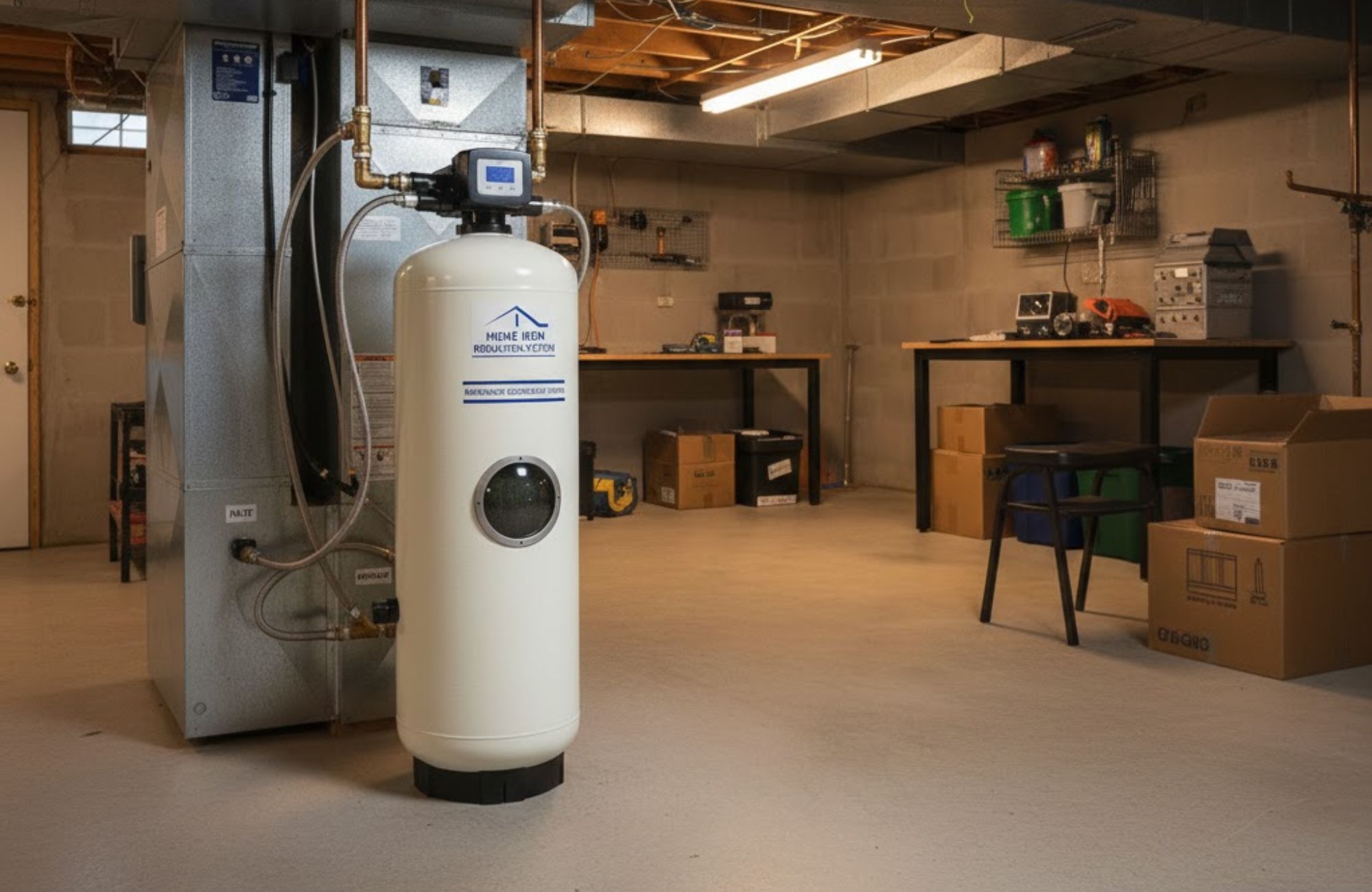
Iron in well water is a common issue for homeowners in Litchfield County, CT, and surrounding areas such as New Milford, Brookfield, and Danbury. If you’ve noticed rust-colored stains on your plumbing fixtures, a metallic taste in your water, or reduced water flow, iron could be the culprit.
A greensand filter is an effective solution for many homeowners, but it’s not always the right choice for every situation. In this article, we’ll explain how a greensand filter works, when it’s ideal for iron and manganese removal, and how it compares to other filtration systems.
If you’re experiencing issues with iron and manganese in your well water supply, our team offers professional water testing and iron filtration solutions throughout Litchfield County and surrounding communities.
What Is a Greensand Filter?
A greensand filter is a water filtration system designed to remove dissolved iron and manganese from your water. The system uses manganese dioxide-coated sand to oxidize the iron, turning it into solid particles that can be easily trapped in the filter media and removed during backwashing.
The greensand media is made of a silica sand core that’s coated with manganese dioxide, which is crucial for the oxidation reaction. This allows the greensand filter to effectively target and remove soluble iron, manganese, and even hydrogen sulfide odors from the water supply.
In Litchfield County and nearby towns like New Milford and Brookfield, this filtration method is particularly useful for homeowners who experience iron staining or unpleasant tastes due to dissolved iron in their well water.
How Does a Greensand Filter Remove Iron?
Greensand filters remove iron and manganese by using an oxidation reaction, where dissolved iron is converted into solid particles. These particles are then trapped by the greensand media and flushed out during backwashing.
The key to this process is the manganese dioxide coating, which acts as an oxidizing agent. Typically, potassium permanganate or chlorine is used to assist the oxidation of iron and manganese in the water. The use of potassium permanganate upstream in the system helps regenerate the greensand filter, allowing it to remove more iron and maintain its effectiveness over time.
Intermittent Regeneration (IR) vs Continuous Oxidation (CO)
There are two main operating modes for greensand filters: Intermittent Regeneration (IR) and Continuous Oxidation (CO).
- Intermittent Regeneration (IR): This method uses potassium permanganate to regenerate the manganese greensand media. It works well for moderate levels of iron and manganese and requires periodic regeneration to restore the filter’s oxidizing capacity.
- Continuous Oxidation (CO): Chlorine or another oxidizing agent is continuously added to the water supply to keep the filter operating without requiring as much regeneration. This method is best for homes with higher iron concentrations or when consistent filtration is needed.
| Operating Mode | Best For | Oxidizing Agent | Maintenance Level |
|---|---|---|---|
| Intermittent Regeneration | Moderate iron and manganese | Potassium permanganate | Moderate |
| Continuous Oxidation | Higher iron concentrations, sulfur odors | Chlorine or air | Higher |
If you’re unsure which method is right for your well water, our team can help you choose the most effective iron filtration system based on your water conditions.
When Is a Greensand Filter the Right Choice?
Greensand filters are highly effective for dissolved iron removal when the right conditions exist. They work best under the following circumstances:
- Iron is dissolved (clear-water iron), not iron bacteria
- Manganese is also present and needs removal
- Hydrogen sulfide odors are present but not overwhelming
- Water pH is within the recommended range for the filter to work effectively
- Backwashing and regular maintenance can be performed
However, greensand filters are not suitable for all well water. If your water contains iron bacteria, extremely high concentrations of iron, or low pH, other systems may perform better. For example, if your well water has high levels of iron bacteria, you may need to treat the water with chlorination or a UV system before installing the filter.
For homeowners in New Milford, Brookfield, and other nearby towns, a professional water test is the best way to determine if a greensand filter is right for your home.
Maintenance and Common Problems
Greensand filters require regular maintenance to ensure they continue to effectively remove iron. Proper regeneration and backwashing are essential to keep the filter media working at its best. Regular maintenance can prevent issues such as iron bleed-through, reduced water flow, and pressure drops.
How to Maintain a Greensand Filter
- Backwashing: Regular backwashing is necessary to remove trapped iron and other contaminants from the greensand media. This ensures the filter remains effective and able to remove iron and manganese.
- Regeneration: Periodic regeneration with potassium permanganate or chlorine is required to restore the filter’s oxidizing power. Proper regeneration ensures the filter continues to work efficiently for iron and manganese removal.
- Monitoring Differential Pressure: Keep an eye on the differential pressure across the filter. If pressure increases, it could indicate that the filter is clogged and needs maintenance.
Common signs that your greensand filter is not working properly include
- Iron staining is returning due to improper regeneration
- Reduced water flow due to clogged media
- High differential pressure indicates that the filter is full and needs to be cleaned or replaced
If your filter isn’t functioning properly, we offer inspection, maintenance, and system replacement services throughout the region.
Greensand vs Other Iron Removal Filters
While greensand filters are excellent for moderate iron levels, they aren’t the only option for iron removal. Here’s a comparison with other common filtration systems:
| Filter Media | Best For | Maintenance | Iron Type |
|---|---|---|---|
| Greensand | Iron and manganese with oxidation | Moderate | Dissolved iron |
| Birm | Low iron, no chemicals | Low | Dissolved iron |
| Katalox Light | High iron capacity | Moderate | Dissolved and particulate |
| Air Injection | Iron and sulfur odors | Moderate | Oxidized iron |
Greensand filters work best for homes with moderate iron and manganese levels, but Birm and Katalox Light may be more effective for low iron situations, while air injection systems are ideal for sulfur odors.
Conclusion
A greensand filter for iron removal is an excellent solution for homes dealing with moderate levels of dissolved iron and manganese. When properly sized, maintained, and regenerated, it can significantly improve water quality, eliminating iron staining and unpleasant tastes from your water.
At Housatonic Valley Well Pump Services, we’re here to help you determine if a greensand filter is the right solution for your well water. Our team can perform a professional water test to assess your needs and recommend the best system. If you’re in Litchfield County or nearby areas and dealing with iron in your water, contact us today for expert guidance.
FAQs
Does a Greensand Filter Remove Iron from Well Water?
Yes, a greensand filter removes dissolved iron by oxidizing it into solid particles that are trapped and filtered out. It works best for clear-water iron, not iron bacteria.
How Much Iron Can a Greensand Filter Remove?
Greensand filters can effectively remove moderate iron levels, but they are not designed for extremely high concentrations of iron. A professional water test helps determine the appropriate system for your needs.
Does Greensand Remove Iron Bacteria?
No, greensand filters do not remove iron bacteria. If your well water contains iron bacteria, you may need additional treatment, such as shock chlorination, before installing a greensand filter.
How Often Does a Greensand Filter Need Regeneration?
Greensand filters need regeneration every 1–2 weeks, depending on iron levels and water usage. Regeneration is done using potassium permanganate or chlorine to restore the oxidizing power.
What Is Better Than Greensand for Iron Removal?
For homes with high iron concentrations or iron bacteria, other systems such as air injection or Katalox Light may be more effective. A professional evaluation helps determine the best system for your needs.