


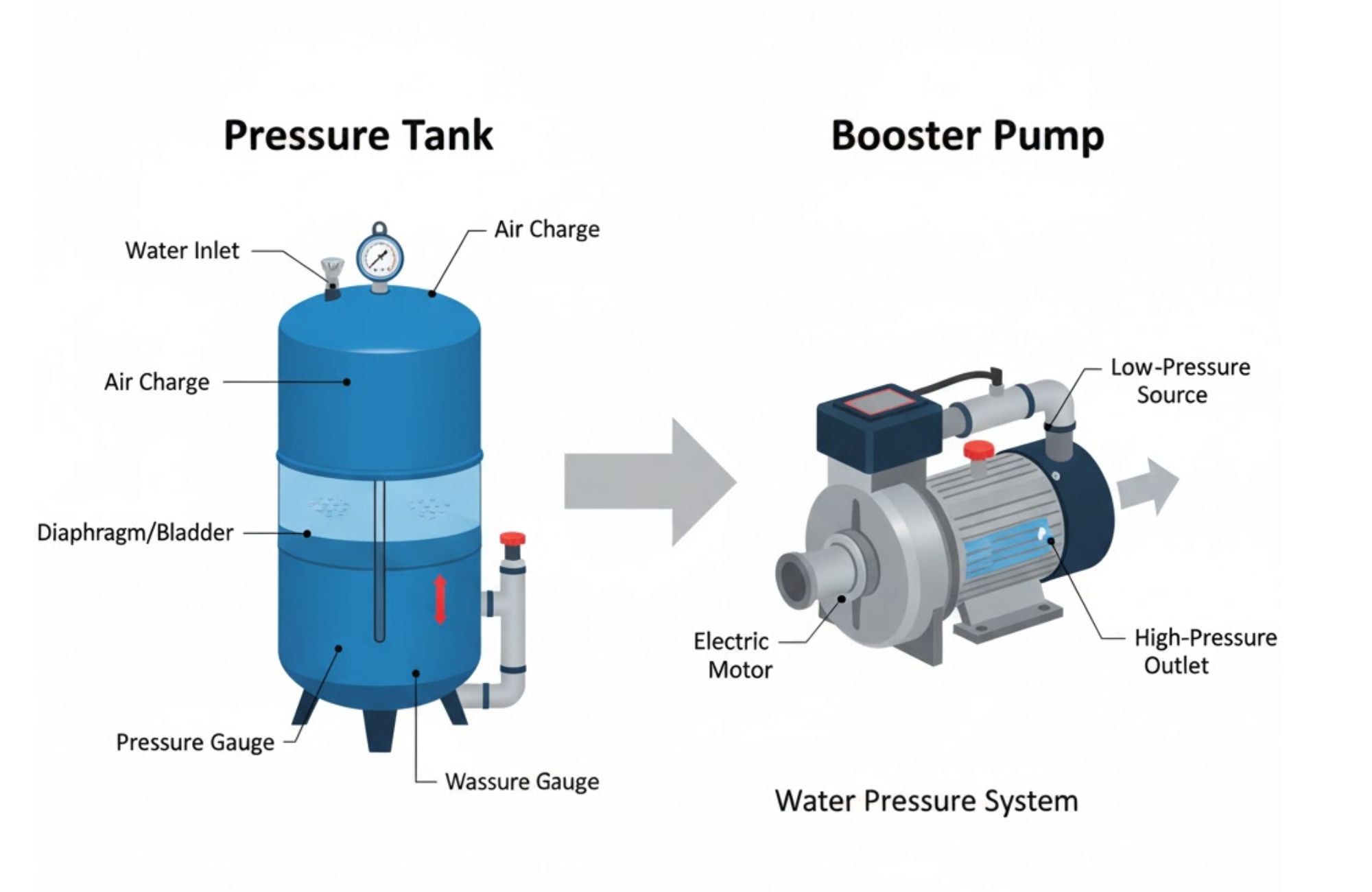
When it comes to ensuring sufficient water pressure in your home’s well system, homeowners often face the dilemma of choosing between a pressure tank vs booster pump. Both play a vital role in maintaining a reliable water supply, but they serve different purposes. Whether you’re dealing with low water pressure, inconsistent water flow, or high energy consumption, understanding these systems will help you make informed decisions about which one is best for your home.
For homeowners in Litchfield County and Upper Fairfield County, CT, where many rely on submersible pumps and private wells, it’s essential to have a system that maintains constant pressure and reliable operation. Let’s explore how pressure tanks and booster pumps differ, their main functions, and how they can work together to deliver consistent water pressure throughout your house.
What is a Pressure Tank?
A pressure tank is an essential component in most well systems, helping to regulate pressure and provide a consistent flow rate of potable water throughout your home. The primary purpose of a pressure tank is to prevent your well pump from turning on every time you open a faucet. Instead, it stores water under pressure, delivering it when needed, and signals the pressure switch when it’s time for the pump to refill.
How Pressure Tanks Work
Inside every pressure tank, there’s either a bladder or diaphragm that separates air from water. When the water pump fills the tank, it compresses the air above the bladder, creating adequate pressure. When you turn on a tap, the compressed air pushes the water out into your plumbing system until the inlet pressure drops low enough to trigger the pressure switch, which turns the pump back on.
This system ensures constant pressure and prevents frequent pump cycling, reducing energy consumption and extending the life of your pump. In gravity-fed or municipal supply systems, a pressure tank also helps maintain consistent pressure across varying flow rates, preventing fluctuations during daily use.
Signs Your Pressure Tank Is Failing
Over time, even the best pressure tanks can lose efficiency. Here are common warning signs:
- Frequent pump cycling: A faulty bladder or incorrect pressure switch setting can cause your pump to turn on and off too often.
- Air in water: This could mean the air bladder has ruptured, causing bubbles in your taps.
- Waterlogged tank: If your tank feels heavy, it may be full of water instead of air, leading to unstable water pressure.
What is a Booster Pump?
A booster pump, also known as a water pressure booster pump or pressure pump is used to increase water pressure when your existing supply pressure is too low. While a pressure tank stores and regulates pressure, a booster pump actively boosts it, ensuring that your home maintains sufficient pressure even during high demand.
How Booster Pumps Work
Booster pumps work by drawing water from a tank, municipal supply, or well system, then using centrifugal force to push it through your pipes at a higher pressure per square inch. Most modern systems include pressure sensors, float switches, and valves to automatically adjust flow based on demand. A properly sized booster pump ensures reliable operation, energy-efficient performance, and a consistent flow rate.
In homes with multiple pumps, such as a submersible pump supplying water from the well and a booster pump increasing outlet pressure, the two must work together to maintain adequate pressure without overloading the system.
When Should You Use a Booster Pump?
You should consider installing a booster pump when:
- You have low water pressure from your well or city water connection.
- You live in a multi-story house, where gravity reduces supply pressure to upper floors.
- You use irrigation systems or agricultural irrigation that require enough pressure to cover large areas.
- You have high water demand, such as multiple showers or appliances running simultaneously.
Booster pumps play a crucial role in homes and industrial settings alike, as they not only increase water pressure but also ensure reliable performance for everything from residential fixtures to irrigation and industrial processes.
Pressure Tank vs Booster Pump: Key Differences
| Feature | Pressure Tank | Booster Pump |
|---|---|---|
| Primary Purpose | Stores water and maintains constant pressure | Actively increases supply pressure |
| Main Function | Prevents short cycling of the pump | Provides adequate pressure and consistent flow rate |
| Ideal Application | Homes with private wells or gravity-fed systems | Homes with low existing pressure or high demand |
| Energy Efficiency | Very energy efficient, minimal electricity use | Requires more energy but delivers great pressure |
| Maintenance Needs | Occasional inspection of pressure switch and bladder | Regular servicing of pressure sensors and motor |
| Cost Range | $500–$1,000 installation | $1,000–$2,500 installation |
| Common Settings | Private wells, rural homes | Multi-story houses, city water supplies, irrigation systems |
The difference between these systems is their main function: the pressure tank maintains consistent water pressure, while the booster pump increases it when the existing pressure is too low. In many systems, both work together, one stores water, the other ensures it reaches your desired location at the desired pressure.
Cost and Maintenance Considerations
Both systems involve different cost and maintenance profiles depending on your water supply and household demand.
Pressure Tank Costs
A pressure tank generally costs less to install and maintain. Periodic checks of the pressure switch, valves, and air charge are enough to keep it operating efficiently. It’s a long-term investment for energy-efficient performance and consistent pressure.
Booster Pump Costs
A booster pump system has a higher upfront cost but is necessary when adequate pressure cannot be achieved through the tank alone. Costs can vary depending on pump capacity, type (centrifugal pump, submersible pump, or pressure pump), and inlet pressure configuration. Maintenance involves checking for leaks, monitoring energy consumption, and replacing worn pressure sensors.
In Litchfield County, you can expect:
- Pressure Tank Installation: $500–$1,000
- Booster Pump Installation: $1,000–$2,500
When to Call a Professional
You should call a professional well service technician if:
- Your pump cycles too frequently or fails to maintain constant pressure.
- You notice low water pressure even with the system running.
- Your booster pump is noisy, leaks, or fails to deliver sufficient pressure.
- Your irrigation or industrial processes require enough pressure but the system isn’t keeping up.
Professionals can assess your water pump, tank, and plumbing system to determine whether you need a replacement, adjustment, or upgrade to booster pump sets or pressure sensors. Ensuring reliable operation and energy efficiency is a critical factor in maintaining a healthy well system. Get professional troubleshooting and installation support available throughout our service area in Connecticut. Technicians can assess your setup, identify the cause of pressure issues, and ensure your system operates efficiently and reliably.
Conclusion
Choosing between a pressure tank and a booster pump depends on your system’s needs and your home’s water pressure requirements. A pressure tank offers energy-efficient, steady performance, while a booster pump is essential when your existing pressure is too low to meet demand.
Housatonic Valley Well Pump Services provides professional well pump and pressure tank inspections across Connecticut to keep your system running smoothly and efficiently. Our certified technicians ensure every component functions at its best for reliable performance. Contact us to schedule your service today.
FAQs
What are the disadvantages of a pressure tank?
While pressure tanks are reliable, they can fail if the bladder ruptures or the pressure switch malfunctions. This can cause fluctuating water pressure, frequent cycling, and higher energy consumption. Regular inspection helps maintain reliable operation and prevents premature failure.
What are the disadvantages of a water booster pump?
A booster pump requires more power and can increase electricity use. Improper sizing or poor installation can also result in excessive energy consumption or reduced reliable performance. However, when properly installed, a water pressure booster pump ensures sufficient pressure and consistent flow rate.
Why use a pressure tank on a pump?
A pressure tank prevents wear and tear on your pump by maintaining constant pressure and reducing pump starts. It’s a vital component in any well system, especially for homes relying on submersible pumps or gravity-fed setups.
How does a booster pump and pressure tank work together?
When combined, the booster pump increases supply pressure while the pressure tank stores water and regulates output. Together, they provide consistent pressure and sufficient flow for household, irrigation, or industrial use. This pairing is ideal for large properties or multi-story homes with high water demand.