


Finding out that your water tested positive for e. coli in well water treatment is stressful, especially if your household depends on a private well for daily drinking water. Many homeowners first discover the issue after routine testing, following heavy rain, or when a family member gets sick. While the result is serious, it does not mean your water system is beyond repair.
E. coli contamination is common in private wells, especially shallow wells or older systems, and it can usually be corrected with the right treatment and prevention steps. The key is acting quickly, understanding the source of the bacteria, and choosing a treatment system that fits your water supply and household needs.
If your well water tested positive for E. coli, professional testing and water treatment are the safest way to protect your family and restore confidence in your water source. Our team specializes in diagnosing bacterial contamination and installing proven well water treatment systems designed for long-term protection.
What Does E. Coli in Well Water Mean?
E. coli in well water means that harmful bacteria from human or animal waste have entered your water supply. Escherichia coli is part of a group called fecal coliform bacteria, which live in the intestines of warm-blooded animals. When E. coli is present, it signals that waste contamination has reached the well.
This is different from total coliform, which can sometimes occur naturally in soil or groundwater. E. coli specifically points to fecal contamination and a higher risk of harmful pathogens. Because private wells are not monitored like public water systems, contamination can go unnoticed without regular testing. When E. coli is detected, immediate action is required to prevent health risks and further spread of bacteria throughout your water system.
Is It Safe to Use Water If E. Coli Is Present?
Water that tests positive for E. coli is not safe to drink or use for food preparation. Even small amounts can cause illness, especially in children, older adults, and people with weakened immune systems. Health risks include stomach cramps, diarrhea, vomiting, and in severe cases, kidney complications.
While some household uses may seem harmless, it is important to understand where the risk exists. Drinking, cooking, brushing teeth, and making ice with contaminated water should stop immediately. Many health agencies advise using bottled water or an alternate source until treatment is complete. Showering and washing hands may be possible in some situations, but only with guidance from a professional who understands the level of contamination and the condition of your water system.
Immediate Steps to Take After a Positive E. Coli Test
After receiving a positive test result, the most important thing is to reduce exposure and prevent further contamination. These first steps protect your household while you plan proper treatment.
- Start by stopping all drinking and cooking with well water. Use bottled water or boiled water for drinking, food preparation, and oral hygiene. Boiling water for at least one minute can kill harmful bacteria, but it should only be used as a temporary measure. Ice makers, coffee machines, and refrigerators connected to the water line should also be avoided until the system is cleared.
- Confirm the test results with a follow-up water sample. Improper sampling can sometimes lead to inaccurate readings, so using correct procedures is important. This includes removing faucet aerators, using clean containers, and avoiding contact with the inside of the sample bottle. A second test helps determine whether the contamination is ongoing or temporary.
- Contact a professional well water specialist to inspect the system and recommend treatment options. Bacterial contamination often spreads through pipes, the pump, and storage components, so addressing only one part of the system may not be enough. Professional guidance ensures the issue is treated the first time correctly.
How Does E. Coli Get Into a Private Well?
E. coli enters well water when surface contamination or waste bypasses the protective barriers of the well. This usually happens through structural weaknesses or environmental conditions that allow bacteria to reach groundwater.
Common sources include cracked or damaged well casing, a missing or poorly sealed well cap, or a well head that is not properly protected from surface water. Heavy rainfall, flooding, or standing water near the well can wash animal waste or sewage into the surrounding soil. Septic systems that are too close to the well, poorly maintained septic tanks, or leaking drain fields are also frequent contributors.
Shallow wells, hand-dug wells, and older systems are especially vulnerable because they sit closer to the surface. Even changes in landscaping or drainage can redirect contaminated surface water toward the well. Identifying these potential sources is critical because treating the bacteria alone will not prevent them from returning.
E. Coli in Well Water Treatment Options
If E. coli contamination is a one-time event, shock chlorination is the go-to solution. This method uses high levels of chlorine to disinfect the well and plumbing, effectively killing bacteria in the short term. However, it does not prevent future contamination if the source remains.
For recurring contamination, continuous chlorination systems are recommended. These systems add a controlled amount of chlorine to the water supply, maintaining a disinfected flow and providing ongoing protection against E. coli and other pathogens.
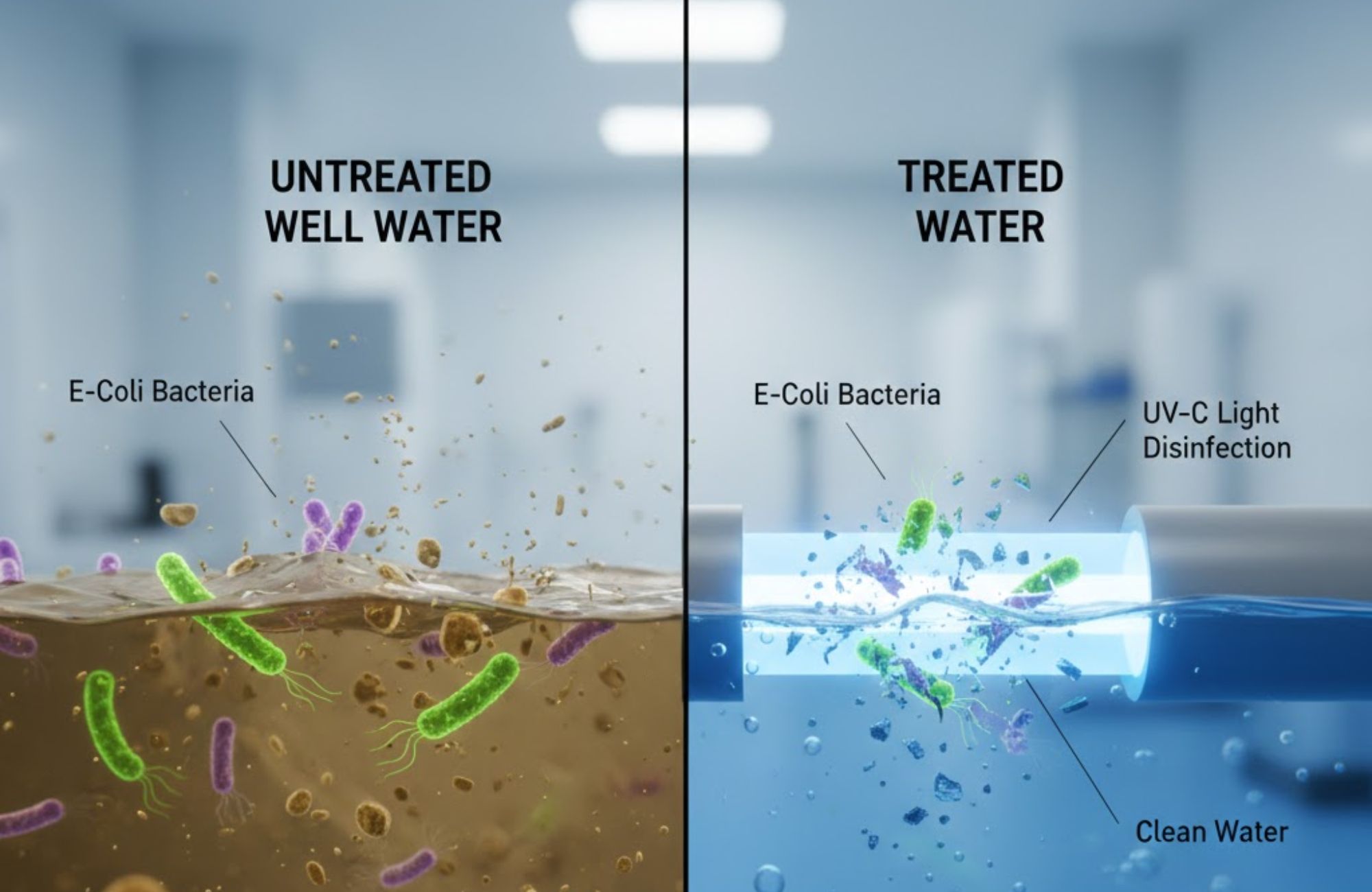
UV disinfection offers a chemical-free solution for long-term protection. UV light disrupts bacteria’s DNA, effectively killing them as water passes through the system. Paired with proper filtration, it ensures clear, safe water without affecting taste or odor.
Fixing the Source to Prevent E. Coli From Returning
Even the best water treatment system cannot compensate for a compromised well structure. Preventing future E. coli contamination requires correcting the conditions that allowed bacteria to enter the water supply in the first place.
A professional inspection often includes evaluating the well head, checking that the well cap is properly sealed, and ensuring the well casing extends above ground and is free of cracks. Drainage around the well should slope away to prevent surface water from pooling nearby. Septic systems should be inspected regularly to confirm they are functioning correctly and are located at a safe distance from the well.
In some cases, improvements such as replacing a damaged well cap, sealing the casing, or rerouting surface drainage can significantly reduce contamination risk. Combining structural fixes with a reliable treatment system offers the strongest protection for long-term water safety.
When to Retest Your Well After Treatment
Retesting is a critical step after treating E. coli in well water. A follow-up water test confirms whether the treatment was successful and whether it is safe to resume normal water use.
Most professionals recommend retesting several days after shock chlorination or after a treatment system has been installed and is running. The water sample should be collected using proper techniques to avoid contamination during testing. A negative result for E. coli and fecal coliform indicates the water is safe again.
Even after successful treatment, annual testing is strongly advised. Wells should also be tested after flooding, major repairs, or changes to the surrounding area. Regular testing is one of the simplest ways to catch water issues early and protect your household.
Why Professional Well Water Treatment Matters
Professional well water treatment goes beyond killing bacteria. It ensures that the entire system is evaluated, treated, and protected moving forward. DIY approaches may address symptoms but often miss underlying problems that cause contamination to return.
Experienced water treatment professionals use accurate testing, proven disinfection methods, and properly sized systems designed for your specific water supply. They also provide guidance on maintenance, monitoring, and long-term prevention. This level of expertise helps protect your health, preserve your equipment, and maintain reliable access to safe drinking water.
Conclusion
Dealing with E. coli in well water can feel overwhelming, but it is a problem with clear, proven solutions. With proper testing, effective treatment, and prevention measures, most wells can be restored to safe, reliable drinking water. The key is acting quickly, choosing the right treatment system, and addressing the root cause of contamination.
If your well water tests positive for E. coli, professional support can make the process safer and more effective. Housatonic Valley Well Pump Services provides comprehensive well water testing, treatment system installation, and long-term protection solutions to help homeowners regain confidence in their water supply. Contact us today to schedule an evaluation and take the next step toward safe, clean well water.
FAQs
How serious is E. coli in well water?
E. coli in well water is considered serious because it indicates fecal contamination and the possible presence of harmful pathogens. Drinking contaminated water can cause gastrointestinal illness and more severe health risks for vulnerable individuals. Immediate treatment and temporary use of bottled or boiled water are strongly recommended.
How do you get rid of E. coli in well water?
Getting rid of E. coli typically involves disinfecting the well and plumbing system through shock chlorination or installing a permanent treatment system such as continuous chlorination or UV disinfection. The best solution depends on whether the contamination is temporary or recurring. Professional testing and system evaluation help determine the most effective approach.
Can you shower in well water with E. coli?
Showering may be possible in some cases, but it depends on the level of contamination and professional guidance. While E. coli is mainly a risk when ingested, there is still potential exposure through open wounds or accidental ingestion. Many experts recommend limiting water use until treatment is complete.
How does E. coli get into my well water?
E. coli enters well water when waste from animals or septic systems reaches the groundwater. This often happens through cracked well casing, poorly sealed well caps, surface water runoff, or flooding. Identifying and fixing these sources is essential to prevent repeat contamination.