


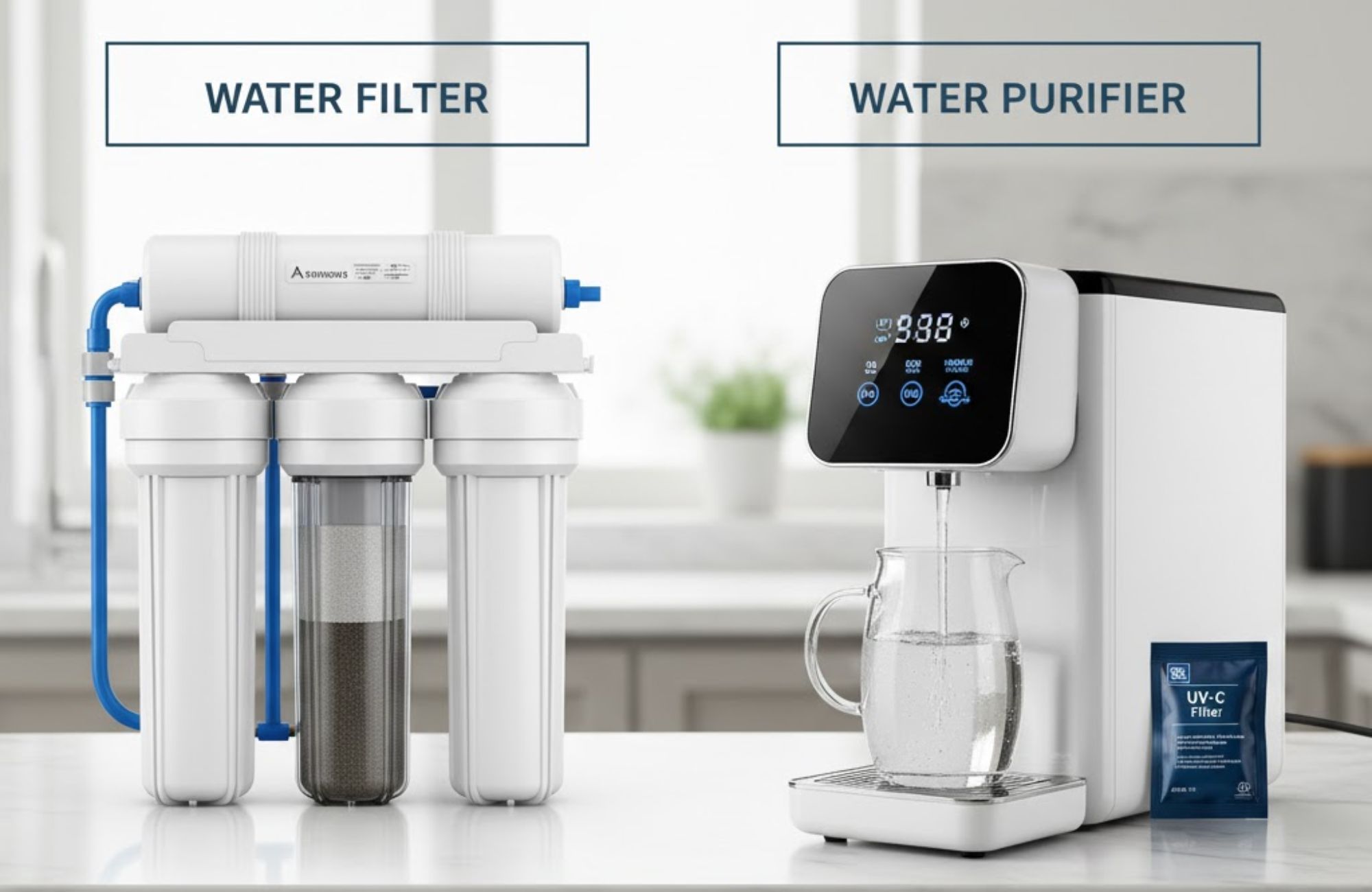
Clean drinking water is something every family depends on daily, but not everyone knows how it’s made safe. Many homeowners believe that a water filter and a water purifier are the same, but they serve very different purposes. Understanding the main difference between a water filter and a water purifier helps you choose the best option for your home, especially if your water comes from a private well.
In Connecticut, homes often face challenges with iron, hard minerals, chlorine, bacteria, and viruses in their water sources. A water filter removes physical impurities like sediment, rust, and chlorine, while a water purifier kills or neutralizes biological contaminants such as fecal matter, giardia lamblia, and hepatitis A. Together, these systems ensure you get safe water for drinking, cooking, and bathing.
At Housatonic Valley Well Pump Services, we help homeowners across New Milford, Brookfield, and Danbury choose the right water purification system for their specific water source. Whether you need a whole house filter, a UV purifier, or a combination of both, we’ll guide you through every step. Not sure which system fits your needs? Schedule a professional water treatment with Housatonic Valley Well Pump Services today.
What Is a Water Filter?
A water filter is designed to remove contaminants from tap water or well water through a physical or chemical process called filtration. Most water filters work by forcing water through materials that remove sediment, chlorine, silt, rust, and other large particles. The result is filtered water that looks clearer, tastes better, and is safer to drink.
Water filters are common in both residential and backcountry water sources. For instance, backpacking water filters are lightweight systems that hikers use to purify water from lakes and streams. These systems can remove contaminants such as dirt and debris, making water from nature drinkable in emergencies. In homes, however, the process is more advanced and permanent.
There are several types of water filtration systems:
- Whole house filters treat all the water that enters your home, ensuring clean water from every faucet and shower.
- Under-sink filters connect to your kitchen sink to deliver clean drinking water for cooking and beverages.
- Countertop water filters are small and easy to install, perfect for renters or small households.
- Shower water filters help remove chlorine and heavy metals that can cause excessive drying of the skin and hair.
- Activated carbon filters use natural carbon to trap chemicals, pesticides, and unpleasant tastes, leaving your water fresh and odor-free.
Water filters work best for homes dealing with iron stains, cloudy water, or chlorine odors. They’re the best bet for anyone who wants to improve the quality of their tap water without installing a full purification system. Ask about our whole-house water filtration systems designed for Connecticut’s unique well water conditions.
What Is a Water Purifier?
While a water filter removes visible impurities, a water purifier goes a step further, killing or removing bacteria and viruses that filters can’t catch. A water purifier uses advanced methods such as ultraviolet light (UV light) or reverse osmosis (RO) to purify water and make it safe to drink.
Here’s how different water purifiers work:
- UV Purifiers: These systems use ultraviolet light to kill microorganisms in the water. The light damages the DNA of bacteria, viruses, and parasites, preventing them from reproducing. UV systems are fast, chemical-free, and safe for humans.
- Reverse Osmosis Purifiers: These use a membrane to remove heavy metals, pesticides, and other impurities. The process eliminates contaminants like arsenic and lead, making it ideal for drinking water and cooking.
- Distillation Systems: These heat water until it becomes steam, then condense it back into liquid, leaving contaminants behind. It’s effective but slower than other systems.
Homes in Litchfield County and Upper Fairfield County often face water issues that a standard filter can’t fix, such as bacterial contamination from old wells. A UV purifier or RO system from Housatonic Valley Well Pump Services can eliminate biological contaminants like giardia lamblia and hepatitis A, giving your family clean water without harmful chemicals.
Example: After a heavy storm, groundwater can carry fecal matter or microbes into private wells. A UV light purification system kills these organisms instantly without using chemical treatments, providing safe drinking water right from the tap.
Water Filter vs. Water Purifier: The Main Difference
The main difference between a water filter and a water purifier lies in what they remove. Filters focus on physical and chemical contaminants, while purifiers focus on biological ones. In simple terms, filters make water look and taste better, and purifiers make it safe to drink.
| Feature | Water Filter | Water Purifier |
|---|---|---|
| Removes | Sediment, chlorine, rust, heavy metals, pesticides | Bacteria, viruses, and parasites |
| Works Best For | Well water with iron or bad taste | Water with biological contamination |
| Common Types | Whole house filters, under-sink filters, countertop water filters | UV purifier, RO system, distillation |
| Maintenance | Replace filters every 6–12 months | Change UV lamps or membranes annually |
| Cost | Lower | Higher but offers complete protection |
For most homes, the best bet is to combine both systems. A whole-house water filter removes sediment and chemicals, while a UV purifier or RO system kills bacteria and viruses. This combination ensures your home has clean drinking water throughout.
Homes using private wells often face multiple water problems at once, from iron and chlorine to bacteria. A combined water treatment system offers purification and filtration without compromise, keeping all the water in your home safe.
How to Choose the Right System
Choosing the right system depends on your water quality and needs. If you’re unsure, here’s a simple guide:
Step 1: Test Your Water – A professional test shows what contaminants are in your tap water, like iron, bacteria, or heavy metals.
Step 2: Identify the Problem – If your water has an unpleasant taste or stains sinks, you need a filter. If it smells bad or causes sickness, you likely need a purifier.
Step 3: Consult an Expert – Our certified specialists at Housatonic Valley Well Pump Services can recommend whether you need filtration, purification, or both.
Maintenance Tips for Long-Lasting Systems
Like any appliance, water filters and purifiers need maintenance to work properly. Skipping upkeep can cause contaminants to build up and slow down the process of filtration or purification.
Here’s how to keep your system running smoothly:
- Change filter cartridges every 6 to 12 months to maintain flow.
- Clean tanks and pipes to prevent bacteria buildup.
- Replace UV bulbs once a year for consistent performance.
- Check your well pump and pressure tank regularly for leaks.
In Connecticut, where many homes use well water, regular maintenance ensures that your filtered water remains clean and safe. Schedule a yearly inspection to keep your system performing at its best.
Why Water Treatment Matters in Connecticut
Private wells in Connecticut aren’t checked by the government, which means it’s up to homeowners to ensure their water is safe. Common issues include iron, chlorine, and biological contaminants from old plumbing or surface runoff.
Without proper water treatment, your home’s water source can carry harmful elements, causing damage to appliances and even posing health risks to humans. Over time, impurities can cause unpleasant tastes, corrosion, and mineral buildup.
Custom water treatment systems that combine whole-house filters, UV purifiers, and activated carbon can be tailored to meet a home’s specific water quality needs. These solutions help families across Connecticut enjoy clean drinking water throughout the year. Professional water treatment services ensure long-term protection for both the household and its water supply
Conclusion
The main difference between a water filter and a water purifier is simple: a filter removes dirt and chemicals, while a purifier kills germs. Together, they create a complete solution for clean drinking water in your home.
For homeowners across Connecticut, Housatonic Valley Well Pump Services provides professional water filtration and purification systems designed for local wells. From testing to installation and maintenance, we make clean water possible for every family. Ready to enjoy safe, clean water every day? Contact us for a free inspection and professional installation.
FAQs
Are water filter and water purifier the same?
No, they’re different. A water filter removes sediment, chlorine, and chemicals, while a water purifier removes bacteria and viruses. Many homes use both to purify water and keep it safe to drink.
What cannot be removed by filtration?
Filters can’t remove viruses or biological contaminants like giardia lamblia or hepatitis A. For that, you need a UV purifier or a reverse osmosis system that can handle bacteria and viruses effectively.
Which is better, purified or filtered water?
That depends on your water source. Filtered water is great for improving taste and removing sediment and chlorine. Purified water is safer when you need to combat viruses or bacteria. For Connecticut homes with wells, combining both systems is the best bet.
Are purifier and filter the same?
No, a filter handles large particles and chemicals, while a purifier kills harmful microorganisms. They complement each other and are both vital to a complete water purification system.
How do I know if my water needs a purifier?
If your tap water smells odd, has a strange taste, or you’ve had bacterial test results, you likely need a UV light purifier. Contact Housatonic Valley Well Pump Services to schedule a water test and find the right system for your home.